
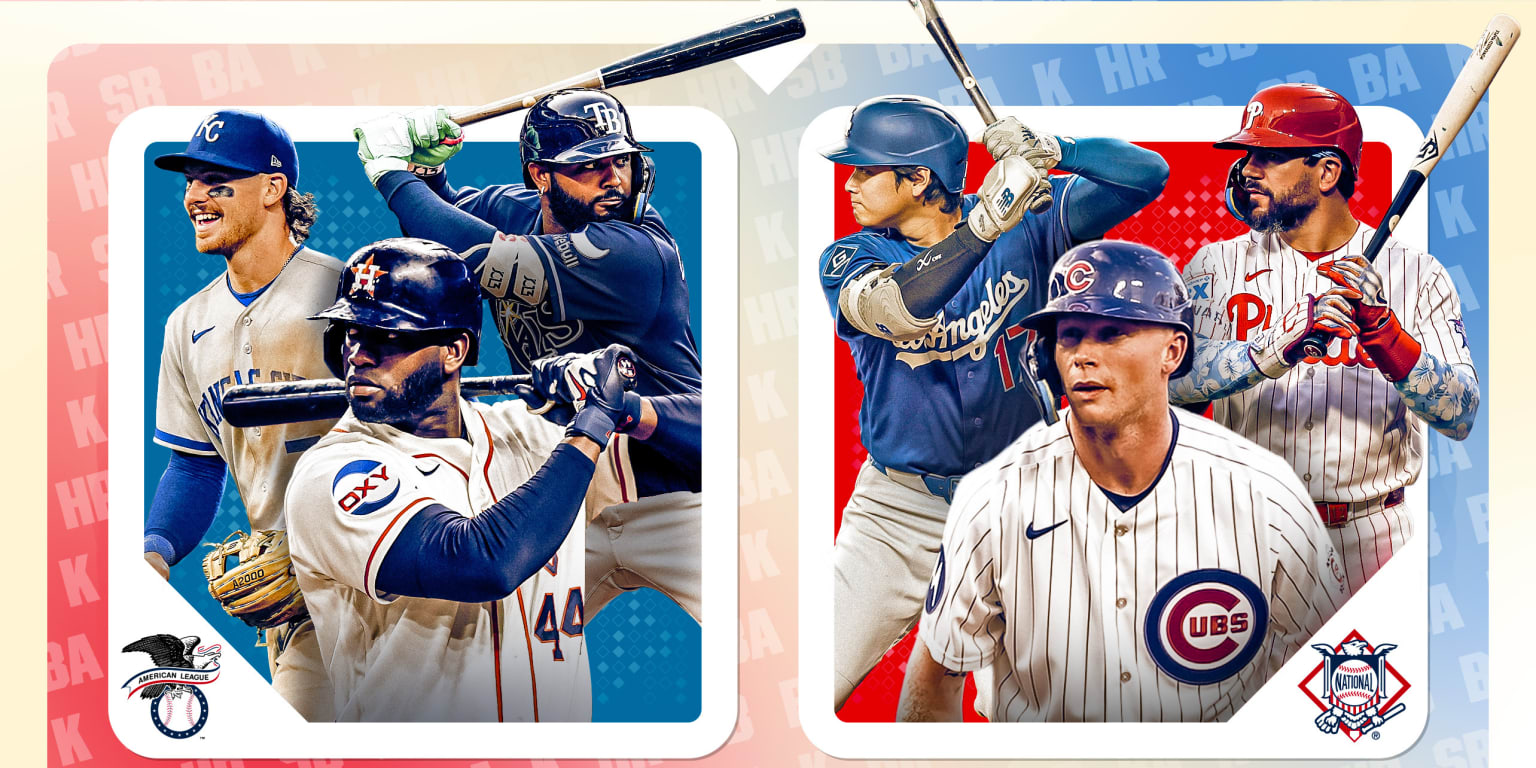
The 2026 MLB awards are not decided yet. Entering play on September 3, the strongest current cases belong to Yordan Alvarez and Pete Crow-Armstrong for MVP, Cam Schlittler and Jacob Misiorowski for Cy Young, and Kevin McGonigle and Sal Stewart for Rookie of the Year. Those names lead recent MLB.com expert polls—not official BBWAA voting—and the final regular-season weeks still count.
2026 MLB Awards Race at a Glance
| Award | Latest MLB.com poll leader | Primary pressure | Poll date |
|---|---|---|---|
| AL MVP | Yordan Alvarez, Astros | Bobby Witt Jr., Royals | Aug. 25 |
| NL MVP | Pete Crow-Armstrong, Cubs | Shohei Ohtani, Dodgers | Aug. 25 |
| AL Cy Young | Cam Schlittler, Yankees | Dylan Cease, Blue Jays | Aug. 18 |
| NL Cy Young | Jacob Misiorowski, Brewers | Cristopher Sánchez, Phillies | Aug. 18 |
| AL Rookie of the Year | Kevin McGonigle, Tigers | Parker Messick, Guardians | Sept. 2 |
| NL Rookie of the Year | Sal Stewart, Reds | JJ Wetherholt and the Mets rookies | Sept. 2 |
This table is a reading guide, not a projected official ballot. MLB.com's panels include experts asked to weigh performance to date and their expectation for the remainder of the season. BBWAA voters operate separately, submit a longer or shorter ballot depending on the award, and can disagree sharply about defense, playing time, rate statistics and team context.
The races also move at different speeds. One poor start can change a pitcher's ERA and innings case more dramatically than one quiet game changes a hitter's season. A September injury can stop a counting-stat chase, while a healthy month can clarify whether a breakout has lasted long enough. Check our 2026 MLB records and leaders snapshot for broader leader context, but keep award evaluation separate from simply sorting one statistic.
How MLB Awards Voting Actually Works
The Baseball Writers' Association of America administers the official voting for MVP, Cy Young, Jackie Robinson Rookie of the Year and Manager of the Year in both leagues. For each award, two writers from every relevant MLB city are selected, producing 30 voters per league and award. American League writers vote on AL candidates; National League writers vote on NL candidates.
| Award | Ballot positions | Points by position |
|---|---|---|
| MVP | 10 | 14 for first, then 9-8-7-6-5-4-3-2-1 |
| Cy Young | 5 | 7-4-3-2-1 |
| Rookie of the Year | 3 | 5-3-1 |
Voters submit those ballots before the postseason begins. October home runs, playoff innings and World Series heroics do not belong in these regular-season award decisions. That timing is why the final scheduled week matters so much: it is the last evidence voters can consider, not merely a warm-up for October.
The MVP instructions deliberately leave “most valuable” open to individual judgment. The ballot points voters toward offense, defense, games played and value to the player's team, while making clear that a winner does not need to play for a division champion or even a postseason qualifier. Pitchers and designated hitters are eligible, and previous winners remain eligible.
Cy Young voters can value dominance, workload, run prevention, strikeouts and context differently. Rookie voters first face an eligibility question, then compare players whose roles and opportunities may be radically different. A starting pitcher, shortstop and first baseman do not build value in the same way.
Finally, “finalist” is not a preliminary eligibility list. When MLB later announces three finalists, those are simply the top three vote-getters after ballots have already been cast and tabulated. An MLB.com poll is editorial guidance; betting odds are a market; the BBWAA ballot determines the award. Mixing those categories creates false certainty.
American League MVP: Alvarez Leads, Witt Applies Pressure
Yordan Alvarez held the clearest editorial lead in MLB.com's August 25 poll, collecting 34 of 37 first-place votes. The Astros designated hitter had combined elite average, power and run production for most of the year. In MLB's September 1 snapshot, based on statistics entering August 31, Alvarez carried a 1.039 OPS with 37 home runs and remained in Triple Crown territory.
His case is straightforward: if one hitter has separated himself dramatically from every other AL bat, voters may treat that offensive gap as the league's most valuable contribution even without defensive innings. The BBWAA instructions explicitly allow designated hitters. The harder question is how to compare concentrated offensive dominance with a star who adds value on defense and the bases.
That is Bobby Witt Jr.'s route. MLB's same September overview credited the Royals shortstop with an AL-position-player-leading 6.4 WAR, an .812 OPS, premium defense and baserunning. WAR is not the ballot, and models can disagree about defensive value, but Witt can gain ground by maintaining an everyday shortstop workload while Alvarez's case remains heavily dependent on exceptional hitting.
Junior Caminero cannot be edited out of the discussion. The Rays slugger actually ranked second in the August 25 MLB.com poll, ahead of Witt, after sustaining a major power season and helping drive a division race. Poll points reflect many full top-five ballots, so a candidate can command broad second- and third-place support without receiving first-place votes.
The final evaluation should ask four questions:
- Does Alvarez finish the Triple Crown categories at or near the top?
- Does Witt widen the total-value case through defense, baserunning and availability?
- Does Caminero produce a signature finish while his club plays meaningful games?
- Do injuries materially change games played or late-season effectiveness?
Team success can shape a narrative, but it is not an eligibility requirement. Use our 2026 MLB power rankings for club context; do not convert a team's rank into an automatic MVP vote.
National League MVP: Crow-Armstrong vs. Ohtani
Pete Crow-Armstrong moved ahead of Shohei Ohtani in MLB.com's August 25 poll, earning 177 points and 29 first-place selections to Ohtani's 154 points and eight firsts. By MLB's September 1 overview, with statistics entering August 31, the Cubs center fielder had a .954 OPS, 38 home runs, 32 stolen bases and 9.3 FanGraphs WAR.
That line creates a rare combination: middle-of-the-order power, premium baserunning and elite defense at a demanding position. Reaching 40 homers and 40 steals would give Crow-Armstrong a memorable counting-stat frame, while a 10-WAR season would summarize value across every phase. Neither threshold is required, and neither should replace analysis, but round-number milestones influence how a late-season case is remembered.
Ohtani's ceiling remains different from everyone else's because a healthy two-way contribution combines an elite bat with starting-pitcher value. A knee issue had kept him off the mound since early July as the September overview was published. Reports that he was expected to return were forward-looking; voters ultimately evaluate innings actually thrown and production actually delivered.
Even without pitching, Ohtani's offensive line remained MVP caliber. His challenge is comparative: if Crow-Armstrong supplies similar hitting plus center-field defense and baserunning over an everyday workload, how many effective mound innings does Ohtani need to close or reverse that gap? Different voters can answer differently without ignoring the same evidence.
Kyle Schwarber also belongs in the conversation. He ranked third in the August poll after leading MLB with 39 home runs at that snapshot. A power surge can build a compelling traditional case, but the two front-runners' broader value made the poll look increasingly like Crow-Armstrong versus Ohtani.
September can still alter all three cases through health, availability and landmark performance. The fairest phrasing is “Crow-Armstrong led the latest poll,” not “Crow-Armstrong won.” The official ballots are independent, and their evidence window remains open until the regular season ends.
American League Cy Young: Schlittler vs. Cease
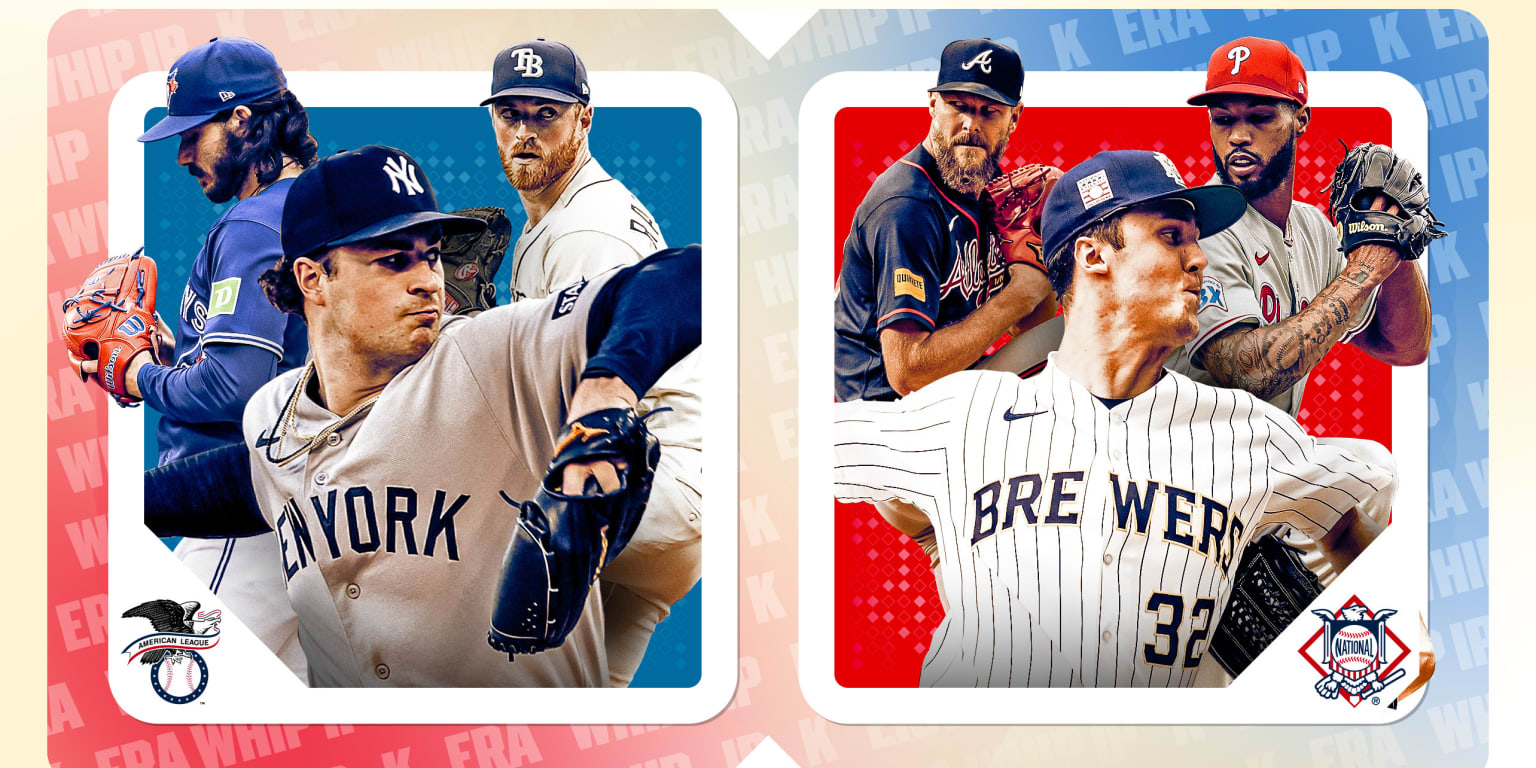
Cam Schlittler held a narrow but meaningful lead over Dylan Cease in MLB.com's August 18 Cy Young poll. Schlittler collected 165 points and 25 first-place votes; Cease received 148 points and 10 firsts. With statistics through August 16, Schlittler led the league with a 2.16 ERA and 152 innings while carrying a 0.94 WHIP and 5.1 Baseball-Reference WAR.
Cease's counterargument begins with missing bats. At the same snapshot he led the AL with 201 strikeouts and a 13.14 strikeouts-per-nine rate, while his 2.42 ERA ranked directly behind Schlittler. An overwhelming strikeout edge can reduce dependence on defense and create a memorable dominance case, particularly if the run-prevention gap tightens.
Schlittler's fastball provides more than velocity. MLB's September 2 pitch analysis credited his four-seamer with 18 runs prevented at that dated point, placing it among the sport's most valuable four-seamers. Cease builds his case through a different shape of swing-and-miss performance. Cy Young voting does not require every ace to win in the same way.
Remaining starts can move the race quickly. A seven-inning scoreless outing adds workload while protecting rate statistics; an abbreviated rough start does the opposite. Voters can also consider how often a pitcher takes the ball, works deep enough to reduce bullpen exposure and maintains quality as innings accumulate.
Drew Rasmussen and other down-ballot candidates still matter because the ballot has five positions. Even if two names dominate first-place discussion, a strong September can rearrange second through fifth and affect the weighted point total. Use today's MLB schedule to confirm who is actually starting rather than rely on an old probable-pitcher note.
National League Cy Young: Misiorowski's Lead and Sánchez's Workload Case
Jacob Misiorowski owned the clearest lead of any August poll. All 35 MLB.com experts placed him first on August 18. At that snapshot, the Brewers right-hander led qualified MLB starters with a 1.75 ERA, while his 210 strikeouts, 2.14 FIP, 0.75 WHIP and .151 opponent average described dominance from several directions.
The lead still contained a legitimate philosophical question. Cristopher Sánchez had thrown more innings and led MLB pitchers with 6.6 Baseball-Reference WAR in the August poll article. MLB's September 1 update put the workload gap at 24 1/3 innings, with Misiorowski at a 1.73 ERA and 222 strikeouts versus Sánchez at 2.52 and 202.
Those numbers create a classic Cy Young comparison. Misiorowski prevents runs and baserunners at a historically eye-catching rate and misses more bats. Sánchez adds excellent performance over more innings, creating more total outs and absorbing more of his club's schedule. A voter can value Misiorowski's peak more highly while still recognizing that innings are production, not a bureaucratic minimum.
Pitch quality supports the leader's case. MLB's September 2 analysis rated Misiorowski's four-seam fastball at +25 runs prevented, tied for the best four-seamer value in the game at that snapshot. But one pitch metric cannot decide a five-name ballot, especially as workload and health change.
Chris Sale sat only three poll points behind Sánchez in August and remained part of the second-place discussion. That matters because unanimity in an editorial survey can break if the leader has a difficult final month or another ace finishes with a sustained run. Misiorowski is the front-runner; “lock” is too strong while starts remain.
The decisive September evidence will include innings completed, quality of contact, walks, strikeouts and whether each pitcher stays in the rotation. Postseason reputation should not sneak backward into the evaluation: BBWAA ballots are submitted before October games.
Rookie of the Year: McGonigle and Stewart Lead
American League
Kevin McGonigle strengthened his AL lead in the September 2 MLB.com poll, taking 30 of 40 first-place votes and 186 points. With statistics through August 31, the Tigers infielder led AL rookies with a .375 on-base percentage and 140 hits, and his 6.1 Baseball-Reference WAR led every MLB rookie.
Parker Messick moved into second with 132 points. The Guardians left-hander owned a 2.46 ERA and 161 strikeouts, giving voters a high-end starting pitcher to compare with McGonigle's everyday position-player value. Munetaka Murakami remained close at 124 points and actually received six first-place votes, twice Messick's total, on the strength of a rookie-leading AL power profile despite missed time.
That distribution matters. McGonigle was the clear poll favorite, but second place was not synonymous with the only challenger. A dominant pitcher, a disciplined all-around infielder and a power hitter create three different ballots. September health and playing time will decide how much evidence each candidate adds.
National League
Sal Stewart separated from a previously tight field. He earned 173 points and 24 first-place votes after reaching 30 home runs and an MLB-leading 105 RBIs by the end-of-August snapshot. The Reds slugger's case is built around exceptional run production and a strong late offensive stretch.
JJ Wetherholt ranked second with 140 points and 10 firsts. His defense at second base—21 Outs Above Average in the poll article—formed the foundation of an all-around case, but an August offensive slowdown and a wrist injury that placed him on the injured list made September availability a live concern. Injury timing must be updated rather than assumed.
The Mets supplied two more credible choices: starter Nolan McLean placed third with 115 points, while outfielder Carson Benge collected 106. McLean offered a rookie-leading strikeout workload; Benge combined average, power, speed and arm value. Because official ROY ballots have only three lines, a deep field forces voters to leave a strong season off entirely.
These players arrived through different development paths. Our MLB farm system levels guide explains how prospects move toward the majors, but Rookie of the Year voting evaluates Major League regular-season performance—not prospect ranking or future ceiling.
What September Can Still Change
- Availability: every healthy game adds opportunity and matters explicitly in MVP guidance. An injured candidate cannot bank projected performance.
- Pitcher workload: remaining starts can widen or close innings gaps while moving ERA, WHIP, strikeouts and total value.
- Rate and counting statistics: a home-run milestone can arrive while an OPS or ERA moves in the opposite direction. Voters see the full line.
- Role: Ohtani's actual mound return, a rookie's defensive assignment or a pitcher's rotation schedule can change the kind of value being evaluated.
- Memorable leverage: a great performance in a regular-season pennant race counts. The October performance that follows does not.
Opponent quality provides context, not a universal adjustment formula. A candidate may face contenders, rebuilding clubs, pitcher-friendly parks or a difficult travel sequence. Review the 2026 remaining strength of schedule to understand that environment, but do not award or subtract votes merely because a team has a particular schedule rank.
Team strategy matters, too. A club that has clinched may protect a starter's innings or give an everyday player rest. A contender may keep leaning on its star. Those choices affect the evidence on the ballot even when they are sensible baseball decisions.
Most importantly, snapshots must keep their dates. An August 18 Cy Young poll cannot incorporate a September 2 start. A September 1 statistics article does not know what happened later that week. Use the full MLB schedule to count remaining opportunities, then consult official statistics after games finish.
The final month should refine the case rather than erase five months of work. One spectacular night can break a close comparison, but a full-season award should still reward the full regular season. The responsible update method is cumulative: add the new evidence, reassess health and workload, and keep the distinction between observed performance and forecast.
2026 MLB Awards FAQ
Who are the official 2026 MLB award leaders?
There are no official leaders before BBWAA ballots are submitted and counted. This article identifies front-runners from dated MLB.com expert polls and current performance. Alvarez, Crow-Armstrong, Schlittler, Misiorowski, McGonigle and Stewart led those latest polls, but none had won an official award as of September 3.
Are MLB.com awards polls the same as BBWAA voting?
No. MLB.com's polls survey its experts and often ask them to forecast how the remaining season will unfold. Official annual awards are decided by selected BBWAA members on weighted ballots. The groups, timing and purpose differ, so a unanimous editorial poll is still not a unanimous official vote.
Do MLB playoff games count toward MVP or Cy Young voting?
No. BBWAA annual-award ballots are submitted before the postseason, and only regular-season performance is considered. A late-September game counts even if it feels like a playoff game; a Wild Card Series or World Series performance does not count toward these ballots.
Can a pitcher or designated hitter win MVP?
Yes. The BBWAA instructions state that all players are eligible, including pitchers and designated hitters. Voters can compare their contribution with everyday offense, defense, baserunning, games played and team value. There is no rule requiring an MVP to come from a playoff qualifier.
Does WAR decide an MLB award?
No. WAR is a useful framework for combining many types of value, but it is not a mandated ballot formula, and different versions can disagree. Voters also examine rate and counting statistics, defensive evidence, workload, context and availability. A responsible case explains the metric rather than declaring that the top WAR total must win.
What does being named an MLB awards finalist mean?
The three finalists are the top three finishers after votes have been cast; they are not the only eligible candidates. MLB normally publishes an awards announcement schedule and reveals results after the season. Check the official awards hub for 2026 dates instead of assuming a past year's November calendar will repeat exactly.
Snapshot conclusion: the September 3 evidence favors six clear poll leaders, but each league offers a credible comparison of peak, breadth, workload or role. Recheck statistics after the final regular-season game and wait for BBWAA results before changing “front-runner” to “winner.”
Loading comments...