

An MLB farm system is a Major League organization’s network of affiliated Minor League clubs and development teams. It gives players regular competition, coaching and progressively harder assignments before they are ready for the Majors. In 2026, the clearest way to picture it is as a ladder: complex-based rookie ball feeds the four full-season levels—Single-A, High-A, Double-A and Triple-A—and the Major League club sits above them.
The important word is system. A farm system is not just a club’s Triple-A team, and it is not merely a prospect ranking. It includes the players whose contracts are controlled by the MLB organization, the coaches and specialists who develop them, the affiliates where they play, and the roster decisions that move them from one assignment to another. This guide explains that whole structure using the current level names, not the Class A Advanced and Short-Season labels found in older explainers.
What Is an MLB Farm System?
“Farm system” is baseball’s informal name for an MLB franchise’s player-development network. All 30 Major League organizations have one. The official Minor League Baseball overview currently counts 120 full-season affiliated teams across the United States and Canada: four for each MLB organization. Those clubs are divided evenly among Triple-A, Double-A, High-A and Single-A. Organizations also operate rookie-level teams at complexes in Arizona, Florida and the Dominican Republic, so the complete development operation extends beyond those 120 clubs.
The farm system solves a practical problem. A high-school draft pick, an international teenager, an experienced college player and a veteran near the Major League roster do not need the same competition or instruction. Multiple levels let an organization choose an environment that fits a player’s present skills and development plan. Coaches can work on mechanics, strength, pitch design, defensive positioning, plate discipline or workload while the player still gets meaningful game repetitions.
Affiliated baseball also differs from a soccer pyramid. A successful Single-A team is not promoted to High-A, and a losing Triple-A club is not relegated. The MLB parent organization moves players between assignments. The local team keeps competing at its licensed classification, even as its roster changes throughout the season. Winning matters to players and fans, but a farm club’s central organizational purpose is preparing talent for higher levels and, ultimately, the Majors.
That distinction explains why a top prospect can skip a level, repeat one, move backward temporarily or reach MLB directly from Double-A. Development is individual, not a fixed four-stop itinerary. The level names describe the competition and assignment, not a guaranteed timetable.
The MLB Farm System Levels at a Glance
The four full-season classifications form an ordered ladder, but they are better understood as development environments than school grades. Each MLB organization supplies players and staff to one affiliate at each level. That makes 30 clubs per classification and 120 full-season affiliates in total.
| Level | Place in the ladder | Typical development focus | Roster context |
|---|---|---|---|
| Single-A | Lowest full-season level | Building professional routines and turning raw tools into repeatable game skills | Often includes younger players and first full-season assignments, but there is no fixed age band |
| High-A | Above Single-A | Executing more consistently against stronger, more experienced competition | A mix of advancing prospects, later developers and players changing roles |
| Double-A | Upper Minors | Applying a mature approach against opponents who can exploit weaknesses | Prominent prospects share rosters with depth players and experienced professionals |
| Triple-A | Highest Minor League level | Preparing for an MLB role and staying ready for rapid roster movement | Prospects, optioned 40-man players, veterans, specialists and rehab assignments can all appear |
Single-A is the first full-season rung. Players encounter longer schedules, regular travel and the daily routine of professional baseball. Results matter, but an organization may value a hitter’s swing decisions or a pitcher’s command plan more than a short run of batting average or earned-run average.
High-A raises the quality and consistency of the competition. A player who could rely on one standout tool at a lower assignment may need better secondary pitches, sharper strike-zone judgment or more reliable defense. “High-A” is the current classification name; older pages may call a roughly comparable rung Class A Advanced.
Double-A is where many fans begin tracking a possible Major League timeline closely. It is an upper-level assignment, and MLB clubs sometimes call exceptional players directly from Double-A. That possibility does not turn Double-A into a formal prerequisite or make every good month a signal that promotion is imminent.
Triple-A sits immediately below MLB in the classification order, yet its roster is not simply spots 27 through 55 on a master talent list. A Triple-A manager might have a near-ready rookie, a veteran on a Minor League contract, a reliever with MLB experience, a player optioned off the active roster and an injured Major Leaguer making a rehab appearance. The roster is built both for development and for depth that can respond to the parent club’s needs.
Players do not have to stop at all four levels, and a move is not always permanent. A polished college draftee may begin above Single-A. A teenager may spend longer at a lower rung. A struggling player can be reassigned to work on a specific problem. Therefore, the level beside a player’s name tells you where he is competing now; it does not supply a guaranteed arrival date in MLB.
Where Rookie Ball and Complex Leagues Fit
Rookie ball sits below Single-A in the usual development picture, but it is not a fifth group within the 120 full-season affiliates. MLB’s current overview counts those 120 across the four full-season classifications, then separately identifies additional rookie leagues in Arizona, Florida and the Dominican Republic. That is why one official page may say “four full-season levels” while a scores menu also offers a Rookie category.
The Arizona Complex League (ACL) and Florida Complex League (FCL) are Rookie-level circuits based mainly at Major League organizations’ Spring Training complexes. The setting lets young players work near an organization’s training fields, coaches, medical staff and development technology. These are real leagues with rosters, schedules, standings and championships, although the game-day setting can be more development-centered than that of a full-season affiliate with its own local brand and conventional ticket operation.
The Dominican Summer League (DSL) is an MLB-operated Rookie-level circuit in the Dominican Republic. It is a major early competition environment for many international signees. Some organizations field more than one DSL squad, one reason a complete farm system cannot always be reduced to a neat diagram of exactly five teams.
Assignments at this level are individualized. A teenage international signee may need a different introduction to professional baseball than a college player drafted after several NCAA seasons. An organization considers experience, physical development, workload, position, competition faced and the skills it wants the player to practice. Not every newcomer starts in the same place, and not every player spends the same amount of time in complex ball.
“Rookie-level” is also a Minor League classification, not a statement about eligibility for MLB’s Rookie of the Year award. A player can have several seasons of professional experience before reaching the Majors and still retain MLB rookie eligibility under separate rules. For fans, the useful takeaway is simple: if a newly signed player is not on a full-season affiliate roster, check the ACL, FCL or DSL roster before assuming he has not begun playing.
How Players Enter, Develop and Move Between Levels
Players enter an organization through several doors. The MLB Draft supplies eligible amateur players from the United States, Canada and Puerto Rico. Clubs also sign international amateur free agents and eligible undrafted free agents, while trades and waiver claims can move professionals from one organization to another. Once under contract, a player is assigned by the MLB organization—not signed independently by the local affiliate after an open tryout.
The first assignment depends on more than draft round or age. The organization can consider the player’s experience, health, recent workload and specific development goals, as well as available playing time on each roster. A college hitter who has already faced strong pitching may start at a different rung than a younger player with less game experience. Two pitchers from the same draft class can also move at different speeds because one is building innings while another is learning a new pitch or role.
A promotion moves a player to a higher classification. It often indicates that the organization believes the next level offers an appropriate challenge, but it is not an automatic reward for reaching one statistical threshold. Evaluators can consider the quality of a player’s decisions and execution—such as swing choices, command or defensive reads—alongside conventional results. Roster space and the needs of other clubs in the chain also affect timing.
A lower assignment is not always a final judgment. A developing player might return to a level to get regular playing time or address a weakness. A Major Leaguer can appear far down the ladder on an official injury rehabilitation assignment; for example, an established pitcher may work at Single-A because the location and schedule suit a controlled return, not because the club now evaluates him as a Single-A talent. Sideways movement can likewise reflect a new role rather than a simple rise or fall.
Fans should therefore read the transaction itself. “Assigned” is a broad placement term. “Promoted” identifies an upward Minor League move. “Optioned” applies to a player on the 40-man roster sent from MLB to the Minors under specific roster rules. “Rehab assignment” signals temporary game preparation while the player remains on an injured-list track. These labels tell a more accurate story than the affiliate name alone.
There is no universal farm-system calendar that says a player must spend one season at every stop. The best question is not “How long does Double-A take?” but “What must this player show, and what roster path is available?” That framing makes transaction news and prospect updates much easier to interpret.
Affiliate, Parent Club and Ownership: What Is the Difference?
The parent club is the MLB organization. An affiliate is a Minor League club licensed to host that organization’s players at a specified classification. The two may be business partners without sharing an owner. That distinction is easy to miss because broadcasts naturally call a club “the Double-A affiliate of” its Major League partner.
On the baseball side, the parent organization controls the players’ contracts and assignments and provides players and field staff to its full-season affiliates. It decides when a prospect changes levels and when a player is needed elsewhere in the system. The local MiLB operation supplies the place where that roster competes and runs fan-facing functions such as the ballpark experience, ticket sales, sponsorships, promotions and its community brand. Exact responsibilities and ownership structures vary, but affiliation does not by itself mean the MLB club owns the MiLB company.
Hillsboro offers a useful public example: the Hops’ official description says the Diamondbacks provide players and coaches, while the Hops provide a stadium and operate as an independent local business. Other MLB organizations do own some affiliates. Still other clubs are owned by companies that hold multiple MiLB franchises. The on-field relationship and the equity owner are separate questions.
Recent transactions make the difference concrete. In late 2025, Houston announced sales of three affiliates to another owner while saying the clubs would remain Astros affiliates. The player-development identity stayed in place even though the business ownership changed. Conversely, an organization can establish a different affiliate or an MiLB franchise can move, so an old team list may no longer match the live system.
When an affiliation changes, the local club does not take an MLB organization’s contracted prospects as a permanent hometown roster. Those players remain under their organization’s control and can be assigned to the new affiliate structure. The MiLB club retains its local franchise identity and business assets subject to the applicable arrangements. That is why the uniforms in a city can acquire a new parent-club patch while the former parent’s prospects appear somewhere else.
For fans, the practical rule is to verify both pieces: Which classification is this club? and Which MLB organization is it affiliated with now? A familiar nickname alone cannot reliably answer either question forever.
The 40-Man Roster, Options and an MLB Call-Up
A player’s Minor League level and his roster status answer different questions. The level tells you where he plays. The 40-man roster tells you whether his contract is already reserved in the group from which the organization can staff its active Major League roster. A player can be an exciting Double-A or Triple-A prospect without yet occupying a 40-man spot.
Think of a call-up as passing two gates. First, the player must be on the 40-man roster. If he is not, the club selects his contract and must have or create a 40-man opening. Second, the club needs an active-roster place. MLB uses a 26-player active roster from Opening Day through August 31 and in the postseason; from September 1 through the end of the regular season, clubs carry 28. An injury, performance decision or planned role change may produce the opening, but strong Minor League statistics alone do not create one.
If a player is already on the 40-man roster and playing in the Minors, the usual transaction language is that he is recalled. If a player is sent back while remaining on the 40-man roster, he may be optioned. An option allows that move without first requiring the player to clear waivers, subject to eligibility and other roster rules.
Players typically receive three option years, with a possible fourth in specified circumstances. An option year is not consumed every time the player rides the shuttle between MLB and Triple-A. Under the official rule, at least 20 days on optional assignment in that season uses one option year, no matter how many qualifying trips occur. A separate current limit permits five optional assignments in a season; after that, another attempt to send the player down requires outright assignment waivers. These rules are why transaction coverage may discuss “options remaining” even when a player appears MLB-ready.
Not every Minor Leaguer has been placed on the 40-man roster, so “option” should not be used as a synonym for any reassignment in the farm system. Likewise, a player can be called directly from Double-A if the organization believes he is ready and completes the roster steps. Triple-A is a common source of immediate depth, not a legal prerequisite for reaching MLB.
Once a call-up is official, check the current MLB schedule or the MLB games today page for the parent club’s next matchup. A transaction does not guarantee that the player will start or even enter that game, but the schedule shows the next opportunity. Lineups and official team transactions provide the final confirmation of his role.
How to Find and Follow Your MLB Team’s Affiliates
Use a live directory rather than memorizing a list that can age. In MiLB’s official teams directory, select the MLB organization and record its Triple-A, Double-A, High-A and Single-A affiliates. Then check the Rookie pages for complex-based squads. This matters because a local club can change its name, classification, city or parent relationship while an older search result remains online.
Next, open the specific affiliate’s page. Its schedule tells you where that Minor League club plays, while its roster and transaction feed show who is currently assigned there. The MiLB-wide schedule can also be filtered by classification, league or MLB affiliate. Do not substitute an MLB schedule for that information: the parent and affiliate have separate opponents, calendars and ballparks.
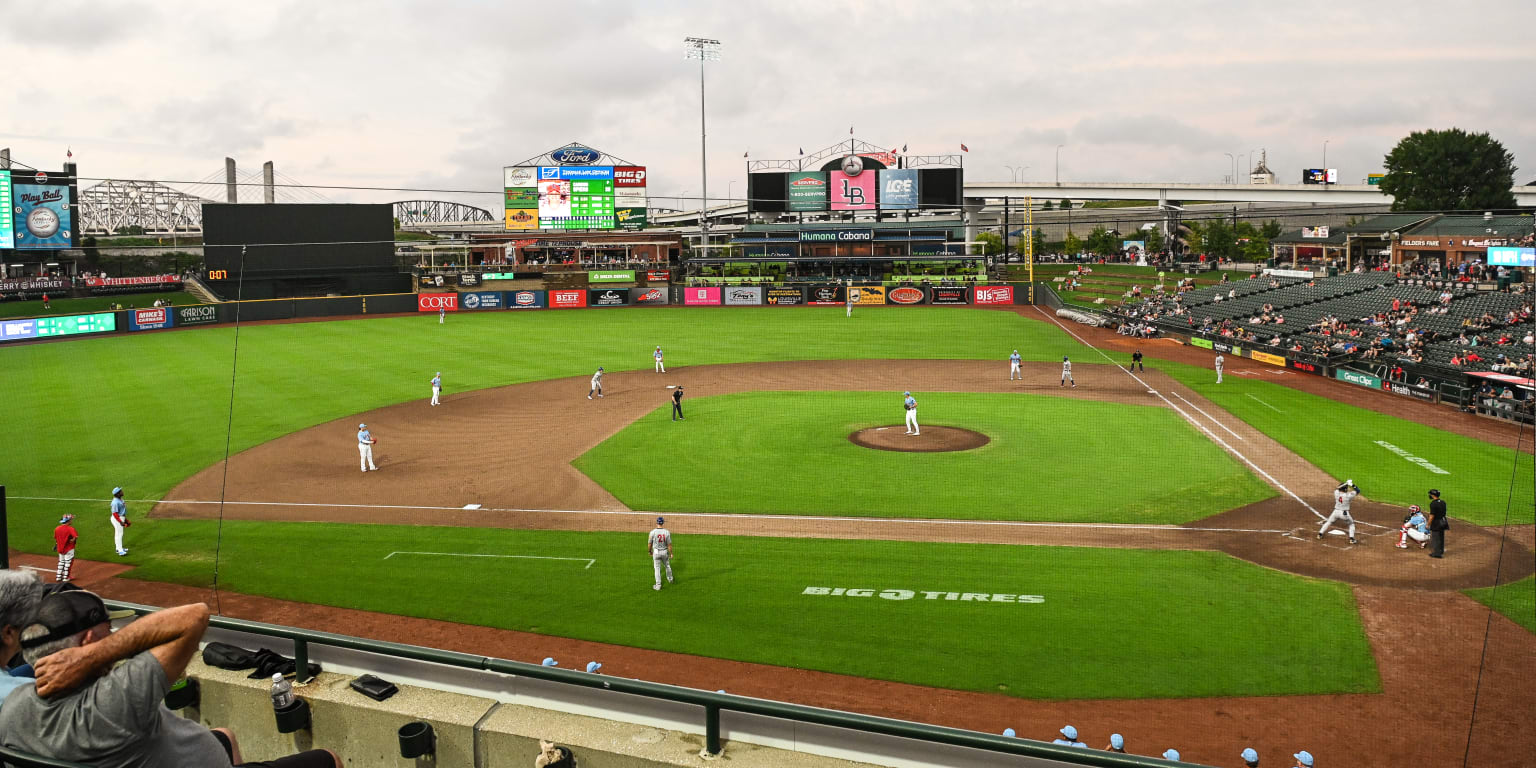
For daily following, the current MiLB App lets fans select clubs and receive scores, pitch-by-pitch Gameday updates, stats, highlights and notifications. Live video availability is a separate subscription question; the app’s official information says MLB.TV and MLB+ subscribers can access covered live MiLB games and archives. Checking the current product page is safer than relying on an old claim about price or access.
Player movement is easiest to understand when you follow two feeds at once: the affiliate’s transaction log and the parent club’s roster news. A prospect disappearing from one lineup may have been promoted, reassigned, injured or traded. The transaction label confirms what happened; social-media speculation does not.
When that move reaches the Majors, MLBSchedule.net becomes the useful side of the handoff. Check the MLB schedule for tomorrow to find the parent club’s next game, then use the MLB Gameday guide to understand official pitch-by-pitch tracking. Those pages cover the Major League slate, while MiLB’s own tools remain the source for affiliate games.
- Verify the current parent-affiliate pairing.
- Check the player’s roster and transaction status.
- Use the correct MiLB or MLB schedule for the level involved.
- Recheck after promotions, trades and rehab moves instead of assuming the assignment is permanent.
MLB Farm System FAQ
Does every MLB team have a farm system?
Yes. Each of the 30 MLB organizations has one licensed full-season affiliate at Triple-A, Double-A, High-A and Single-A. That produces the official total of 120 full-season affiliated clubs. Organizations also have rookie-level operations, although the number and location of those squads are not identical in every system.
Must a player complete every Minor League level?
No. The classifications supply development choices, not mandatory credits. A player may skip a level, repeat one, move down for a different challenge or reach MLB from Double-A. The organization chooses an assignment based on the player’s readiness, plan, health and the roster opportunities available. Even two highly ranked teammates can follow different routes.
Are an organization’s best prospects always in Triple-A?
No. Triple-A is the highest Minor League classification and commonly holds players closest to filling an immediate MLB role. A club’s highest-upside prospect, however, may be younger and appropriately assigned to Double-A, High-A, Single-A or rookie ball. Triple-A rosters also need experienced depth and role players. “Highest level” describes the competition; “best prospect” is an evaluation of future value.
Are independent leagues part of an MLB farm system?
Not automatically. MLB’s designated Partner Leagues—the American Association, Atlantic League, Frontier League and Pioneer League—are independent professional leagues, not the 120 affiliated full-season clubs. Their players can attract scouts and later sign with an MLB organization, but that possibility does not make the independent team a farm affiliate. The official word “Partner” should not be read as “assigned affiliate.”
Are college baseball teams farm teams?
No. College programs develop amateur players and are central to scouting and the Draft, but an MLB organization does not assign its contracted professionals to an NCAA team. Summer-collegiate and MLB Draft-focused leagues can also provide competition and evaluation before a player signs. They belong to the amateur pathway, not to one club’s affiliated professional ladder.
What is the quickest way to understand a specific player’s status?
Check three items in order: the MLB organization holding his contract, the club and classification to which he is currently assigned, and the exact transaction or roster status. Those details tell you more than a ranking number. A Triple-A assignment, a 40-man spot and a recall are separate facts; together they explain how close the player is to an immediate Major League opportunity.
The farm system becomes much simpler once you separate its three layers: classification describes the competitive rung, affiliation connects a local club to an MLB organization, and roster status governs the transaction path. Keep those labels distinct and promotions, options and call-ups stop looking like interchangeable moves.
Loading comments...