
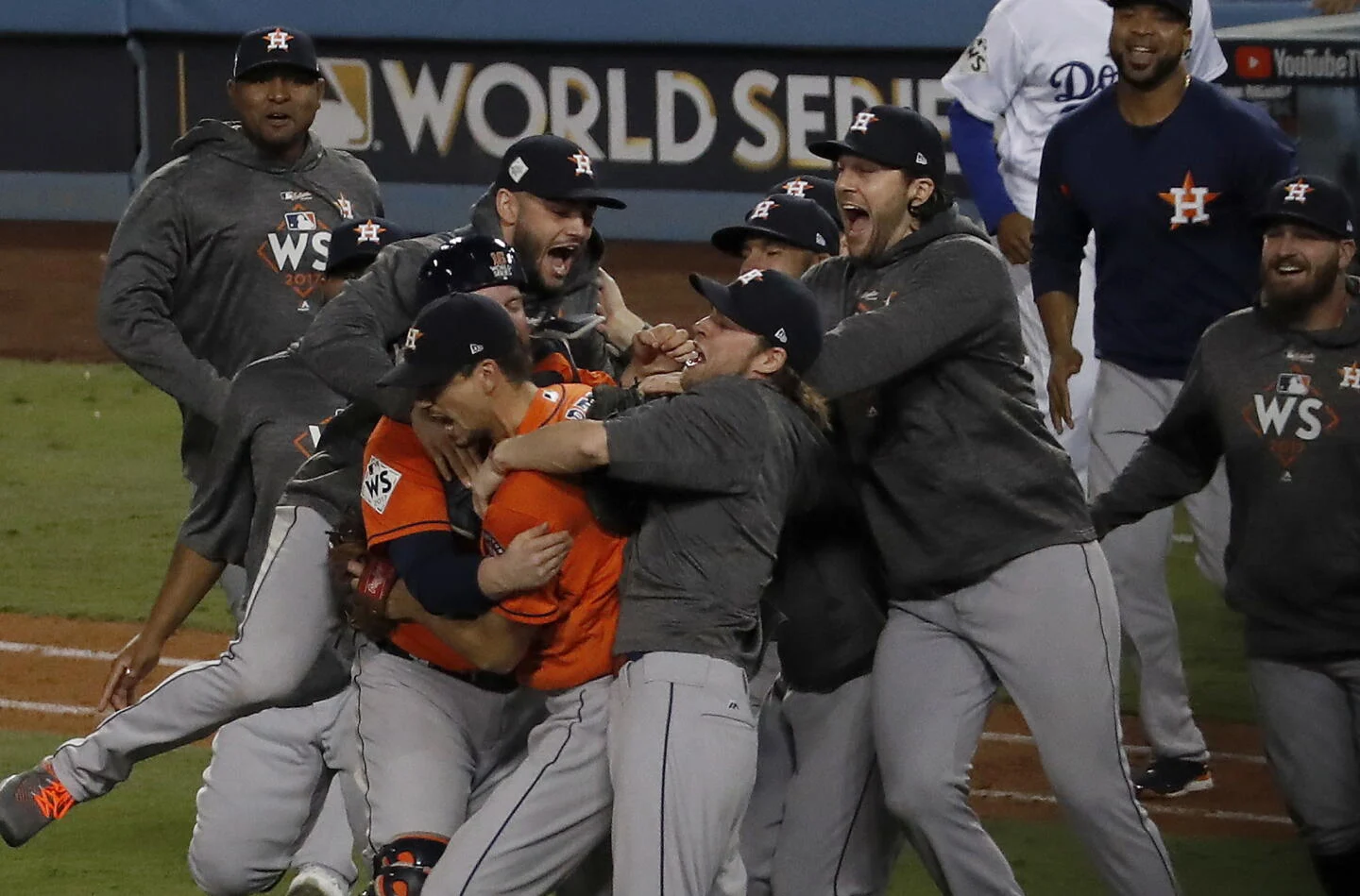
The 2017 MLB playoffs ended with Houston winning a seven-game World Series against Los Angeles. Below are every round’s matchup, the dates actually played, the decisive results and the format that shaped that postseason.
The completed 2017 MLB playoff bracket
The Houston Astros won the 2017 World Series, defeating the Los Angeles Dodgers in seven games. The postseason began with the American League Wild Card Game on October 3 and ended with Houston's 5-1 win at Dodger Stadium on November 1. This is a completed historical bracket: every matchup and score below belongs to that October, not the current postseason.
| Round | Winner | Opponent | Result | Dates played |
|---|---|---|---|---|
| AL Wild Card | Yankees | Twins | 8-4, one game | October 3 |
| NL Wild Card | Diamondbacks | Rockies | 11-8, one game | October 4 |
| ALDS | Astros | Red Sox | 3-1 | October 5-9 |
| ALDS | Yankees | Cleveland | 3-2 | October 5-11 |
| NLDS | Dodgers | Diamondbacks | 3-0 | October 6-9 |
| NLDS | Cubs | Nationals | 3-2 | October 6-12 |
| ALCS | Astros | Yankees | 4-3 | October 13-21 |
| NLCS | Dodgers | Cubs | 4-1 | October 14-19 |
| World Series | Astros | Dodgers | 4-3 | October 24-November 1 |
Read a series result as games won, not runs scored. Houston's 4-3 World Series result means four victories to three; its Game 7 score was 5-1. The Wild Card rows are different because those rounds consisted of a single elimination game. There was no second chance for either losing team, even though later rounds required multiple victories.
The American League side therefore flowed from Minnesota-New York to New York-Cleveland, then New York-Houston. Boston entered directly against Houston. On the National League side, Colorado-Arizona produced the Dodgers' Division Series opponent, while Chicago and Washington played the other Division Series. The two league champions met only in the World Series.
Cleveland competed under the Indians name in 2017. Contemporary scorecards and the official postseason archive retain that historical wording. Using Cleveland in the table keeps the matchup easy to identify without silently changing what an original 2017 box score says.
How the ten-team format worked in 2017
Ten clubs qualified: five from each league. Each league sent its three division winners directly into the Division Series, while two Wild Card teams played for the remaining Division Series place. There were therefore four Division Series matchups, two League Championship Series and one World Series, plus the two opening Wild Card Games.
The Division Series were best-of-five, requiring three wins. The League Championship Series and World Series were best-of-seven, requiring four. A team did not have to win every round by the same margin, and the total number of postseason games varied with how quickly each series ended. The Dodgers' sweep of Arizona, for example, finished sooner than the Cubs' five-game meeting with Washington.
A single Wild Card Game in each league
The opening round was especially unforgiving. New York and Arizona advanced with one victory each, while Minnesota and Colorado were eliminated by one loss each. There was no best-of-three Wild Card Series in the 2017 bracket. A reader accustomed to the modern first round should not add unplayed Games 2 and 3 to the historical schedule.
This also shaped the route taken by a Wild Card winner. New York had to clear Minnesota before facing Cleveland; Arizona first had to beat Colorado before meeting Los Angeles. Those opening games were part of the postseason, even though they did not look like the multi-game series that followed. A historical bracket that starts with the Division Series leaves out two teams and two elimination games.
Home field needs its own historical check. Starting in 2017, the World Series location advantage followed the league champion with the better regular-season record, rather than the All-Star Game result. In this bracket, Los Angeles hosted Games 1 and 2 and the final two games. Houston hosted the middle three. That arrangement explains why the final game took place at Dodger Stadium even though the Astros became champions.
For the wider timeline, our history of the MLB playoff format follows how the rounds changed. Use the separate current playoff-format guide for today's qualification structure. Keeping those explanations distinct makes it much easier to compare years without accidentally assigning modern byes, seeds or first-round rules to a completed older bracket.
Wild Card Games and Division Series results
New York beat Minnesota 8-4 on October 3, and Arizona beat Colorado 11-8 the following night. Those two results completed the opening round and established the last Division Series opponents. Both games were high-scoring, but what mattered for the bracket was simple: the winners continued, and the losers' seasons ended immediately.
American League: New York survived the early rounds
The Yankees then faced elimination again after losing the first two games against Cleveland. A 4-0 opening loss was followed by a 9-8 defeat, leaving no margin for another loss in the best-of-five series. New York answered with a 1-0 win, then a 7-3 win, before taking the deciding game 5-2 on October 11. The final 3-2 series line conceals how close the Yankees came to an early exit.
The decisive game sent New York to Houston, not directly to the World Series. That distinction matters when revisiting the season: surviving Cleveland earned the Yankees the American League Championship Series berth. They still needed four more wins to take the pennant.
Houston's Division Series against Boston followed a shorter route. The Astros won the first two games by identical 8-2 scores. Boston kept the series alive with a 10-3 victory in Game 3, but Houston closed it with a 5-4 win in Game 4 on October 9. The Astros were finished two days before the Yankees, giving the two ALCS participants different routes into the same opening game.
National League: Los Angeles advanced while Chicago went the distance
The Dodgers swept Arizona with wins of 9-5, 8-5 and 3-1. The first two were in Los Angeles; the last was in Arizona on October 9. A three-game sweep is the shortest possible best-of-five series, and it meant the Dodgers did not have to return home for a fourth or fifth game before the next round.
Chicago and Washington used all five games. The Cubs won 3-0, the Nationals answered 6-3, and Chicago took a 2-1 victory in Game 3. Washington forced a decider by winning Game 4, 5-0. The Cubs then survived a 9-8 finale on October 12. That last game settled the NLCS matchup against Los Angeles.
One scheduling detail is easy to misread in an old calendar: Washington-Chicago Game 4 was originally scheduled for October 10 but was played on October 11. A postponed listing and the completed game are not two different postseason contests. When rebuilding a bracket, count completed results and use the date actually played.
These Division Series illustrate why the order of results adds meaning beyond the final margin. The Yankees recovered from two defeats, the Cubs alternated wins and losses before their finale, Houston absorbed one setback, and Los Angeles never lost. All four advanced, but they entered the next round with different workloads and very different recent experiences.
League Championship Series: two very different paths
The pennant rounds produced the same World Series matchup through contrasting series. Houston and New York went to the limit, while Los Angeles settled its meeting with Chicago in five games. The date range in a completed bracket records what happened, not the maximum number of games originally available on the calendar.
ALCS: Astros beat Yankees in seven games
Home teams won all seven games. Houston opened with two 2-1 victories at Minute Maid Park, then New York won the next three at Yankee Stadium: 8-1, 6-4 and 5-0. The Yankees left that home stretch ahead three games to two, needing only one more victory. The Astros instead won 7-1 and 4-0 after the series returned to Houston.
That sequence explains why a 3-2 advantage after Game 5 did not put New York in the World Series. The seventh game still belonged to the original home-field holder, and Houston had to win both remaining contests to use it. The difference between leading a series and finishing it is the central story visible in these results.
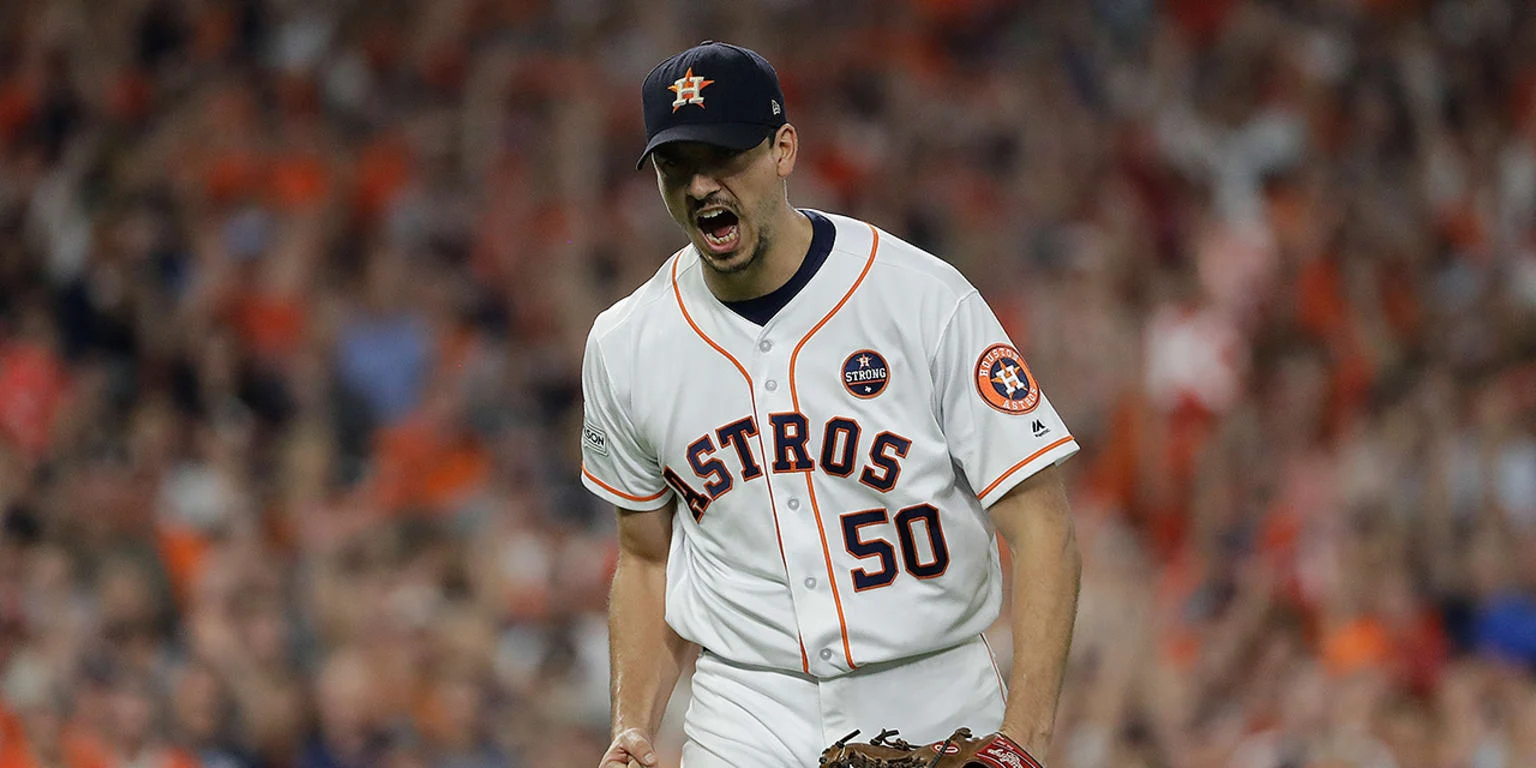
Charlie Morton supplied five scoreless innings in the clincher. His outing helped turn a winner-take-all night into a shutout, and Houston's 4-0 victory on October 21 completed the American League side of the bracket. The Astros had now advanced past Boston and New York, with one series remaining.
NLCS: Dodgers beat Cubs in five games
Los Angeles won the first three games, 5-2, 4-1 and 6-1. Chicago prevented a sweep with a 3-2 victory in Game 4, but the Dodgers answered with an 11-1 win at Wrigley Field on October 19. The final margin was four games to one, giving Los Angeles the National League pennant.
The Dodgers did not need a return trip to Los Angeles to finish the series. That is a useful check when reading an old bracket displaying reserved dates for Games 6 and 7: those games were possible, not played. A historical results page should omit invented scores for them and should not treat an unused date as a postponement.
For a viewer choosing which series to revisit, the contrast is helpful. The ALCS offers a complete seven-game sequence in which the home side repeatedly held serve. The NLCS shows Los Angeles establishing a three-game lead and closing the series after one setback. Both paths ended with a pennant, but the progression of pressure was different.
The Dodgers finished their pennant round on October 19; the Astros finished on October 21. Both then appeared in the October 24 World Series opener in Los Angeles. Those dates connect the league brackets to the final without confusing the Championship Series with the championship of Major League Baseball itself.
2017 World Series: every game and final result
Each club won two of the first four games, leaving the series tied 2-2. Houston then moved ahead at home, Los Angeles forced a deciding game, and the Astros won that finale on the road. The complete result was Houston four wins, Los Angeles three.
Seven games between Houston and Los Angeles
| Game | Date in 2017 | Site | Final score | Series after game |
|---|---|---|---|---|
| 1 | October 24 | Los Angeles | Dodgers 3, Astros 1 | LA led 1-0 |
| 2 | October 25 | Los Angeles | Astros 7, Dodgers 6 | Tied 1-1 |
| 3 | October 27 | Houston | Astros 5, Dodgers 3 | Houston led 2-1 |
| 4 | October 28 | Houston | Dodgers 6, Astros 2 | Tied 2-2 |
| 5 | October 29 | Houston | Astros 13, Dodgers 12 | Houston led 3-2 |
| 6 | October 31 | Los Angeles | Dodgers 3, Astros 1 | Tied 3-3 |
| 7 | November 1 | Los Angeles | Astros 5, Dodgers 1 | Houston won 4-3 |
Game 5 stands out immediately in a score list: a 13-12 Houston victory, with 25 combined runs. But it did not end the series. The Astros still needed one more win, and the Dodgers' 3-1 response in Game 6 carried the championship into November. A close look at the series-state column keeps a memorable game from being confused with the clincher.
The final two games also make a useful contrast. Los Angeles won Game 6 by the same 3-1 score as the opener, then lost Game 7, 5-1. Identical scores in different games do not imply identical situations. One established the first lead of the series; the other merely kept the Dodgers alive for another night.
George Springer received the World Series MVP award after hitting five home runs in the series. That individual distinction belongs alongside the team result, but it is not another round of the bracket. For a broader championship timeline, see our World Series winners by year.
Why the title also needs historical context
A responsible account of 2017 also acknowledges what MLB later found. In its January 13, 2020 investigation report, the commissioner's office documented prohibited electronic sign-stealing by Houston during the 2017 regular season and postseason. MLB imposed discipline following that investigation.
That finding is part of the history of this championship, not a reason to invent different game scores or substitute a hypothetical winner. The official record continues to list Houston as the 2017 champion. The report also distinguished the documented conduct from any claim that its effect on a particular game could be measured conclusively.
When discussing the series, keep those points together: the results show which club advanced, and the later investigation changes how the season must be understood. A bracket alone records the path; it does not resolve every question about competitive integrity. Conversely, acknowledging the violation does not justify assigning an unplayed alternate outcome to the table.
This is why an archive guide benefits from both dates and context. The seven-game schedule explains the sequence fans watched in 2017. The later official findings explain an essential part of the discussion that followed. Readers revisiting the games can see the result clearly while also understanding why the championship remains a disputed subject among fans.
Read the archive and revisit the games
A postseason bracket and a regular-season standings table answer different questions. Standings explain how a club reached October and, where relevant, its home-field position. The bracket records which opponent it faced and how that matchup ended. A club with an excellent regular-season record can disappear early from the bracket; a Wild Card entrant can keep advancing.
For 2017, begin with the round, then check the opponent and game number. “Game 5” by itself is ambiguous: Chicago-Washington, Houston-New York and Houston-Los Angeles each had a fifth game. Adding the round and date removes that ambiguity and makes an archive search much more reliable.
Use the date actually played, rather than the publication date of a recap. A night game can finish close to or after midnight, and an article may be dated the following morning. A time converted to your local zone can also fall on another calendar day. The dates in this guide follow the games' U.S. official schedule dates, which are more useful for matching historical box scores.
When choosing video, distinguish a highlight package, a condensed game and a complete replay. A short clip can show the key swing without preserving the pitching changes and innings that produced it. Search the official archive or MLB's own video channels for the exact season, matchup and game number, then check the running time and description before settling in to watch.
Our full-game replay guide explains the difference between those formats and the available official routes. Do not assume that a current subscription automatically includes every older postseason broadcast on every device. Confirm that the particular 2017 game is available before paying specifically to revisit it.
If you want to follow a complete team run, start with New York's Wild Card Game and continue through Cleveland and Houston, or begin with Houston's Boston series and follow both subsequent rounds. That order preserves the pressure each team faced at the time. Jumping directly to a finale shows the result without the path that made the game decisive.
For this season's matchups, use the current MLB playoff bracket. Keep this page as the 2017 record: ten teams entered, Houston and Los Angeles won the pennants, and the Astros completed the final four games to three. The year label is what keeps an evergreen archive useful as new Octobers add new champions and new formats.
Loading comments...