
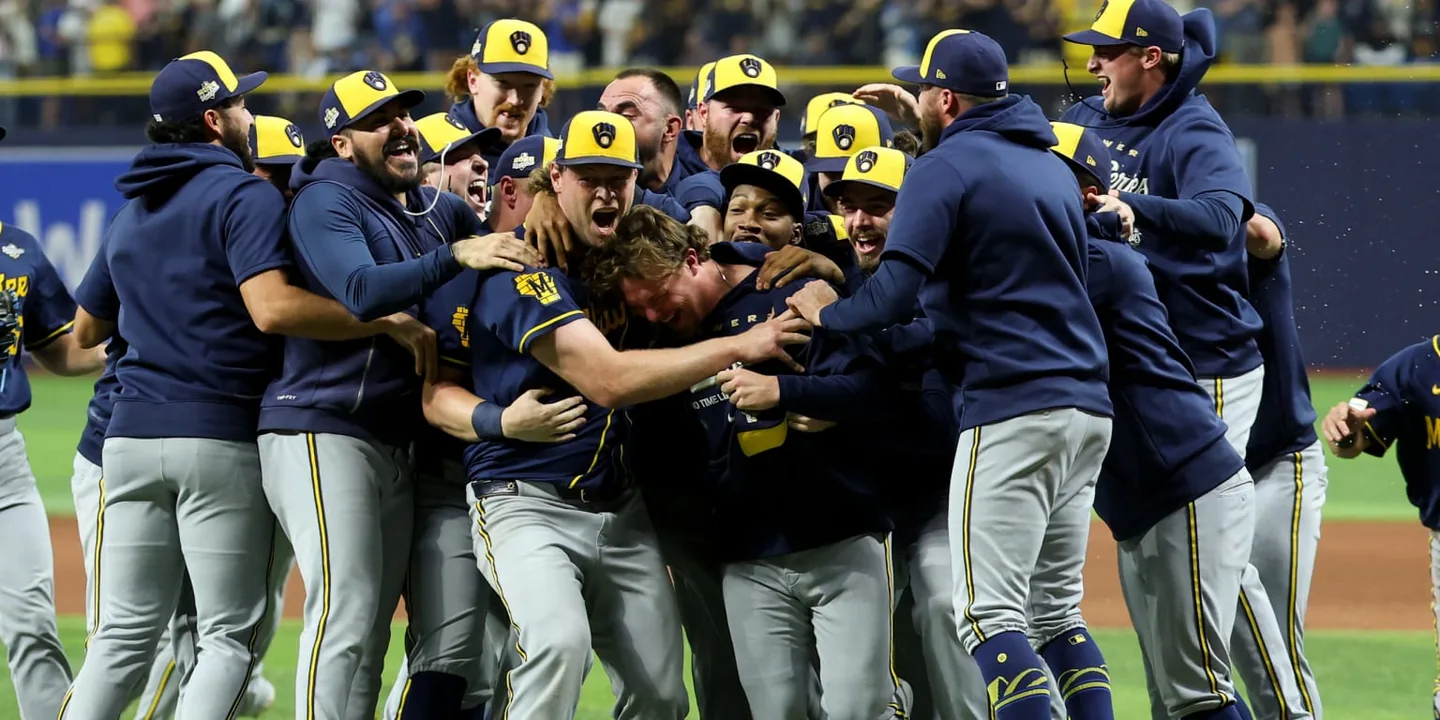
Milwaukee won its first World Series in five games
The Milwaukee Brewers won the 2026 World Series, beating the Tampa Bay Rays four games to one for the first championship in franchise history. They clinched it with a 4–1 win in Game 5 on October 28 at Tropicana Field in St. Petersburg. Catcher William Contreras won the World Series MVP award.
The game score and the series score happened to match. Game 5 ended with Milwaukee ahead by three runs. The series ended with the Brewers having won four of the five games played. Tampa Bay's win in Game 4 extended the series by a night, and Milwaukee's win the next day secured the four victories needed in the best-of-seven format.
| Game | Date | Final score | Ballpark | Series after game |
|---|---|---|---|---|
| 1 | Oct. 23 | Brewers 3, Rays 2 | American Family Field | Milwaukee led 1–0 |
| 2 | Oct. 24 | Brewers 5, Rays 4 | American Family Field | Milwaukee led 2–0 |
| 3 | Oct. 26 | Brewers 10, Rays 1 | Tropicana Field | Milwaukee led 3–0 |
| 4 | Oct. 27 | Rays 4, Brewers 3 | Tropicana Field | Milwaukee led 3–1 |
| 5 | Oct. 28 | Brewers 4, Rays 1 | Tropicana Field | Milwaukee won 4–1 |
American Family Field hosted the first two games, both decided by one run. Milwaukee took both before the teams traveled. That left the Rays needing to win at least twice in St. Petersburg to send the series back to Wisconsin. Tampa Bay salvaged Game 4, but the Brewers took Games 3 and 5 on the road, so the series never returned to Milwaukee.
The sequence helps explain why Game 2 was such a consequential swing. A split would have sent Tampa Bay home with a chance to win the title in its own ballpark. The Brewers' comeback instead left the Rays facing a deficit they could erase in Florida only by winning all three home games. The two one-run games in Milwaukee produced a much larger advantage on the series scoreboard than the combined margin of those games might suggest.
The MLB playoff bracket puts those five games at the end of the full postseason. For the final round alone, MLB's 2026 postseason archive also links each game to official highlights and scoring records.
How the five games unfolded
The most revealing way to follow this series is to look at the moment each team could have changed the score with one ball in play. Milwaukee won the opener and Game 2 with the tying run only ninety feet away. Game 3 tilted on a runner getting to second base a fraction before the throw arrived. And the Rays, who stayed alive with a run of singles in Game 4, had another scoring chance in the early innings of the clincher.
Game 1 — Milwaukee protected a one-run lead
Christian Yelich gave Milwaukee an immediate lead with a first-inning triple that scored Jackson Chourio. Contreras followed with a run-scoring hit, and the Brewers led 2–0 before their starter had to face the heart of the Rays lineup for a second time. Jacob Misiorowski allowed one run in five innings. The Rays brought that run home on an out after Junior Caminero doubled, then missed another opportunity when Contreras threw out Victor Mesa Jr. trying to steal third in the fifth.
Chourio's RBI single in the seventh turned a 2–1 lead into a two-run cushion. Tampa Bay needed every bit of the ninth to get one back. With the bases loaded, it appeared that Liam Hicks had grounded into the last two outs of the game. A replay showed shortstop Cooper Pratt's foot had come off second base, leaving two Rays in scoring position and a run across. Trevor Megill then struck out Jonny DeLuca to finish it. That made the seventh-inning single the margin in a game without a home run.
Game 2 — A comeback put the Brewers up 2–0
The Rays scored four before Milwaukee batted. Chandler Simpson and Caminero singled in runs, and Hicks followed with a two-run homer. For Tampa Bay, the better question after that first inning was how many more runs it would need. Contreras and Garrett Mitchell cut the lead to 4–2 in the bottom half, and Pratt came home in the fourth when David Hamilton's grounder got past first baseman Jonathan Aranda for an error.
Sal Frelick tied it in the sixth with a solo shot to center off left-hander Ian Seymour. In the seventh, Brice Turang doubled, moved to third on Mitchell's fly to right and scored when Pratt took a Kevin Kelly sinker the other way for a single. Milwaukee finished with one home run and five runs, a good example of how a big swing can work alongside small advances. The Rays threatened in the ninth, but an appealed check swing by Yandy Díaz was called strike three with the tying run at third. The MLB check-swing rules guide explains how that kind of call is made.
Game 3 — An eight-run fifth stretched the lead to 3–0
Tampa Bay came within one out of leaving the top of the fifth down 2–0. With two on and two out, Contreras hit a chopper to third, and Caminero went to second for the force. A review showed Yelich had beaten the throw. The inning continued with the bases loaded, and the next three pitches produced three hits and five runs. Turang's grounder got through for two, Mitchell singled home another and Pratt doubled in two more. Milwaukee kept the inning going until it had scored eight.
There was still a clean path back into the game for the Rays if they had escaped the inning before the rally. It was much harder against Robert Gasser, who allowed one hit over six scoreless innings. Gasser had given Milwaukee a chance to win even before the lineup broke the game open. The burst of seven consecutive hits with two outs was extraordinary, but the run prevention explains why those eight runs put the game so far out of reach.
Game 4 — Tampa Bay forced another night
The score stayed 2–2 from the fifth until Pratt led off the 12th with a home run. Seymour then held Milwaukee at 3–2 despite a two-out Chourio double. That mattered immediately. In the bottom half, Caminero reached on a throwing error and the Rays followed with four singles. DeLuca drove in the tying run. Pinch hitter Ben Williamson sent the winning run home on a grounder through the right side.
Winning 4–3 in twelve innings bought Tampa Bay another game and came with a pitching cost. The Rays used seven pitchers, including Nick Martinez for two innings of scoreless relief. Martinez had been in line for Game 5, which Drew Rasmussen started instead. Seymour's last out in the top half was the difference between needing one run to tie and facing an even larger deficit with the season down to its last three outs.
Game 5 — Milwaukee finished the series at Tropicana Field
Against Rasmussen on short rest, Milwaukee went ahead in the second on Pratt's single. Tampa Bay put two runners in scoring position in the fourth, when Jake Bauers kept a foot on first to secure the third out on a high throw. Pratt singled and scored on Hamilton's hit in the fifth. Contreras doubled in a run in the sixth, and Pratt added a sacrifice fly to make it 4–0.
Misiorowski held the Rays scoreless for 5⅔ innings, allowing two hits before a calf cramp ended his night. Milwaukee's relievers took over with a four-run lead and held it through the eighth. Tampa Bay got one in the ninth against Megill. He ended the series when a ground ball went to Turang at second. The game had been close deep enough for Bauers's stretch to matter, and the Brewers still finished with some room when the Rays finally scored.
Why the Brewers controlled the series
Milwaukee took the series lead in Game 1 and held it the rest of the way. Its control came from repeatedly preserving a useful score. The Brewers stayed close while trying to come back, added insurance after taking a lead and made Tampa Bay string together multiple plays to change the game. A few innings show how that worked better than the series score alone.
One lopsided game and three one-run decisions
Milwaukee outscored Tampa Bay 25–12. Nine runs of that thirteen-run difference came from Game 3. Take that 10–1 game out and the teams were separated by four runs over the remaining four games, with Milwaukee winning three of the four. The first two games and Tampa Bay's Game 4 win were each decided by one run. Those are different signals. Milwaukee consistently put itself in position to win, and Tampa Bay was close enough to change the result with a single in several late innings.
Game 3 is still important to the series total. The Brewers collected sixteen hits and the Rays had three. Milwaukee hit just one home run across the first three games, Frelick's Game 2 equalizer. In the blowout, seven hits in a row with two outs allowed Milwaukee to keep adding runs. The scoring method matters because the Rays could end the inning with a routine out at any point in that sequence, yet the inning kept reaching the next batter. That was the night when Milwaukee's ability to keep the ball in play produced the largest difference on the scoreboard.
The comeback and shutdown innings mattered
Tampa Bay's four first-inning runs in Game 2 could have been the start of a long night for Milwaukee pitching. Instead, the Brewers bullpen threw six scoreless innings. Ashby got the last five outs for the save. Because the Rays never scored again after the first, a two-run response gave Milwaukee something it could build on. The error in the fourth cut the deficit to one, and Frelick's solo home run was enough to tie it. The offense had time to recover through three different innings rather than having to produce its own four-run burst.
Game 5 showed the same advantage from the starter's side. The Rays came close to tying it in the fourth, and a play at first preserved a one-run lead. By the time Misiorowski left, the Brewers had added three runs. The following relievers were protecting a lead large enough to absorb the run Tampa Bay eventually scored. Over the entire postseason, Milwaukee relievers worked 65 of the team's 118 innings and recorded a 1.38 ERA. That larger sample helps explain why a manager could turn to the bullpen early in one game and still trust it to close the next one. The balance between a close score and available outs was at least as important to the title as the biggest Milwaukee rally.
Why William Contreras won World Series MVP
Contreras went 8-for-21 (.381) with four RBIs. His first-inning hit in Game 1 brought Yelich home after a triple, and his sixth-inning double in Game 5 scored Yelich again. Those runs came at different points in a game and served different purposes. One doubled the early lead when the Rays had all night to answer. The other made a tight clincher harder to turn around with a single swing.
Tampa Bay had stolen eleven bases without being caught in that postseason before facing Milwaukee. Contreras threw out four of nine would-be base stealers in the series, including Mesa at third in the opener. That out ended the fifth with Díaz at the plate. In the next inning a failed attempt at second turned a Simpson strikeout into the end of another Rays threat. The team trying to take a base had to weigh how much that base would help against the cost of giving up an out. Contreras changed that calculation.
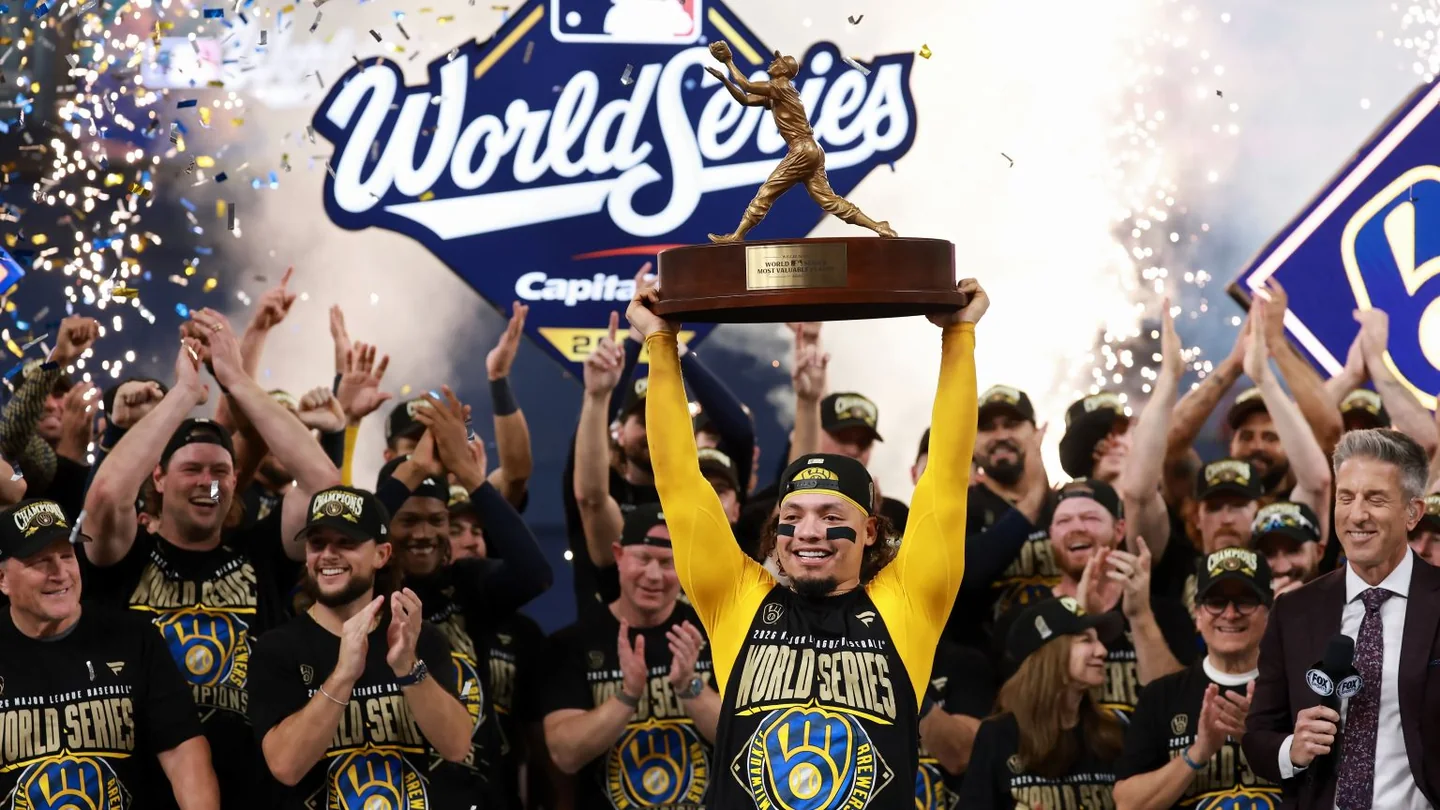
And in the first MLB season with the Automated Ball-Strike Challenge System, he got 10 of 13 World Series challenges overturned. A plate umpire still made the original ball-or-strike call. A challenge that changed that call let Milwaukee keep the challenge available. In a series with several long, close stretches, turning a ball into a strike could improve a pitcher's options on the very next pitch. That was a separate contribution from his ability to throw and from the .381 he hit.
Other Brewers produced exceptional numbers. Pratt drove in seven runs, Chourio collected eleven hits, and Misiorowski recorded two wins. Contreras's own performance included a part in every kind of duel those games required: reaching base and driving in runs, keeping fast runners from taking an extra base and using a new review system to help his pitchers. He became the first catcher since Salvador Perez in 2015 to win World Series MVP. Milwaukee's staff finished the series with a 1.91 ERA, an outcome that also took the starters, relievers and fielders executing all around him.
What the first title meant for Milwaukee and Tampa Bay
It was the Brewers' first title and Milwaukee's first since the Braves defeated the Yankees in the 1957 World Series. Those are two different milestones. The Brewers franchise began as the Seattle Pilots in 1969 and moved to Milwaukee before the following season. The 1982 team won the American League pennant and took the Cardinals to Game 7. The 2026 club won the National League pennant and gave the franchise its first championship in its second trip to the World Series.
Winning in 2026 took more than putting together a good final round. Milwaukee led the majors with 103 wins in the regular season, beat San Diego in the Division Series and swept the Dodgers in the NLCS. Tampa Bay led the American League with 98 wins, swept the Yankees in the ALDS and beat Cleveland in six games in the ALCS. It was a final between the two top seeds. Both teams had earned their position before October, and neither one had won a World Series before Game 1.
For the Rays, this was the third American League pennant and the third fall without the championship. Philadelphia won the 2008 series in five and the Dodgers won the 2020 series in six. The 2026 loss added another result to that history, but it also added the twelfth-inning rally that gave Tampa Bay its win at home. The World Series score can obscure how close Games 1 and 2 were to changing the order in which the two clubs had to take risks.
For context on earlier finals, start with the historical winners by year. To see how the finalists assembled the players who made these games so close, read the Brewers and Rays roster-building analysis. The Milwaukee Brewers schedule and Tampa Bay Rays schedule are the place to check the clubs' upcoming games.
Loading comments...