
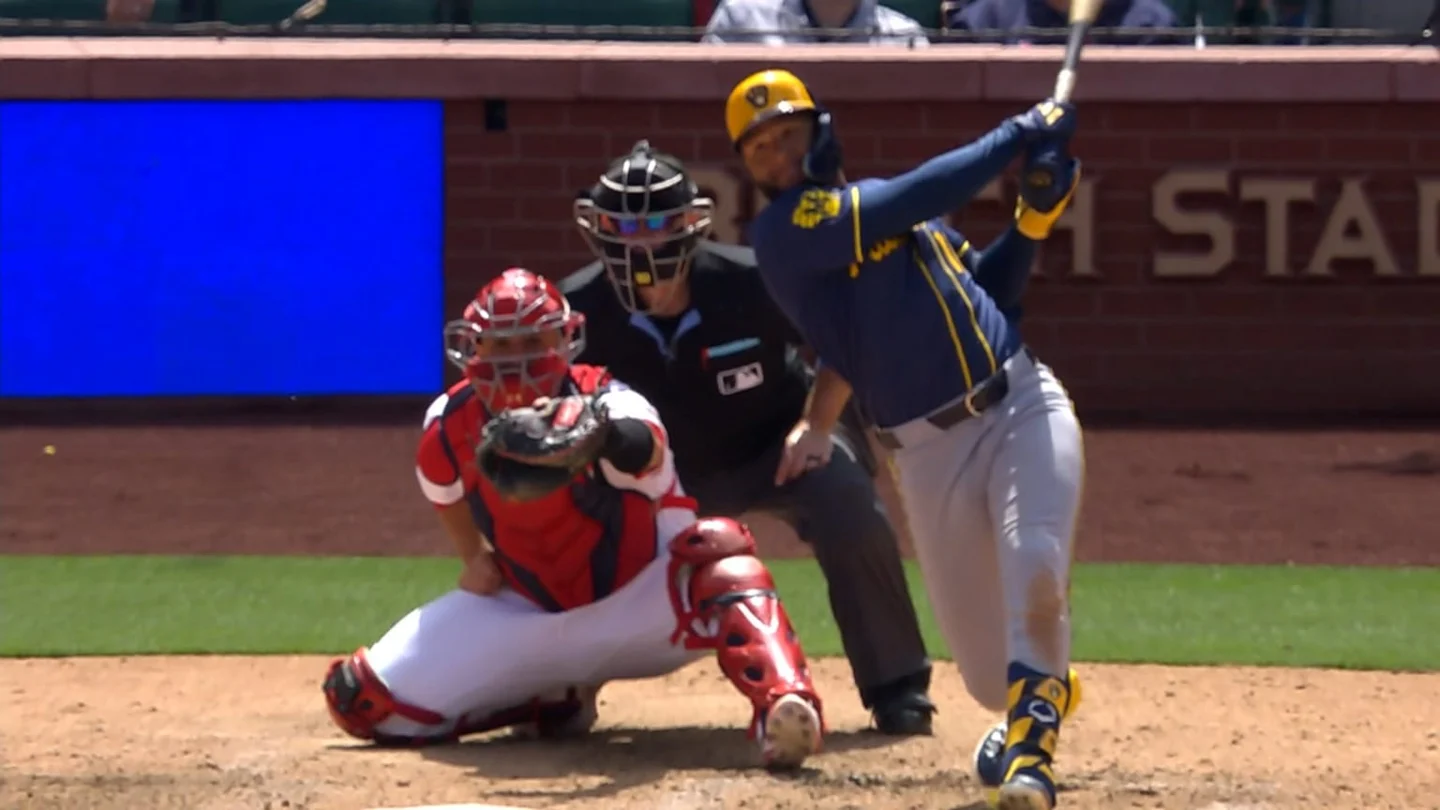
The Brewers and Rays reached the 2026 World Series through different combinations of talent acquisition. Milwaukee has a substantial foundation of players it drafted or signed internationally, complemented by important trades. Tampa Bay assembled much of its major league core through deals with other organizations. Their shared reputation for finding value should not obscure those different paths.
Two pennant winners, two different acquisition mixes
This is a look at how the teams assembled their World Series clubs, as of October 27, 2026, rather than a prediction of the championship result. The useful question is not simply which organization spent less. It is how an amateur signing became a regular, how a prospect became trade currency, or how a player who no longer fit one club supplied something another needed.
A roster-construction chart usually sorts players by the transaction that brought them into the organization: the Draft, an international signing, a trade, free agency or another route. That makes a complicated history readable, but the categories have limits. A player who arrives in a deal is a trade acquisition even if the receiving team does years of subsequent development. A veteran who re-signs also needs a consistent classification rule.
MLB Pipeline's postseason acquisition methodology keeps re-signed players in their original category. That is a useful reminder to read a table's definition before comparing totals. A projected playoff roster in September and a club's actual World Series roster in October are also different snapshots. One player changing places can alter an acquisition count without changing the organization's overall philosophy.
Acquisition is only the beginning of development
There are at least three separate questions in every success story: who first identified the player, who acquired his rights and who helped turn his skills into a major league role. Sometimes one organization does all three. Sometimes several clubs contribute along the way. Calling a player homegrown or acquired cannot settle the entire credit discussion.
That distinction also explains why a strong farm-system ranking is not the same thing as a finished October roster. Prospects can become big leaguers, remain in development or leave in trades that bring immediate help. The following examples trace those different uses of talent. For the separate question of who can be activated for a playoff round, see our postseason roster eligibility guide; being in an organization does not by itself settle every October roster decision.
Milwaukee built a foundation through the Draft and international scouting
The Brewers' internal talent pipeline supplied players with different backgrounds and different jobs. Its importance is easier to understand by following a few routes than by treating every successful prospect as the same kind of discovery. A first-round high school selection, a junior-college pitcher and an international amateur do not enter professional baseball through identical systems.
Draft picks became different kinds of big leaguers
Milwaukee selected Brice Turang with the 21st pick in 2018. That is a conventional example of a substantial amateur investment: a high pick, followed by development and a major league opportunity. His route is different from Jacob Misiorowski's. The right-hander came from Crowder College and was taken in the second round in 2022, as his official player biography records.
Aaron Ashby also came through Crowder, but Milwaukee selected him in the fourth round in 2018. Those dates matter: the pitchers share a college connection, not a single Draft class. They also illustrate why drafting pitching cannot be reduced to finding a future ninth-inning specialist or a future starter in isolation. An organization acquires ability, then works through health, command, workload and opportunity to determine how that ability can help the major league club.
For a fan evaluating the roster, the important result is variety. Different amateur classes can supply the infield, rotation and bullpen simultaneously. A farm system contributes to winning when those players become useful in the roles the club actually needs, not merely when their prospect rankings look impressive.
Chourio and Uribe show the range of international investment
Jackson Chourio joined Milwaukee's international class in 2021 for a reported $1.8 million bonus. His signing is a reminder that homegrown does not mean drafted in the United States. International scouting is a separate route into the same player-development system, and its successful graduates deserve a place in any explanation of the Brewers' core.
Abner Uribe supplies a different scale of investment. MLB's prospect-find report records his $85,000 signing in 2018. The contrast with Chourio shows how widely the initial price of amateur talent can vary. It does not establish that the smaller bonus represented an identical risk or that teams could reproduce the result by simply signing more inexpensive players.
A signing bonus is also not a player's current salary or the full cost of preparing him for the majors. Coaching, facilities, medical work and years of roster decisions sit between the original commitment and a World Series appearance. These examples show why scouting and development belong together when assigning credit.
The Brewers used trades to complete the major league puzzle
Milwaukee's homegrown foundation did not eliminate the need for outside help. William Contreras arrived from Atlanta in the December 2022 three-team deal involving Oakland. Joey Ortiz and DL Hall came from Baltimore in the Corbin Burnes trade in February 2024. Robert Gasser was part of the return when Josh Hader went to San Diego in August 2022. The present club combines those acquisitions with players who entered as amateurs.
The Contreras transaction is particularly useful for understanding how a roster grows through several linked decisions. Milwaukee sent Esteury Ruiz to Oakland in the three-team arrangement. Ruiz had himself arrived in the Hader deal. An asset acquired in one transaction therefore helped the Brewers make another move, rather than necessarily becoming a long-term player in Milwaukee.
That does not make Contreras a direct one-for-one return for Hader. The two deals had different participants, other players and their own circumstances. Keeping those steps separate prevents a simplified trade tree from obscuring what was actually exchanged. It also shows why assessing an acquisition only by the immediate major league innings or plate appearances of its first return can miss a later use.
The Burnes transaction involved a different balance. Milwaukee exchanged an established frontline pitcher for Ortiz, Hall and a Draft pick. The Orioles' announcement supplies the actual package. From a roster-building perspective, the deal converted one major league asset into several potential sources of future help. It also removed an excellent pitcher from Milwaukee's rotation. Both sides of that cost belong in the explanation.
Gasser's path makes another distinction visible: a trade for a prospect still leaves development work to do. Getting a young pitcher is not the same as receiving a finished World Series starter on the day of the transaction. Health, progression and the opportunity to earn a role intervene. The Brewers' approach relies on those later steps as much as on the original evaluation.
These examples explain the mix more accurately than describing the team as either entirely homegrown or entirely assembled by bargains. Milwaukee used its own player development, other organizations' talent and existing major league trade value. Its successful roster required those pieces to fit together.
Tampa Bay found much of its core in other organizations
The Rays' trade-heavy roster contains more than one kind of acquisition. Some deals target young players years from their eventual ceiling. Others exchange established major leaguers to address different needs. A deadline move can bring immediate experience without resembling the long development bet that produced a younger star. Three examples show that range.
Caminero was a scouting bet before he was a headline
Tampa Bay acquired Junior Caminero from Cleveland in November 2021 for Tobias Myers. The Rays' transaction record establishes the exchange. Caminero was not a finished major league slugger at that point. The appeal of the acquisition depended on projecting what a young hitter could become and then helping him get there.
This is where a trade-acquisition label can hide the receiving club's development contribution. Tampa Bay did not originally sign Caminero, but it acquired him before his major league career and provided a route through its own system. The eventual value reflects both the original identification and what happened afterward. An inexpensive-looking exchange is only the beginning of the story if the player still needs years of progress.
Rasmussen links the two World Series clubs
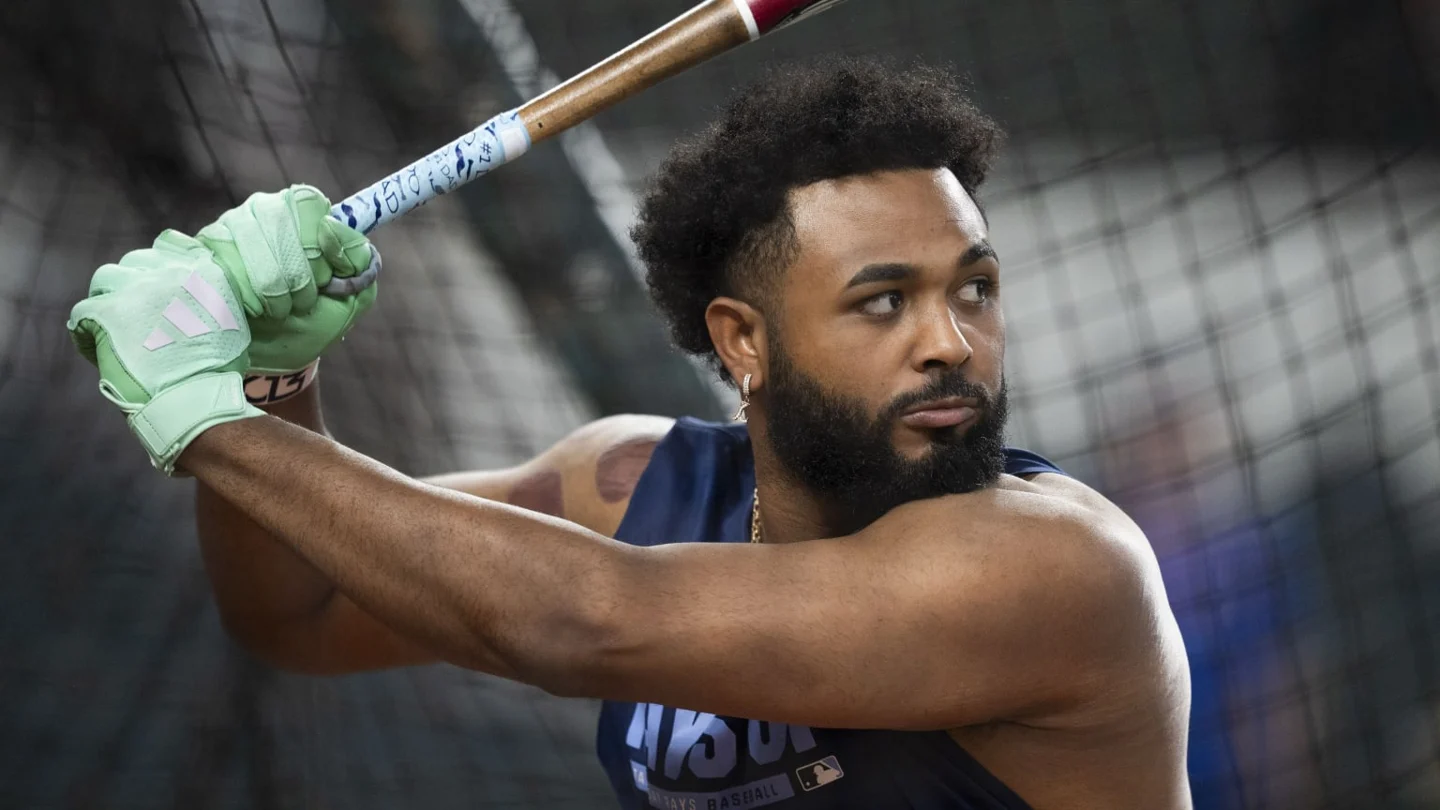
The May 2021 trade sent Drew Rasmussen and J.P. Feyereisen from Milwaukee to Tampa Bay, with Willy Adames and Trevor Richards moving the other way. Unlike a simple purchase of a missing piece, that exchange required both teams to give up players they valued. Their roster needs and their view of the available talent made the same transaction workable from different directions.
Rasmussen's later importance to Tampa Bay does not mean Milwaukee entered the deal expecting to supply a future World Series opponent. Nor should the current matchup erase what Adames contributed during his Milwaukee tenure. A fair explanation separates the circumstances of a decision from the much later scene in which fans encounter its consequences. Trades are made with uncertainty, and a useful evaluation includes both what was surrendered and what was received.
Peralta illustrates the difference between a pathway and a plan
Freddy Peralta provides a more recent connection. After his long Milwaukee tenure and a move to the Mets, he joined Tampa Bay in the August 2, 2026 transaction for Emilien Pitre, Aidan Smith and Gary Gill Hill. That was a Mets-Rays deal, not a direct exchange between the World Series opponents.
The Rays used prospect depth to obtain an established starter for their present push. That is a different use of a farm system from promoting every promising player into your own lineup. It also carries an opportunity cost: the prospects are no longer available for Tampa Bay's future roster. The route demonstrates flexibility, not proof that every traded prospect was expendable or that every experienced acquisition will work. Those judgments require more than the fact that a club reached October.
Free agency and the Rule 5 Draft supplied narrower pieces
Neither organization's story is an argument for refusing to sign free agents. Nick Martinez joined the Rays on a one-year agreement in February 2026. Gary Sanchez returned to Milwaukee that month to back up Contreras. Those moves addressed specific jobs rather than trying to acquire an entire lineup and rotation through the open market.
The Martinez signing report described pitching depth and flexibility as reasons for the addition. That is a useful way to evaluate veteran acquisitions: identify the expected job before judging the size of the headline. A team may need dependable innings, a second catcher or a bench option even when it already has its principal stars. Different needs call for different commitments.
Kevin Kelly arrived through another channel. Colorado selected him from Cleveland in the Major League phase of the 2022 Rule 5 Draft, then traded him to Tampa Bay for cash. The Rays did not originally draft him as an amateur or make the Rule 5 selection themselves. Preserving those steps matters when comparing how organizations find talent.
The Rule 5 mechanism involves initial major league roster requirements, so keeping a selected player requires more than identifying an interesting pitch or delivery. A team needs a viable place for him while meeting the applicable conditions. Those initial restrictions should not be described as a permanent status following a player throughout his career.
For roster construction, the broader lesson is about fitting complementary pieces. A veteran free agent, a Rule 5 arrival and a prospect acquired in a trade can all solve different problems. None of those routes guarantees success on its own. The club must provide opportunities, tolerate some uncertainty and decide which alternatives it can afford to keep. A useful final roster is the product of those choices working together, rather than a competition to use one acquisition category more purely than everybody else.
What this matchup tells you about scouting and payroll
The shared feature is not one rigid transaction formula. Milwaukee and Tampa Bay both need to recognize talent, make choices about it and turn those choices into major league roles. Their different acquisition mixes show why a club's reputation can be less informative than the actual pathways of the players on the field.
Scouting and analytics work on the same problem
MLB's reporting on the clubs' scouting investment highlighted their continued use of in-person evaluation alongside analytical work. Their official personnel directories also list scouting, research and development functions. Treating those activities as mutually exclusive misses how a modern organization can assemble information.
The relevant question is what each observation helps a team decide. A performance record can establish what a player has done. A scouting assessment can help interpret a skill, a role or the possibility of improvement. Coaching then has to translate an idea into useful preparation. No single one of those steps guarantees the next. These teams' results provide examples to examine, not a controlled experiment proving that adding a particular number of scouts automatically produces a pennant.
Compare costs with a definition and a date
Payroll comparisons need the same care as acquisition categories. Opening Day payroll, money actually paid during a season and competitive balance tax accounting are different measures. A guaranteed contract total can also include future obligations or an option buyout; it is not necessarily the player's salary for the current year. Our MLB salaries explainer separates those figures.
The same caution applies to wins above replacement. Baseball-Reference and FanGraphs use different versions of WAR, and the group being counted matters. A September projected roster, an October active roster and everyone who appeared for a team over a season will not necessarily produce the same sum. Putting values from those groups in one table can create a precise-looking comparison that answers no consistent question.
There is no need to force such a ranking to understand this matchup. Follow Chourio's international signing, Misiorowski's Draft route, Contreras's three-team deal, Caminero's prospect acquisition and Peralta's deadline move. Each reveals a concrete way to build a club, together with the development work or opportunity cost that followed.
When watching the next game, use the current MLB matchup listing for game information and the 2026 postseason guide for the series context. Then look beyond the acquisition label: what role does each player fill, what did the team give up to get him, and what changed after he arrived? Those questions make the Brewers-Rays roster story more useful than a claim that one payroll level or one transaction method explains winning baseball.
Loading comments...