
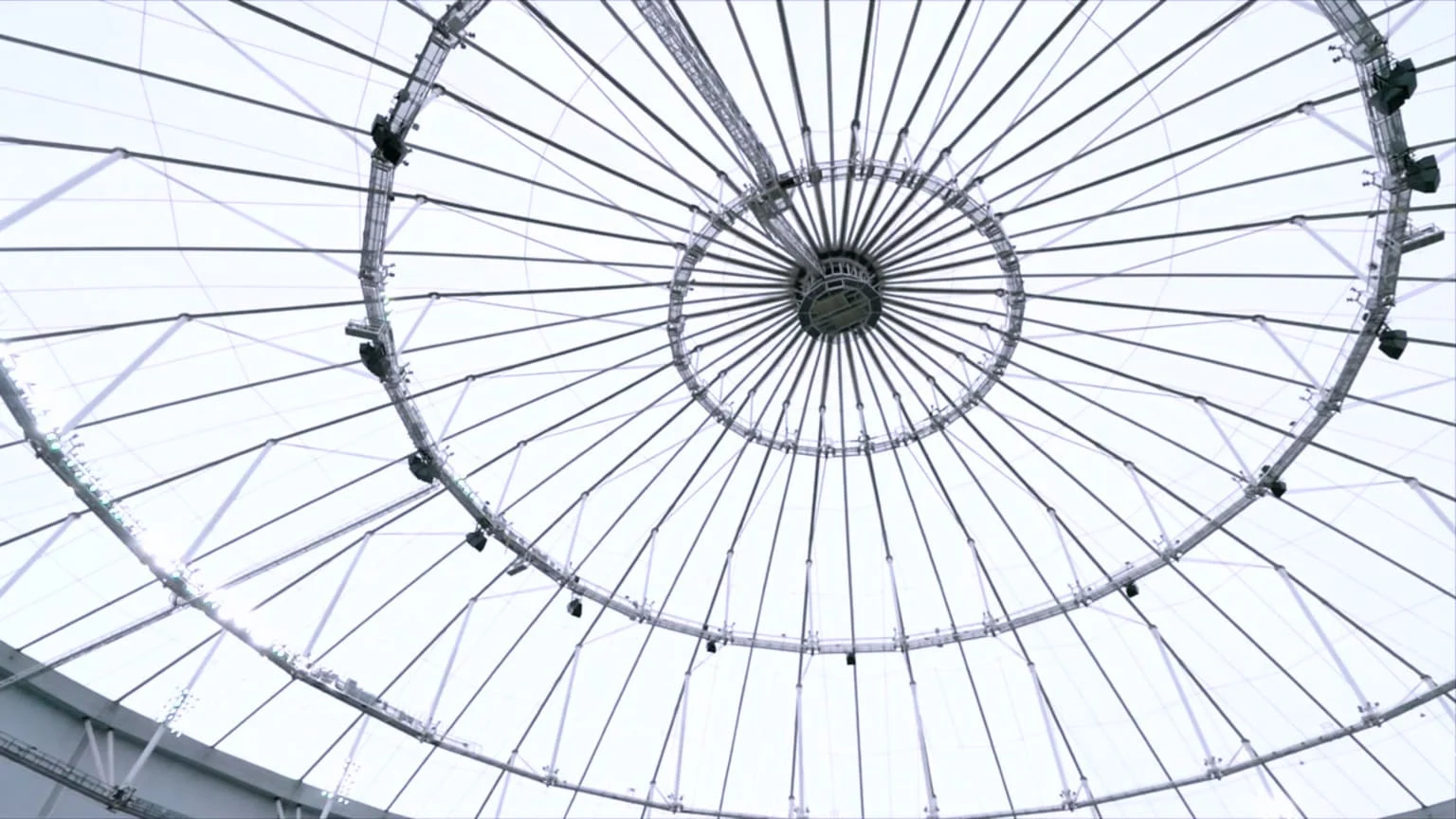
What happens when a ball hits Tropicana Field's catwalks?
At Tropicana Field, a batted ball hitting an overhead structure is not automatically a home run, a foul ball or a ground-rule double. The result depends on which structure it hits, whether that contact is over fair or foul territory and whether the ball comes back into play. Those details explain why two apparently similar high fly balls can produce very different calls.
The Rays' published ground rules distinguish four catwalk rings. The lower pair, C and D, have a home-run provision for fair-territory contact. The upper pair, A and B, can leave the ball live. A ball remaining on a structure and a ball contacting one over foul territory require different treatment again.
| Situation | Basic ruling | What to watch next |
|---|---|---|
| Fair-territory contact with designated C or D ring structures | Home run | The designated structure matters, even if the ball rebounds downward |
| Fair-territory contact with designated A or B ring structures | Ball remains in play | A fielder may still catch it for an out |
| Non-home-run ball remains on a catwalk or covered suspended object | Two-base award | This is different from a ball that returns to playable space |
| Catwalk or covered overhead-object contact over foul territory | Dead ball | A subsequent apparent catch does not revive the play |
This is a quick orientation, not permission to ignore the exact object involved. The club's list includes specified lights, supports and suspended objects as well as the walkways themselves. A television replay may show the ball dropping without clearly identifying what it struck, so the first useful question is the location of the contact.
The issue has particular relevance to the Brewers-Rays World Series, but the rule is attached to the ballpark rather than invented for the matchup. This guide reflects the published rules checked on October 27, 2026. For the series structure and game sequence, use our 2026 postseason schedule and bracket guide; a roof-rule explanation should not be mistaken for a live scoreboard.
The A, B, C and D rings do not have the same rule
The rings are labeled from A through D, with D the lowest. Their different locations create different playing conditions. Remembering the letters is useful, but a good replay also needs to establish whether the point of contact was above fair or foul territory. The letters and the territory work together.
Fair balls hitting the lower C and D rings
A fair-territory collision with the designated lower-ring structures produces a home run. The published rule extends beyond the walking surface to specified attached lights and suspended objects, along with the described supports connecting the C-ring and the masts supporting the D-ring. A viewer should therefore avoid deciding the call merely because the ball appeared to strike a rod rather than the walkway.
Consider a hypothetical deep fly that hits a covered C-ring structure over fair territory and rebounds toward an outfielder. Under this provision, catching that rebound does not turn the home run into a routine flyout. The decisive event was the qualifying lower-ring contact. The fielder's later action cannot change which ground-rule category the ball entered.
This also explains why projecting the ball's unobstructed destination is not the central task. Fans may debate whether it would have cleared the wall, but the published rule identifies a specified contact rather than requiring a new estimate of the entire flight. Establishing the actual collision is more useful than drawing a speculative trajectory on the broadcast image.
Upper A and B ring contact can leave the ball in play
The upper-ring rule is different. A fair ball contacting a covered A- or B-ring structure can remain live, giving fielders a chance to play the descending ball. The list includes the masts supporting those catwalks and specified rods between the B-ring and the C-ring support masts. The exact description matters more than a generic statement that the ball hit metal.
For a hypothetical A-ring popup that drops back into playable space, the defense must continue following the ball. A legal catch can retire the batter. If the defense fails to catch a playable ball, the mere fact that it hit an upper structure does not automatically entitle the batter to stop at second base. Live-ball play and a prescribed dead-ball award are separate outcomes.
Foul-territory contact and balls that become lodged
A batted ball contacting a covered overhead object over foul territory is dead. The fair-territory rules should not be carried across the foul line simply because the same ring extends around the building. After dead-ball contact, a fielder's apparent catch is not a way to resume the original play.
A non-home-run ball that remains on a catwalk, light or suspended object receives a two-base award. The qualification matters: a ball already ruled a home run under the lower-ring provision does not become a double because it stays there. First identify whether the home-run provision applies; then ask whether the remaining ball returned to play or became inaccessible on the structure.
How fielders, runners and viewers should follow a roof play
The unusual bounce can make everyone pause, but a playable ball still demands ordinary baseball decisions. Fielders must locate it, runners must assess whether it can be caught and viewers must follow the umpire's signal. A surprising sound or a momentary loss of the ball in a television shot does not itself establish that play stopped.
A rebound can still become an out
The 2026 ALDS supplied a clear example. In Game 2 on October 5, Spencer Jones' high fly struck the B-ring and Victor Mesa Jr. caught it. MLB's account of the play explains why Jones was retired: the applicable upper-ring rule kept the ball in play. The structural contact did not count as the ball landing on the playing surface.
That example is useful because it separates how strange a play looks from what the rule requires. The descending ball was difficult to track, but a successful catch remained possible. A player who assumes every catwalk collision is dead risks failing to finish a live play.
Runners also need to respect the possibility of a catch. An overhead collision is not the fielder's first touch for tagging-up purposes. If a playable fly is caught, normal return-and-retouch obligations still matter. In a hypothetical play with a runner at third, the runner should not treat the ball striking a B-ring support as permission to leave as though an outfielder had touched it.
Why a roof contact is not automatically a two-base award
The two-base provision is attached to a particular outcome: a non-home-run ball remains on the specified overhead structure. It is not compensation for every unexpected deflection. A ball that returns to the defense can remain live, so the eventual result may depend on catching, retrieving and throwing it.
Consider two hypothetical B-ring contacts. In the first, the ball drops back and is caught; the batter is out. In the second, it remains on the structure and cannot continue through an ordinary play; the ground-rule award applies. Describing both only as balls that hit the roof hides the fact that determines the different results.
Do not confuse this with other rules that change the running situation. For example, our postseason extra-innings runner guide addresses how an inning begins, not what an overhead collision does. On a roof play, first establish the ball's status, then work through the running consequences. That sequence is more reliable than starting with the base a fan thinks a runner deserves.
American Family Field uses different roof rules
Milwaukee's ballpark does not simply copy the Tropicana Field ring categories. Its published roof rules address the roof, roof trusses and roof cables. Contact over fair territory leaves a ball in play, including the possibility of a catch. Contact over foul territory makes it dead. Those location-based provisions are essential when comparing a Milwaukee replay with a Tampa Bay replay.
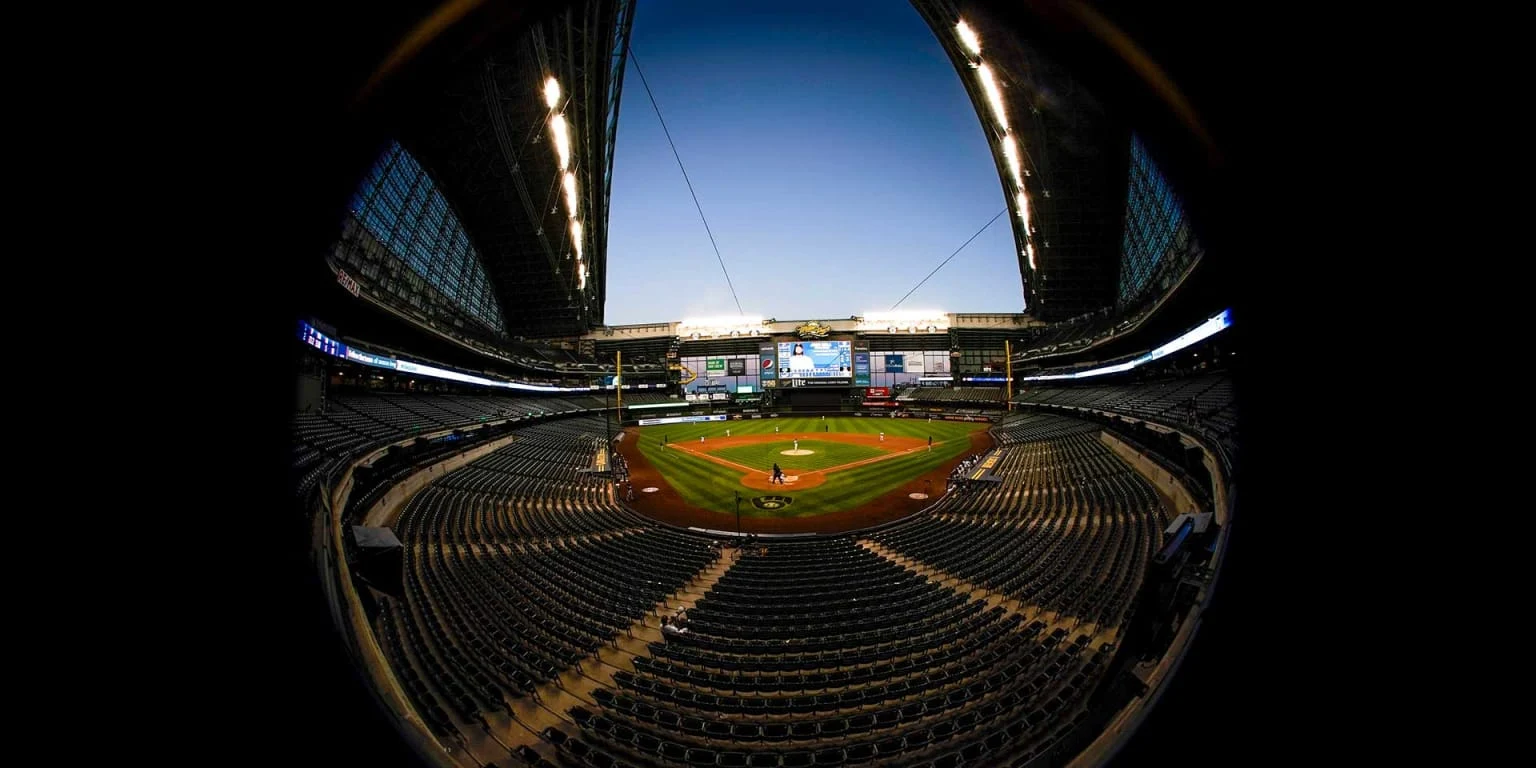
The 2026 NLDS supplied the relevant Milwaukee example. Ty France hit a high ball that struck overhead structure and came down to Jackson Chourio for the second out of the ninth inning in Game 1 against San Diego. The outcome depended on contact over fair territory and the completed catch. A prediction about where the unimpeded ball might have landed was a different question.
MLB's World Series roof feature reproduced additional media-guide language about the eventual landing of an uncaught ball. After fair-territory contact with the specified roof structure, a ball landing foul is foul, while one landing fair is fair. That detail reinforces the need to follow the entire play rather than using the phrase roof ball as a complete ruling.
The useful comparison is therefore specific. At Tropicana Field, qualifying fair contact with the lower rings triggers the home-run provision. In Milwaukee, a qualifying fair roof collision can still be followed by a valid catch. Neither result is evidence that the same physical object is being treated inconsistently: the ballparks have different designated structures and published ground rules.
Fans asking whether an umpire can reconsider a boundary decision also need to separate the playing rule from the review procedure. Our MLB replay review guide explains why the category of a disputed call matters. A replay helps establish what happened; it does not erase the park's rule or create one uniform outcome for every ball that touches a roof.
Who decides whether the roof is open in the World Series?
A rule about a ball striking a roof is different from a rule about operating that roof. The first decides the status of a play. The second determines the conditions under which a game is staged. Keeping those questions separate prevents a common mistake: assuming that an unusual bounce gives the home team unrestricted authority to change the roof during a postseason game.
Regular-season decisions and postseason authority
MLB's published World Series explanation says the home club determines the starting roof position in the regular season. During the postseason, the Commissioner or a designated official makes roof-movement decisions in consultation with the home club and the umpire crew chief. The club's role in that consultation is not the same as unilateral control.
The Brewers' roof-operation explanation also shows why weather discussions can be more complicated than checking for rain. Wind, changing conditions, machinery limits and the comfort of people inside can all inform the operating decision. A pleasant temperature forecast is not, by itself, an instruction that the World Series roof must be open.
Regular-season procedures also address movement after play begins. Readers should be careful when sharing one of those provisions as though it alone settles a postseason disagreement. The explicit postseason authority described by MLB is the relevant starting point for a World Series question.
Why roof status does not rewrite the ground rules
Tropicana Field has a fixed dome, so there is no comparable choice to open it for a game. Milwaukee's roof is retractable. That difference affects what the ball could encounter overhead, but the published playing rules still govern any actual contact. A roof decision does not turn a Milwaukee cable into a Tropicana Field C-ring.
The possibility of a series played entirely indoors attracted attention in 2026. It should remain a conditional description until every game needed to complete that series has been played under the relevant conditions. Two indoor ballparks do not automatically establish that every game in a series had a closed roof.
For a visit to Milwaukee, check the club's current roof information rather than an old photograph. MLB lists the roof-status hotline as (414) 902-4636. For understanding why a game would be in one city or the other, our MLB playoff format guide explains the series structure; the roof-status update answers a separate, game-specific question.
A practical checklist for the next unusual ball in the air
An unfamiliar ballpark can make a routine-looking popup difficult to interpret. You do not need to memorize every support rod to ask better questions. Begin with the park's published rule and follow the ball in the order the relevant events occurred. This keeps an argument about the physical play separate from an argument about what rule should exist.
What to establish before arguing about the call
- Identify the park. A Milwaukee roof rebound and a Tropicana Field catwalk collision can be governed differently.
- Identify the structure. In St. Petersburg, establish the ring or the specific covered attachment rather than assuming every overhead beam has the same rule.
- Locate the contact. Determine whether it occurred over fair or foul territory. A later camera angle showing the landing point may not answer that earlier question.
- Check what happened afterward. Did the ball return to playable space, remain on the structure or enter a home-run category at contact?
- Follow the fielders and runners. A live ball can still produce a catch, a throw or a running mistake. Wait for the completed action and the umpire's signal.
- Listen to the review explanation. If video review occurs, identify the specific issue being reviewed instead of assuming every aspect of the play was challenged.
A broadcast angle can be useful without being conclusive. A close view may identify the ball's contact with steel while a wider angle better establishes its position relative to the foul line. Neither crowd reaction nor a projected home-run distance substitutes for those observations.
The MLB ground-rule reference combines universal provisions with links to individual parks. That is the right resource when a different stadium creates a new question. Look up the actual feature involved, read any park-specific exception and then apply the rule to the observed play. The result becomes easier to understand when the building, the ball's status and the subsequent action are examined in that order.
Loading comments...