
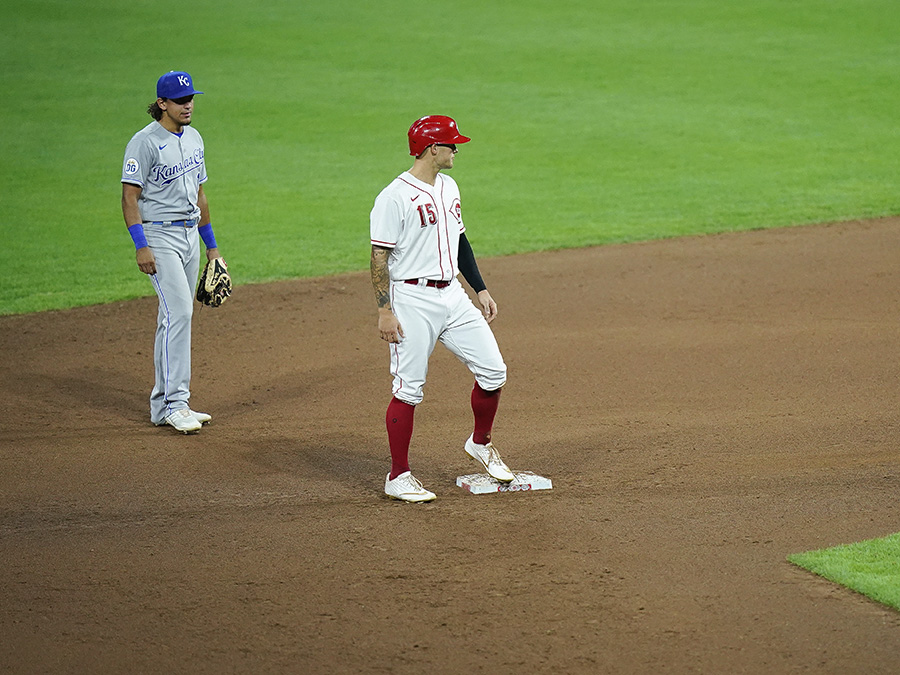
No: MLB playoff extra innings do not start with a ghost runner on second base. Tied postseason games continue with empty bases at the start of each half-inning. That includes the Wild Card Series, Division Series, League Championship Series and World Series.
If you watched the regular season and expected a runner to appear in the tenth, the October score graphic can look surprising. Here is how to follow the next inning, understand the different decisions facing each dugout and keep a long playoff night straight. Rules reviewed October 10, 2026.
There is no ghost runner in the MLB playoffs
The important distinction is the competition, rather than the inning number or the stakes of a particular matchup. MLB uses an automatic runner during regular-season extra innings. Its postseason exception removes that starting runner from every October round. You can check the exclusion in Rule 7.02(g) of the 2026 Official Baseball Rules.
| Game you are watching | Start of an extra half-inning | What to look for |
|---|---|---|
| MLB regular season | Automatic runner on second | An occupied second-base icon before the first pitch |
| Any MLB postseason round | Empty bases | The offense must build its rally |
This also answers the common World Series question: the championship round does not introduce a separate second-base starter. The same distinction follows a team through the MLB playoff format, so there is no switch to memorize when a club moves from its Division Series to the next round.
Fans often call the regular-season player a ghost runner. The actual player is visible on the field; the nickname describes being placed there without first reaching base during that half-inning. If a broadcast uses the official term, automatic runner, it is discussing that same starting placement. An October announcer mentioning a runner in scoring position may simply be describing a player who reached second during the rally.
Before assuming the broadcast graphic has made a mistake, notice when you joined the action. Empty bases before the first pitch and an occupied base after a double are perfectly compatible. The useful question is how the runner got there, not whether the game has gone past nine innings.
There is another name trap for viewers: MLB Extra Innings can refer to a television subscription product. A package name on your bill does not identify the rules of the game. Use the game's regular-season or postseason label when checking this rule; use its broadcaster listing when checking your viewing access.
How a tied playoff game continues after nine innings
Think of the tenth as another inning of the same game. The running score stays on the board; neither team receives a new starting total. A 3-3 tie does not become a separate one-inning contest, and it does not award a series win to whichever club puts a run up first.
Keep three things in view on the score graphic: the inning, which half is being played and the number of outs. The inning number tells you how far the game has gone. The score tells you what the club batting now needs. The out display tells you how much of that opportunity remains.
The visiting team bats first with the bases empty
The visitors hit in the top half, beginning without a placed runner. Three outs retire the side. Imagine a fictional playoff game tied 3-3 after nine: if the visiting club scores once in the top of the tenth, it has a 4-3 lead when the teams change sides. That lead is important, but it is not yet a final score.
For the viewer, this is a useful moment to avoid leaving the stream too early. A visiting home run can feel decisive, especially when the crowd goes quiet, but the game still has its home half. Conversely, a scoreless top half does not mean the teams must automatically play an eleventh; the home club's next rally may finish the night.
Notice the difference between Game 5 and inning 10 on a postseason display. The first identifies the game within its series. The second describes the current game. Extra innings add play to that game; they do not create extra games in a best-of-five series.
The home team gets its chance to answer
In that fictional 4-3 situation, one run by the home team ties the game 4-4; a second run gives the home side a winning 5-4 lead. A home team taking the lead in an extra inning produces a walk-off. It does not have to keep batting merely to record three outs.
If the home club finishes its half without catching the visitors, the visitors win. If the teams finish the inning tied, the next inning begins. Neither side carries baserunners from the previous half into the next one. For example, a stranded runner on third in the tenth does not start the eleventh on third.
When following an update feed, wait for the final status before treating a lead as a result. A push notification saying a team has gone ahead may describe a live rally, while the final notification confirms the game has ended. This matters most when you are watching highlights or checking scores between other commitments.
What the automatic runner does in the regular season
During regular-season extra innings, each half starts with no outs and a runner on second. That opening picture gives the next batter a very different situation from the empty-base start in October. Both clubs receive the placement when their respective half begins; it is not a benefit reserved for the home team.
Compare two fictional scoreboards showing a 2-2 tie in the tenth. In a regular-season game, you would expect the second-base indicator to be lit before the first batter faces a pitch. In a playoff game, the first batter begins without that head start. The score can be identical while the immediate task for the offense differs.
Who starts on second base
The automatic runner normally comes from the lineup position immediately before the inning's leadoff hitter, or that player's substitute. It is not simply whoever the manager considers the fastest player in uniform.
For a simple lineup example, imagine the No. 8 hitter is due up. Look at the No. 7 position to understand the starting runner. Then keep following the batting order from No. 8. The runner's placement does not mean the manager gets to choose a new leadoff hitter from anywhere in the order.
This is useful when a television graphic shows a player on second before you have seen a hit or walk. You have not necessarily missed an offensive play. Check whether the game is a regular-season extra inning before rewinding the stream to look for a double that never happened.
Why a pinch-runner is a different decision
A pinch-runner replaces another player as a substitution. In a postseason game, that can happen after a hitter reaches base; it does not grant the club an automatic runner at the start. Seeing a new player jog out to second during an October rally therefore does not indicate that MLB has changed the extra-inning rule.
The replacement also has a cost: the removed player cannot return to that game. When following the move, ask which lineup position now belongs to the substitute, rather than thinking of the new runner as a temporary helper who disappears after the scoring chance.
For example, if a fictional cleanup hitter doubles and the manager sends in a substitute to run, you can track two questions at once: can the new runner help score the immediate run, and who will bat when that lineup position comes around again? The answer may affect how you assess the move in a game that remains tied.
A faster runner could be useful in one situation while preserving a particular hitter could matter in another. The rules define who is eligible and what a substitution changes; they do not prescribe a single correct manager decision for every late inning.
How empty bases change extra-inning decisions
The starting situation changes which decisions are available immediately. With nobody on, there is no existing runner for a batter to move closer to home. The offense first needs someone to reach. That is why a playoff tenth inning can initially resemble an earlier inning more than the regular-season tenth you remember.
Once a runner reaches, reassess the situation rather than applying one October strategy to everything. A leadoff walk puts a player on first. A leadoff double puts one on second. Those two rallies started with the same empty bases but now present different choices. The absence of the automatic runner does not prevent an offense from creating a runner in scoring position through play.
A sacrifice bunt trades the batter's out for a runner's advance. Whether that trade looks attractive depends on the current score, outs, hitters and runner. Without someone already on base, the familiar idea of bunting the second-base starter to third simply does not describe the opening situation.
The two dugouts may also be pursuing different immediate needs. In a hypothetical tied bottom half, scoring one run can finish the game. If the visitors have already scored twice, the home offense is chasing a different target. From the visiting dugout, adding to a narrow lead may be valuable because the home club still has its response. These are consequences of the scoreboard, not a rule requiring a certain number of runs.
Three questions make the tactics easier to follow:
- How many runs are needed right now? Distinguish tying the game from winning it.
- What would giving up an out buy? Watch the runner's location and the hitter who would follow.
- What would a substitution change later? A move for the present rally may also change the next trip through the lineup.
Those checks let you evaluate an announced bunt or pinch-runner without treating it as automatically correct or automatically timid. They also help explain why the same manager might make a different choice after a double than after a walk. Watch the actual state of the rally before comparing it with a regular-season game that began with a runner already on second.
How long can a postseason game last
There is no preset twelfth-, fifteenth- or eighteenth-inning finish that automatically settles an MLB playoff tie. Ordinary play continues toward a winner. An unusually high inning number on your screen does not trigger a switch to automatic runners.
That is different from saying the game can never be interrupted. Weather or another interruption can affect play, and postseason suspension decisions are a separate matter from extra-inning starting bases. If the live status changes to delayed or suspended, read the game's official update rather than applying a made-up inning cutoff to decide who has won.
For your own evening, treat a listed first-pitch time as a start, not a guaranteed finish. A live scoreboard in today's MLB games can help you keep track if you need to step away. Check the inning and status together: a tenth-inning lead and a final tenth-inning result are different updates.
An 18-inning World Series example
Game 3 of the 2025 World Series provides a real example. The Dodgers beat the Blue Jays 6-5 at Dodger Stadium in a game officially dated October 27, 2025. Freddie Freeman hit the winning solo home run in the bottom of the eighteenth. The official MLB Gameday page lets you revisit the box score; MLB also offers video of the winning homer.
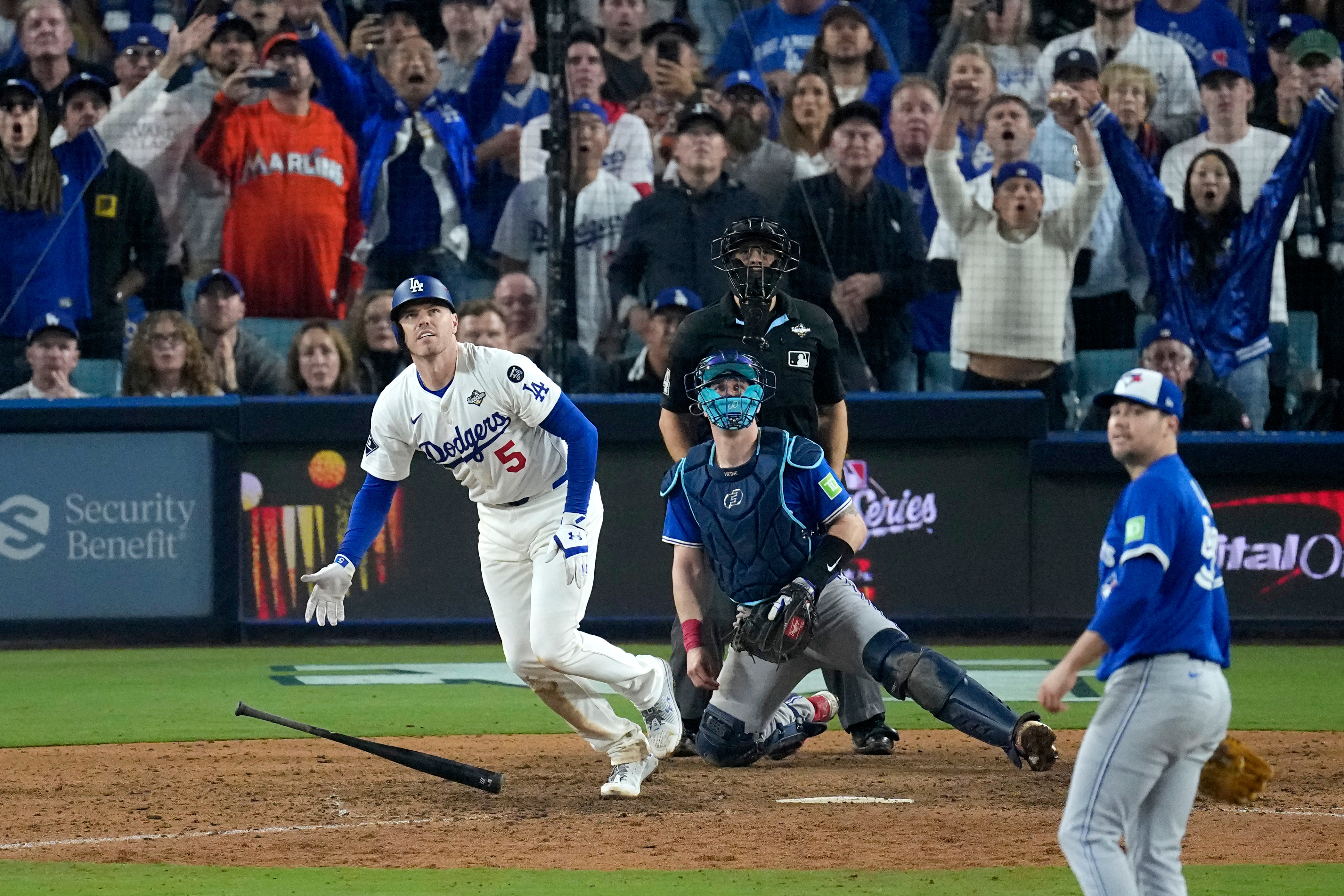
Do not confuse that play with Freeman's 2024 World Series grand slam. The 2025 game ended on a solo homer: the final official play records one RBI. This distinction matters when a search result combines photos, past highlights or headlines from different years.
For someone learning the rule, the example shows why an empty-base playoff format can keep producing another tied inning. It does not mean every October extra-inning game will last nearly as long. One rally can end the next home half, while a series of scoreless halves keeps the game alive.
If you missed the finish, use the correct year, series and game number when finding the replay. Our MLB full-game replay guide explains where to check available archives. A short winning-play clip answers how the game ended; a full replay lets you see how the teams reached that situation.
Other rules still matter in extra innings
Removing the starting runner does not remove the pitch timer. MLB's postseason extra-inning explanation distinguishes those two issues. A tied October game continues under the clock; its extra inning is not an unlimited pause between pitches.
For fans, the practical difference is between the game's total length and the pace of an individual plate appearance. A contest can keep adding innings while pitchers and hitters still have timing obligations within each one. An eighteenth inning therefore is not evidence that the timer has been switched off.
The 2026 ABS Challenge System is another separate issue. It concerns challenging ball-strike calls, rather than placing a player on base. MLB's official ABS announcement provides a challenge to a team entering an extra inning with none remaining. That adjustment does not create an automatic runner.
If a broadcast displays a challenge counter, keep it separate from the base indicators. A successful or unsuccessful challenge addresses the pitch call. A lit second-base icon describes where a runner is. They can both matter in a close rally, but they answer different questions.
The bench also remains worth watching. Extra innings do not restore hitters who were previously replaced. When you hear a commentator discussing who is available, remember the substitutions already made rather than assuming the club can use its original lineup again simply because regulation innings have ended.
A quick check can settle most confusion during a late game: confirm that it is a postseason matchup, read the top or bottom inning label, notice whether a runner was there before play or reached during the rally, and check whether the displayed result is live or final. Those observations explain the situation more reliably than the nickname ghost runner alone.
For the next inning, start with the actual score and bases shown on the field. October extra innings begin without the regular-season runner; everything that happens after the first pitch is the rally you are watching unfold.
Loading comments...