
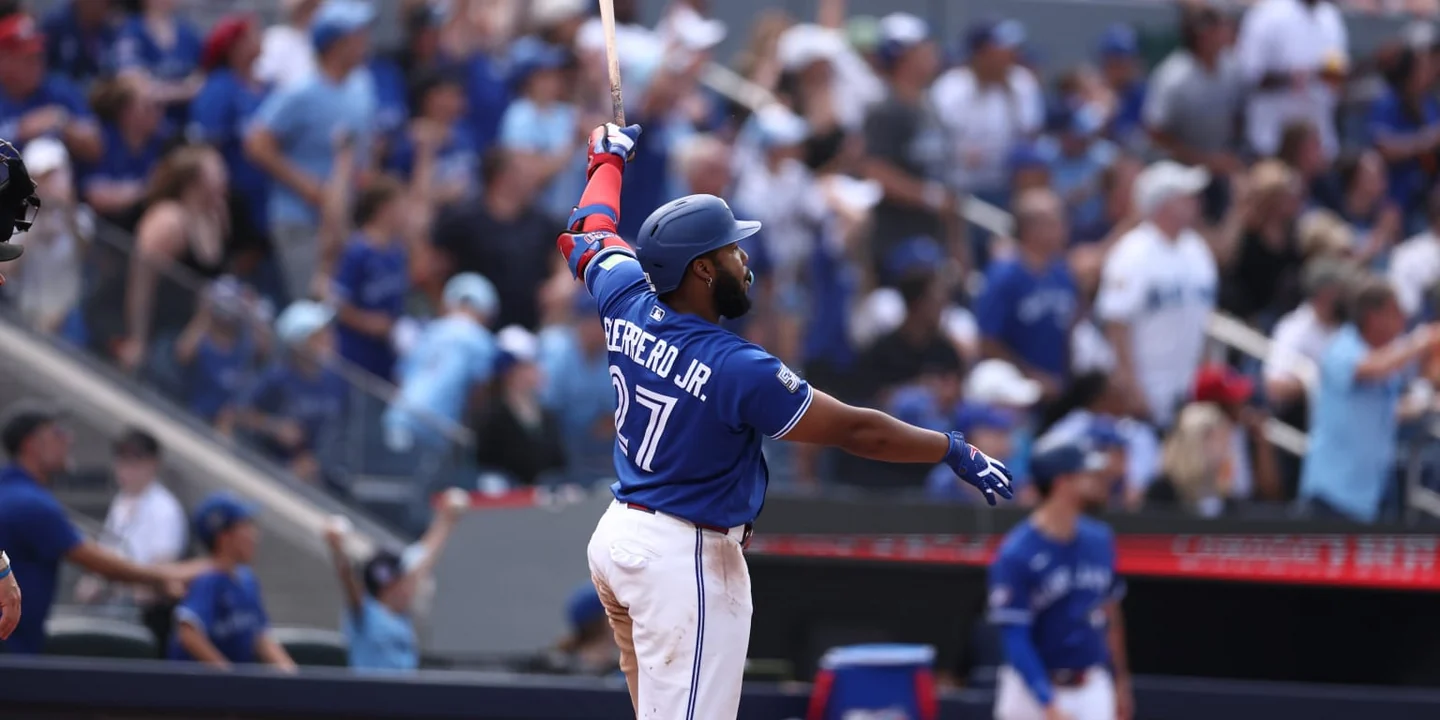
As of November 27, 2026: The Toronto Blue Jays sent right-hander Chase Lee to Colorado for cash, claimed infielder Christian Cairo and protected three prospects on the 40-man roster. The biggest item in the news is a reported agreement with Japanese right-hander Kaima Taira, separate from the completed moves on Toronto’s transaction log.
The next question is what each move does for the 2027 team. A waiver claim can give Toronto another infielder to compete for a job. A minor league signing can help an affiliate cover a full season. A starting pitcher signed to a major league contract can change how the manager builds an entire staff. This tracker groups the moves by the decisions they create.
What the Blue Jays have already made official
Toronto’s confirmed winter moves have mostly been about who occupies a roster spot. The club added three prospects on November 17, then effectively traded a bullpen depth slot for infield depth when it claimed Cairo and designated Lee two days later. The trade that followed made Lee a Rockie and returned cash. Below are selected moves from the Blue Jays’ official transaction log.
| Date | Confirmed move | What changed |
|---|---|---|
| Nov. 2 | Myles Straw elected free agency | Toronto had declined his 2027 club option |
| Nov. 17 | RJ Schreck, Nolan Perry and Daniel Guerra selected | Three prospects joined the 40-man roster |
| Nov. 19 | Christian Cairo claimed from the Dodgers; Chase Lee designated for assignment | Infield depth added and a corresponding roster space opened |
| Nov. 20 | Lee traded to the Rockies | Toronto received cash considerations |
| Nov. 20 | Davis Schneider elected free agency | His availability for 2027 became a separate contract question |
| Nov. 24–25 | Eury Saldana, Rhylan Thomas and Yeuris Jimenez signed | Three minor league contracts added depth |
The Chase Lee trade and the 40-man moves
Follow Lee’s two dates to understand the trade. The Blue Jays designated him for assignment on November 19 to make room for Cairo. On November 20 they completed the deal with Colorado for cash considerations. Lee made eight major league appearances for the Jays in 2026. His departure matters to the winter depth chart because another relief arm must cover that layer of options, even if the best pitchers on the staff keep their jobs. Colorado confirmed the terms and the sequence in its report on the trade.
The prospects belong in a different column. Toronto selected Schreck and Guerra from Triple-A Buffalo and Perry from Double-A New Hampshire. That puts all three on the 40-man roster and gives the club a chance to keep developing them while keeping them protected from Rule 5 selection. A promotion to the 26-man active roster remains a separate decision. In November, those three choices tell you how Toronto values the players it already has as it allocates room for outside additions.
Free agents and organizational depth
Toronto declined Straw’s $8 million option for 2027. Straw’s free agency and Schneider’s later election make the range of outfield outcomes wider, particularly when you consider the club also entered the winter with George Springer eligible for free agency. The rotation and bullpen also lost contractual certainty. MLB’s offseason list includes Shane Bieber, Jameson Taillon, Max Scherzer and Patrick Corbin among the available starters and Yimi García and Paul Sewald among the relievers. Each free agent can sign a new contract, including with the team he just played for. The first useful check is whether that contract is actually on file. MLB’s winter transaction tracker
The contracts for Thomas, Jimenez and Saldana are another part of that winter picture. Thomas gives the organization an outfielder under contract, while the two right-handers add pitching depth. The minor league terms leave Toronto with the flexibility to place those players in the system. If one makes a major league roster later, the club would record a separate move. That separation makes the transaction log easier to read when a headline simply says that Toronto signed a player.
Which Blue Jays deals and rumors are still at the reporting stage?
Kaima Taira is the closest thing to a major rotation addition on the November 27 board. MLB.com reported on November 24 that Toronto and the right-hander had agreed to a five-year, $80 million contract with an opt-out after the third season. The report cited a source, and MLB’s November 26 offseason ledger still described it as a reported deal. Toronto’s transaction log and 40-man roster checked on November 27 did not list Taira. The club’s announcement or the completed transaction entry would be the next evidence to look for. MLB’s report on the agreement
The attraction is clear even while that paperwork remains pending in public. Taira had a 1.36 ERA across 23 appearances and 146 innings for Seibu in Japan’s Pacific League in 2026. That workload gives Toronto a meaningful recent starting-pitching sample. Moving from a Japanese schedule to MLB also changes the rhythm between outings and the number of times a starter can expect to pitch in a month. A completed signing would give the Jays a significant new option, and how they manage his starts would affect who takes innings behind him. NPB’s 2026 Pacific League pitching table
Michael King is at a different stage. MLB’s November 24 Hot Stove report said Toronto had shown interest in the former San Diego starter and left open whether the Taira agreement changes that pursuit. King’s MLB transaction history records his October 30 election of free agency. Being connected to a player tells you which part of the market a club has explored. It leaves a wide range of outcomes, including competition from other teams and a decision to put that portion of the budget into another position. MLB’s November 24 report · King’s transaction history
Track the two names with the appropriate threshold. For Taira, look for an announcement that turns reported terms into an official addition. For King, look for genuinely new reporting about his destination before changing any depth chart. The 2027 MLB free-agent guide provides the leaguewide view when Toronto’s front office is choosing among multiple paths for the same roster spot.
Where Toronto still needs help for 2027
Toronto went 79–83 in 2026 and finished with the fewest runs and home runs in MLB, at 648 and 152. There is a temptation to read the winter as a pitching story because Taira is the most prominent name connected to the club. The batting line explains why the next impact addition matters at least as much. Last season also showed how Toronto can have elite performances at the top of its staff while still needing to cover more innings across the rest of it. MLB’s 2026 team batting totals
The rotation has innings to replace
Dylan Cease gives Toronto a high baseline. In his first season as a Blue Jay, the right-hander struck out 239 batters in 169 innings and posted a 2.40 ERA over 29 starts. He made the All-MLB First Team. He also had two stints on the injured list, a reminder of how quickly a club can need another starter even when its ace is producing. Trey Yesavage gave Toronto 20 starts and 97 2/3 innings. Toronto has two important starters to build around and a separate job of making sure it has enough innings to support them. Toronto’s 2026 pitching numbers
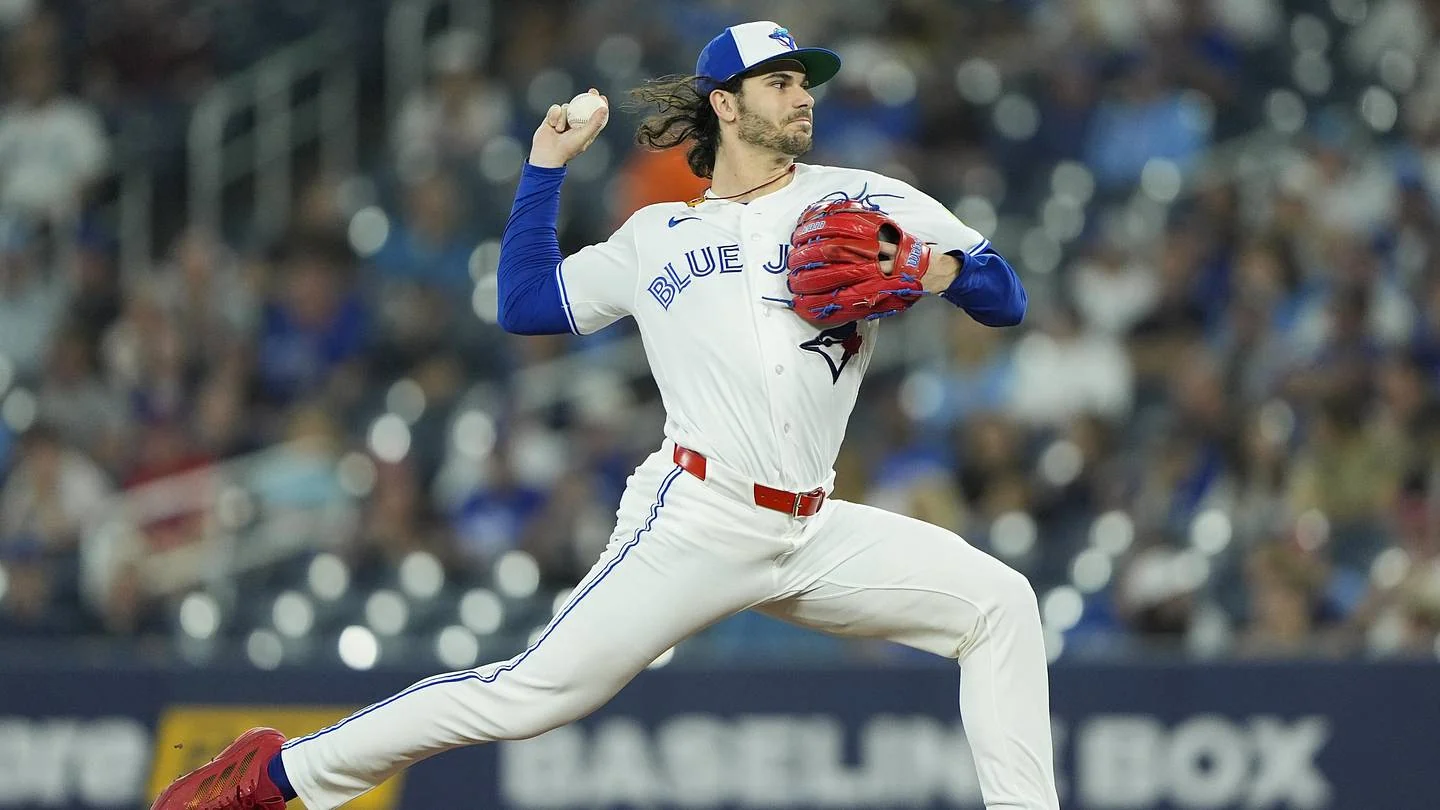
The conversation extends beyond the first two names. Bieber and Scherzer supplied 140 1/3 innings for Toronto in 2026, and both were listed as free agents this winter. José Soriano, José Berríos and Cody Ponce are among the pitchers on the club’s current depth chart. If the Taira deal becomes official, Toronto gains another possible starter with a recent season of 146 innings. His once-a-week schedule in Japan makes the interval between starts part of the transition. Each extra rest day needs to fit somewhere on a calendar with six or seven games in a week. A swingman who can start or relieve would help cover that extra day without forcing the club to improvise. Blue Jays depth chart · MLB’s offseason rotation analysis
The lineup needs a plan for designated hitter and the outfield
The Jays lost much of their power between the 2025 pennant and the next regular season. A rebound from Vladimir Guerrero Jr. would improve a large share of the team’s most important plate appearances. Another dependable hitter would spread the responsibility around and protect the lineup from a repeat of the weeks when its core bats struggled together. Kazuma Okamoto, Addison Barger, Nathan Lukes and Anthony Santander each give Toronto different ways to fill out that order. The choice of an outside bat comes down partly to whose playing time he would take and whose matchups he could improve. MLB’s review of Toronto’s offense
George Springer’s free agency also opens a decision about how to use designated hitter. General manager Ross Atkins expressed a preference for keeping the spot flexible and said he wanted Santander to be an outfield option. If a new hitter can handle a corner, Toronto can use DH to give different regulars a break from the field. A hitter who spends most of his time at DH can bring more power at that spot while leaving the club with a narrower set of ways to deploy the other bats. The next addition should be judged by what he changes in both places. Atkins’ offseason roster comments
The bullpen needs dependable innings across different roles
Louis Varland took over the closing job in late April and wound up with 35 saves and a 1.27 ERA across 78 innings. The closer is a strong starting point for the bullpen. The bigger winter question is how Toronto gets the ball to him. A healthy starter can get through six or seven innings and leave a useful sequence of relievers. After a shorter start, someone has to get extra outs and keep multiple one-inning arms fresh for the rest of the series. That job matters even if it rarely comes with a save chance. Toronto’s All-MLB report
Spencer Miles shows how those assignments overlap. His 49 outings included eight starts, and he threw 95 2/3 innings. If he moves toward full-time starting, the rotation gets another option and the bullpen must find another way to cover those longer stretches. If he works in both roles, the club still needs one or more relievers capable of taking the ball when he is between appearances. Follow the innings and the jobs each pitcher has done. That will tell you more about the depth Toronto has assembled than a simple count of bullpen signings.
How a 40-man roster spot changes Toronto's options
The November roster sequence works as a practical guide. Toronto added Schreck, Perry and Guerra and reached 40 players on November 17. Protection keeps those eligible prospects out of the major league phase of the Rule 5 Draft while Toronto continues their development. Their roster places still count against the same limit the club uses when it signs a major league free agent or makes a waiver claim. The Rule 5 Draft guide explains why the selecting club’s active-roster commitment also matters. Toronto’s protection announcements
Cairo and Lee show what happens when a club at the limit wants another player. A waiver claim immediately gives the claimed player a place on the roster. Designation for assignment takes the other player off that roster and gives the club a short window to resolve his status. In Lee’s case, that resolution was a trade the next day. Earlier in the month, pitcher CJ Van Eyk cleared waivers and was assigned outright to Triple-A, an example of a player remaining in the organization without occupying a protected spot. These moves can have a similar immediate effect on the count while leaving Toronto with different depth afterward. MLB’s transaction glossary
The tender deadline added another layer. Toronto non-tendered Schneider and tendered the rest of its arbitration-eligible group, which included Varland, Ernie Clement and Barger. A tender keeps the player under club control through the salary-setting process. It can come well before the final salary is known. Toronto’s 40-man count was 39 on November 20, according to MLB’s report. That is a dated snapshot and a reason one later major league signing could fit without pairing it with an immediate departure. It leaves the club free to make other decisions with that space. Toronto’s tender decisions · How the non-tender deadline works
When a second addition arrives, read the transactions before deciding how many major league options were gained. A new pitcher and a corresponding waiver loss can leave the roster at the same size with a different balance. Players on minor league contracts can give the organization more choices for camp without creating the same immediate 40-man obligation. Keeping those distinctions visible makes the tradeoff easier to see.
What to watch between now and the first 2027 games
The closest date is December 1, 2026. The existing collective bargaining agreement expires at 11:59 p.m. Eastern. The league’s court filing and the possibility of a lockout make that date relevant to the pace of major league roster activity. The filing itself is one step in the dispute. A labor agreement, a formally announced lockout and any change to the game calendar would be separate developments. Follow the 2027 MLB labor timeline for that distinction. The Basic Agreement’s term
Keep an eye on December 9, currently the scheduled date of the Rule 5 Draft in San Diego. Toronto’s protection choices are already recorded, and the draft would show whether other clubs select any eligible players the Jays left unprotected. The team’s report explicitly flags labor uncertainty around the event. Check for an updated announcement if the negotiations extend past the contract deadline. Toronto’s Rule 5 update
The published game calendar gives fans three different planning points. Spring Training is scheduled to open February 19. Toronto’s regular-season schedule opens at Yankee Stadium on March 25, and the Rogers Centre home opener is scheduled for April 2 against Seattle. Spring exhibitions will offer early clues about who is being stretched out to start and which hitters see time in the outfield. The lineup for a regular-season date is a separate update and will come much closer to first pitch. MLB’s spring release · Toronto’s schedule highlights
When the next Toronto headline lands, look up the transaction, then read the 40-man roster and depth chart for what changed. A recorded signing tells you who joined the organization. A club’s spring usage can give you a sense of the role. Together, those checks help you read the winter as a series of choices about the 2027 team, from who pitches through the middle innings to which hitter gets time at DH. Use the Toronto Blue Jays schedule for opponents and dates as the season approaches.
Loading comments...