

Updated October 17, 2026. The potential 2027 MLB free-agent class includes impact pitchers and established hitters, but contract options will shape the final market. Here is how to follow the leading names, compare roster needs and read the decisions that determine who is actually available.
What 2027 MLB free agents means in October 2026
The 2027 free-agent conversation concerns players who could sign for the 2027 season during the offseason following the 2026 World Series. That is the 2026-27 offseason. A list describing the winter after the 2027 season covers a different group. Check that distinction before comparing rankings: an excellent list can still answer the wrong year's question.
As of October 17, 2026, a projected class is a planning document. A name appearing on it does not establish that the player is currently unsigned, that an option has been declined, or that another club has permission to announce a completed deal. This guide uses potential for unresolved availability and reserves signed for an actual announced transaction.
The MLB Players Association's eligibility explanation ties ordinary major-league free agency to six years of service and the absence of a contract for the following season. That combination matters. Reaching a service milestone while already covered by an extension does not put someone on the open market. Conversely, a released player can become available through a different route.
For a usable watchlist, separate three columns: expected eligibility, a decision that must happen first, and the latest confirmed transaction. Leave the final column blank until there is news to enter. An option deadline, extension or roster decision can change the first two columns without producing a signing. This small distinction prevents most of the confusion created when a preseason projection is circulated again in October.
Also keep the baseball calendar separate from the labor calendar. Our 2027 CBA and lockout explainer follows that broader issue. A negotiating proposal is not an adopted rule, and a possible disruption is not proof that a scheduled game has been canceled. A useful offseason plan can identify uncertainty without guessing which proposal will become the final agreement.
Notable pitchers and hitters to track
Start with a manageable group rather than treating every expiring contract as equally relevant. MLB's early ranking highlighted Tarik Skubal, Michael King, Randy Arozarena, Jazz Chisholm Jr. and Seiya Suzuki. That is a useful starting point, not an announcement that all five have entered free agency or that their eventual contracts will follow that order.
Selected watchlist, checked October 17, 2026. Current-club labels below identify the existing roster, not a predicted signing destination. Contract-expiration entries remain prospective until the offseason process occurs.
| Player | Position | Current club | Availability condition |
|---|---|---|---|
| Tarik Skubal | LHP | Dodgers | Projected contract expiration |
| Michael King | RHP | Padres | Player option decision |
| Randy Arozarena | OF | Mariners | Projected contract expiration |
| Jazz Chisholm Jr. | 2B | Yankees | Projected contract expiration |
| Seiya Suzuki | OF | Cubs | Projected contract expiration |
| Bo Bichette | 3B | Mets | Player option decision |
| Sonny Gray | RHP | Red Sox | Mutual option decision |
Starting pitching and bullpen priorities
Skubal represents the kind of starter who changes how a club imagines its rotation. The evaluation question is not simply whether the pitcher is good. It is how many starts the buyer expects, how the pitch mix should age, what medical uncertainty remains, and whether a long commitment fits the rest of the roster. A team can badly need an ace and still decide that a different use of the same resources produces a better complete staff.
King belongs on a separate, conditional line because he controls a player option for 2027. For a club drawing up alternatives, that means preparing two versions of the market. One includes him; the other assumes he stays under his existing agreement. Planning for both outcomes is more useful than reporting a prediction as if the decision has already been filed.
For relievers, begin with the innings a team needs to cover. A closer vacancy and a shortage of reliable sixth-inning options are different problems. Compare strikeout ability, walk prevention, recent workload and the types of hitters the pitcher can face. Saves can describe past usage without telling you whether a new manager would assign the same role. A sensible shortlist includes fallback choices rather than a single famous name.
Position players and lineup fit
Arozarena, Chisholm and Suzuki illustrate why a hitters list needs a position column. Outfield and second-base needs are not interchangeable. Before debating the best bat, ask where that player would start, which current player would move, and whether the club still has enough flexibility to handle an injury elsewhere. A lineup can improve on paper while becoming awkward to manage if too many players need the same defensive spot.
Suzuki's approaching contract expiration was also discussed in the Cubs' October coverage. For a potential buyer, the useful questions concern his expected hitting contribution and the role that would accompany it. The appeal of a right-handed hitter depends partly on the rest of the lineup; it should not be reduced to his place on an undifferentiated rankings graphic.
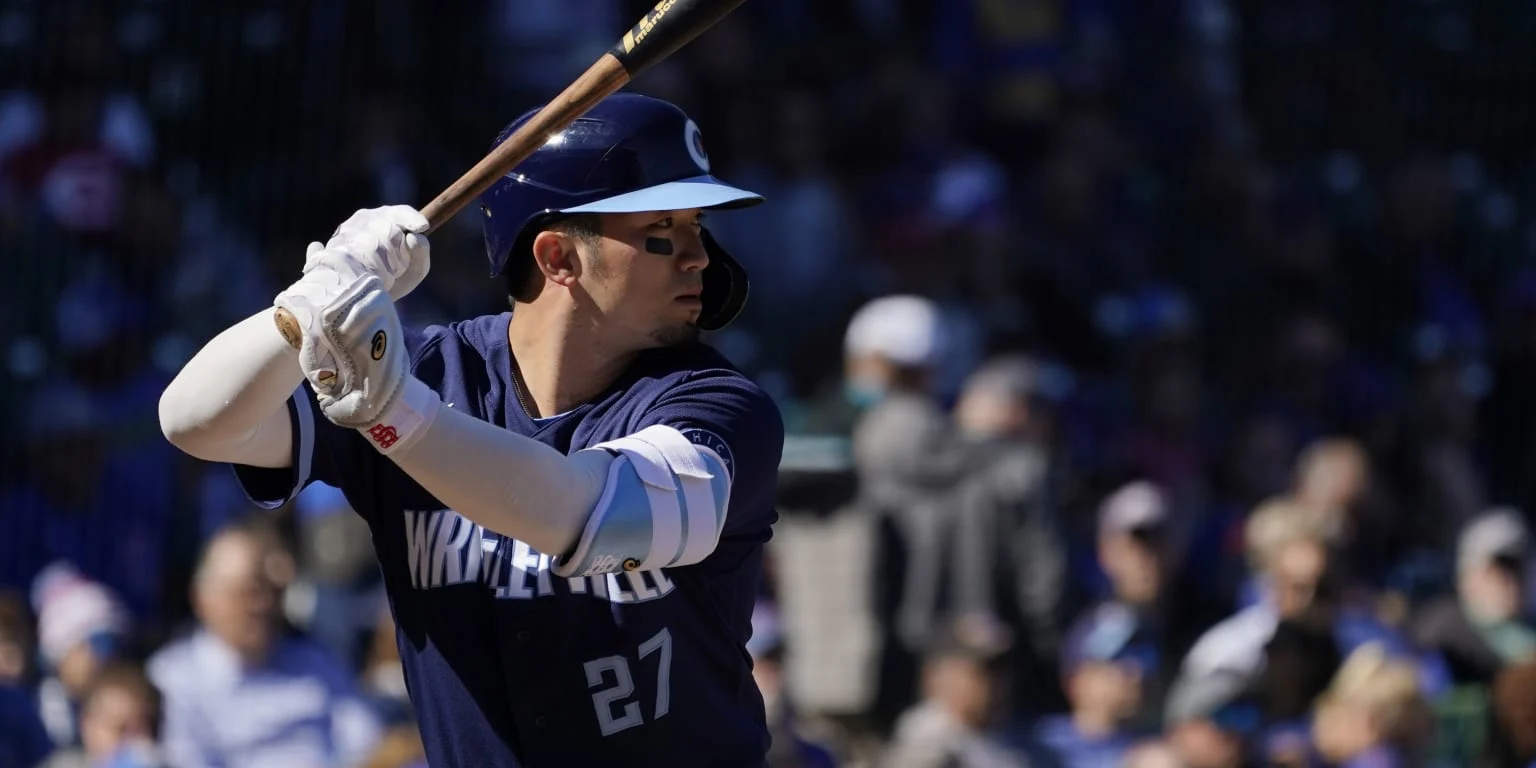
These are analytical comparisons, not reported negotiations. A club's need can identify someone worth studying without establishing that its front office has contacted his representative. Keep that line visible whenever a watchlist turns into a discussion of possible destinations.
Contract options can change the available-player pool
An expiring guaranteed portion of a contract is not always the end of the relationship. An option can keep the player in place or put a decision between him and the open market. Read the option column before the prediction column: otherwise, a team-needs exercise can quietly assume access to a player who will never be available.
Who controls the decision?
| Provision | Basic decision maker | Watchlist treatment |
|---|---|---|
| Club option | The club | Keep a separate outcome for exercise and decline. |
| Player option | The player | Do not move him to the available column before the decision. |
| Mutual option | Both sides | Agreement from only one side is insufficient. |
| Opt-out | The party holding that right | Check the actual contract provision and announced action. |
The official club-option definition also flags an important exception involving players who remain arbitration eligible. Declining an option does not automatically produce the same result for every contract. When a transaction seems inconsistent with a headline, the remaining years of club control may be the missing detail.
Two examples from MLB's October options review are Bo Bichette's player-controlled decision and Sonny Gray's mutual option. Those labels explain why listing both as unrestricted, already available targets would be premature. They do not tell us that either decision has been announced.
Why an opt-out prediction is not a transaction
A writer may reasonably expect a player to choose free agency because the market could provide more security. That is an assessment of incentives. The player may weigh guaranteed money, health, location, family considerations and his own appetite for uncertainty differently. Even strong public expectations leave room for another outcome.
Use clear verbs when sharing news: "can opt out" describes a right; "is expected to opt out" describes a forecast; "has opted out" reports an action. They should not be swapped merely to make a headline sound more decisive. If your preferred club needs a starter, keep researching alternatives until the market has actually settled.
One practical approach is to give every conditional player a companion entry for what happens if he stays. That forces the analysis back toward roster construction. A fan does not need to predict every decision correctly to follow the offseason well; the useful skill is understanding which decisions would change the choices available next.
Match free agents to team needs without inventing destinations
A "free agents by team" page can mean two very different things: players leaving each club, or possible signings for each club. Record which meaning the page uses. A player's current or most recent organization belongs in an origin column; it is not evidence of where he will sign next. This distinction is especially important after a midseason trade.
Build a team worksheet from the official depth-chart entry point. For each position, write down the apparent starter, the main alternative and any unresolved contract decision. Then identify the actual problem. "Needs pitching" is too broad. A club could need a dependable third starter, an innings bridge for injured pitchers, or a reliever capable of facing the middle of an opposing lineup.
Next, separate an immediate vacancy from an upgrade opportunity. A vacancy exists when no reasonable internal starter is in place. An upgrade opportunity means a team could become better despite already having someone who can play the position. A club might pursue the second while leaving the first to a trade or younger player. Neither category, by itself, proves that a free-agent offer is being prepared.
Consider a hypothetical team with one open outfield spot and a thin rotation. Spending its available budget on a hitter may solve the most visible issue while leaving too many innings for uncertain starters. Signing two less celebrated pitchers might produce a more balanced roster. That example is a way to compare choices, not a report about any particular team's budget or negotiations.
For each potential signing, ask what happens to the rest of the roster. Would another player move to designated hitter? Does the bench retain someone who can cover the infield? Is the team relying on several pitchers to return from injury at once? The value of a signing depends partly on these connected decisions, which a simple list of the best available players cannot show.
Our MLB teams and divisions guide helps organize a league-wide worksheet. Use three labels when discussing destinations: confirmed interest, reported interest and analytical fit. Only the first two should be attributed to reporting, and the underlying report still deserves a date. A sensible fit can remain your own observation without being dressed up as inside information.
Compare the contract beyond its headline value
A large guarantee answers only one question: how much has been committed under the reported terms? It does not, by itself, tell you the annual payroll effect, the length of the obligation, when the money is paid or who controls any optional seasons. Those details can make two contracts with the same headline total serve very different purposes.
Years, annual value and the shape of risk
For a simple hypothetical comparison, a three-year, $60 million guarantee averages $20 million per year, while a five-year, $60 million guarantee averages $12 million. The second figure is lower annually, but the commitment lasts longer. That arithmetic does not establish which agreement is better; expected performance and the value of the additional seasons still have to be considered.
Then look at the distribution. A team trying to fill several present needs may care about cash due now, while a reader comparing luxury-tax payrolls needs the applicable tax calculation. MLB's CBT explanation describes a system using contract average annual values and other items. A cash-payroll total should not be presented as though it were automatically the tax figure.
Options require another pass. A deal with a team-controlled final year gives the club a different future choice from one carrying a player-controlled decision. When comparing reported totals, distinguish the guaranteed portion from money that depends on someone exercising a right. Including every possible season without a label can exaggerate the commitment; omitting the options can hide the reason one side accepted the agreement.
Also check whether a qualifying offer is attached under the rules that apply to that player and signing club. Draft-related consequences can affect the overall evaluation, but they are not uniform across every free agent. Do not copy an old offseason's qualifying-offer dollar amount onto a current table just because the explanation of the mechanism remains useful.
For 2027 planning, labor proposals deserve their own column rather than being inserted into a contract calculator as existing rules. Our offseason proposal guide explains why a suggested change and an adopted agreement are different stages. Until terms are established, a precise-looking forecast can communicate more confidence than the evidence supports.
The best comparison is therefore a short explanation: the expected role, guaranteed years, annual commitment, conditional money and principal uncertainty. A prediction about a destination or price can follow, clearly labeled as analysis. It should never replace the information needed to understand the deal if that prediction proves wrong.
Build a reliable offseason watchlist
The most useful watchlist changes when the facts change. Put the date of your latest check beside the player's name and retain the previous status in a note. If an option is exercised, move the player out of the potential free-agent group. If a signing is announced, replace the prediction with the actual destination and reported terms rather than leaving both versions side by side.
Keep a link to MLB's transaction listings and the relevant club's announcement. A reported agreement may still depend on additional steps before the roster move is official. That does not make the report useless; it means its wording and stage matter. "Agrees to terms, pending a physical" and "club announces signing" communicate different information.
A short checklist before calling a signing official
- Confirm the season. The 2027 season market follows the 2026 postseason.
- Confirm availability. Check options, extensions and other unresolved decisions.
- Find the actual report. Trace a screenshot or social post to its original publication.
- Read the condition. Preserve any reference to a physical, option or unannounced term.
- Update the roster impact. Identify the likely position, innings or lineup role without guaranteeing it.
- Save the date. An accurate report from August can be incomplete in November.
For predictions, make the assumptions visible. A useful forecast could say that a club needs a starter and that a player would fit if he becomes available. An unhelpful one skips directly from that observation to an unsupported claim that negotiations are advanced. The former gives a fan something to evaluate; the latter creates a false impression of certainty.
There is also no need to react to every quiet day as though the market has stalled permanently. Clubs and players can have different priorities and acceptable timelines. Follow the meaningful changes: availability, a credible report of interest, agreed terms and official completion. Each changes what you know, even when the eventual contract takes longer than a prediction suggested.
Once players have new teams, the next practical step is finding when those clubs play. Use the MLB schedule for dates and opponents, then today's games when the season is underway. A careful offseason watchlist should make it easier to follow the baseball that comes next, rather than leaving you with a collection of outdated destination guesses.
Loading comments...