
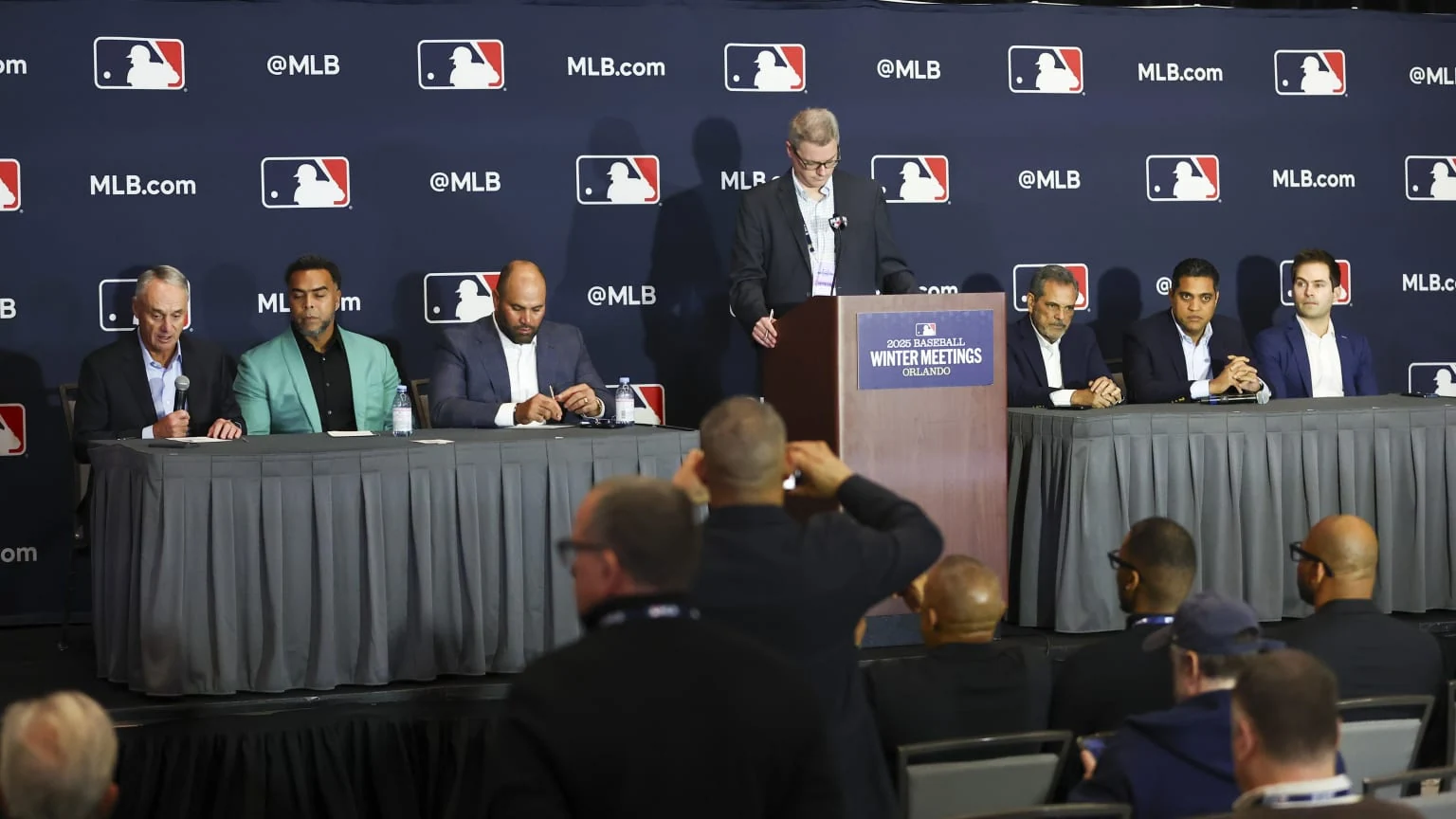
Major League Baseball has proposed a new offseason transaction calendar that would concentrate most free-agent signings into a short December window, freeze Major League transactions until early February, then reopen the market before Spring Training. It is a bargaining proposal, not a rule currently governing the offseason.
MLB presented the framework to the MLB Players Association on August 27, 2026, as part of negotiations over the next collective bargaining agreement. The union promptly objected. The dates below explain MLB's proposal as reported through September 20, 2026; they should not be treated as an enacted signing calendar.
What Did MLB Propose for the Offseason Calendar?
The league's concept would replace the open-ended rhythm of the Hot Stove with scheduled periods for negotiation, signing and inactivity. It is designed to create a burst of transactions around the Winter Meetings and a second burst shortly before clubs report to camp.
Proposal, Not Current Rule
No free agent currently faces a December 21 deadline under this proposal. MLB and the MLBPA would have to agree to the change through collective bargaining, and the final text could differ or disappear entirely. MLB also says the transaction calendar is contingent on installing a salary cap-and-floor system, a concept the union has long opposed.
That status matters because a headline about a “signing deadline” can sound final. The current labor agreement and existing offseason rules remain controlling until a successor agreement is ratified. For the larger expiration and lockout context, read the site's 2027 MLB CBA and lockout guide.
The Three Proposed Phases at a Glance
| Proposed phase | Timing | Main effect |
|---|---|---|
| Quiet Period | After the five-day post-World Series option window until noon ET on the Monday of the Winter Meetings | Free-agent negotiations continue, but most new-team agreements cannot be finalized; trades remain possible |
| Signing Window | Winter Meetings Monday through December 21 | Free agents may officially sign; trades remain available |
| Frozen Period | December 21 through the first Monday in February | No Major League player contracts or transactions |
On the first Monday in February, free-agent signings and trades would resume. This is a framework rather than a fully negotiated rulebook: implementation language would still need to answer how deadlines, physicals, waivers, minor-league deals and exceptional circumstances are administered.
How the Proposed Free Agency Timeline Would Work
The proposal starts with a familiar checkpoint, then changes the order and pace of business. Its most consequential feature is not one deadline by itself; it is the combination of a delayed opening, a short signing window and a multiweek freeze.
After the World Series: Options and the Quiet Period
Clubs and players would retain the existing five-day period after the World Series to exercise or decline contract options. Once that window ends, a new Quiet Period would run until 12 p.m. ET on the Monday of the Winter Meetings.
During that time, teams could speak with free agents and agents, exchange proposals and build the market. Most agreements involving a free agent changing clubs could not be officially finalized. A player returning to his former club could re-sign, and teams could conduct trades. The design therefore pauses public signings without stopping every front-office conversation.
Winter Meetings Through December 21: Signing Window
Free agency would officially open at the Winter Meetings deadline and remain open through December 21. Depending on the calendar, MLB describes that span as roughly two to three weeks. Players could sign with new clubs, and trades could continue.
This period would carry unusual urgency. A club that needs a shortstop, for example, would have limited time to evaluate several free agents while also pursuing trade alternatives. A player deciding among offers would know that unresolved talks pause after December 21. Medical reviews, contract language and roster space would need to be handled within that compressed process.
December 21 to February: Transaction Freeze
From December 21 through the first Monday in February, the proposal calls for a moratorium on all transactions and contracts involving Major League players. ESPN reported that trades would also be banned during this gap. It is stronger than a media “quiet period”: the underlying transactions would stop.
The freeze would cover a part of winter when clubs currently continue to sign free agents and reshape rosters. Public rumors might persist, but an agreement could not become a Major League transaction until the window reopened. Any final CBA would need detailed rules for emergencies and procedural moves; the August proposal should not be expanded with exceptions MLB has not publicly specified.
What Teams and Players Could Still Do
A frozen transaction does not mean every offseason job stops. Scouting, analysis, budgeting and internal roster planning would continue. The important question is when a club may negotiate, when it may execute an agreement and when the league may formally process it.
Negotiations, Re-Signings and Trades
MLB's description permits teams and agents to negotiate during the initial Quiet Period. That allows the market to develop before the Winter Meetings, even though a player changing teams generally could not finalize the agreement. A club could also re-sign one of its own free agents during that early phase.
Trades would remain available during the Quiet Period and the December signing window. That gives clubs another way to fill needs while the free-agent market forms. Once the Frozen Period begins, however, the proposal would halt trades along with Major League contracts. The published outline does not authorize a team to “agree now, announce later” as a workaround, so fans should be cautious about treating freeze-period rumors as completed deals.
February Reopening and Spring Training
Business would restart on the first Monday in February. Unsigned players could resume formal talks and sign, while clubs could trade again as equipment trucks and reporting dates approach. That second window would not necessarily be a one-day event; the proposal describes a reopening, not another publicly stated closing date.
For clubs, the restart could create a compressed final build before camp. Medicals, visas, arbitration preparation and roster moves may overlap. Fans checking the full MLB schedule or a club page such as the Mets schedule would still see game dates, but those pages cannot predict which free agent will be on the roster. Transaction reporting remains separate from schedule data.
Why MLB Says It Wants a Compressed Calendar
MLB frames the proposal as a way to replace months of sporadic activity with predictable events. The league also links it to a larger package intended to stabilize rosters and spread spending. Those are management's stated goals, not outcomes the parties have proven together.
A Predictable Free Agency Event
The league wants the Winter Meetings to function like a starting gun. With a known signing period, networks can schedule coverage, fans know when to follow the market and clubs face pressure to complete decisions. MLB compares that concentration with the attention generated by NFL and NBA free agency.
An MLB.com analysis points to the unusual 2021-22 offseason. Before the December 1 lockout, teams awarded a reported $1.9 billion to free agents in November, and 54 free agents signed within the first 30 days. Activity surged again after the March 2022 labor agreement. MLB uses that episode to argue that compression creates urgency, while acknowledging that a lockout is not identical to a negotiated calendar.
A scheduled burst may be easier for fans to follow, but attention alone does not establish fair bargaining conditions. The market still depends on how many teams bid, how much they can spend and whether players have time to compare offers.
Roster Stability and the Salary Cap Condition
The transaction calendar arrived alongside proposals for weekly active rosters, altered injured-list minimums, fewer in-season options and Rule 5 Draft changes. MLB says this broader package would reduce roster churn and help fans recognize the players on their club. Those in-season ideas are separate rules even though the league presented them together.
MLB states that the calendar and related changes are contingent on a cap-and-floor system. Management argues a floor could broaden spending while a cap protects competitive balance. Because the union opposes a salary cap, the calendar cannot be evaluated as a harmless scheduling tweak detached from economics. Its practical effect would depend on the spending system, enforcement rules and concessions elsewhere in the CBA.
Why the MLBPA Objects
The MLBPA's response focuses on player choice and negotiating power. The union does not accept the premise that earlier signings require a salary cap or a mandatory freeze, and it views the calendar as one part of a management package that shifts leverage toward owners.
Leverage and the “Musical Chairs” Concern
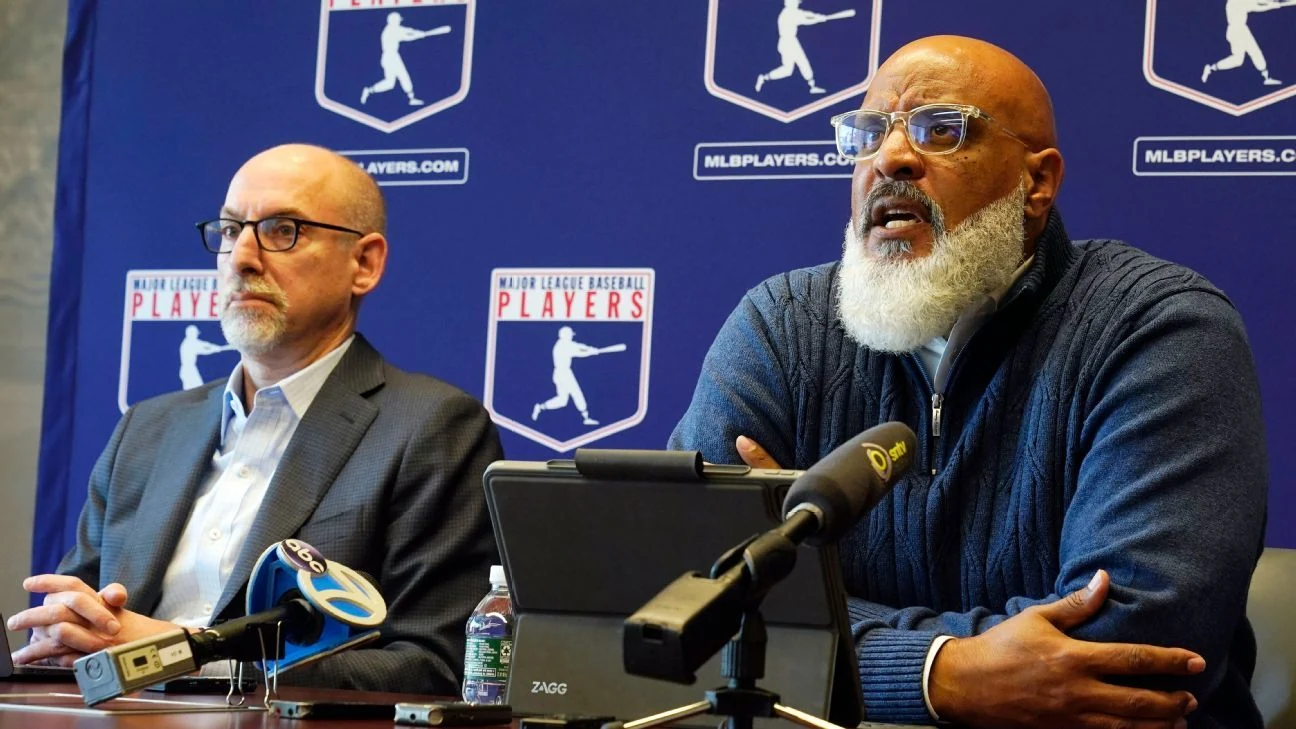
In the union's August 27 response, interim executive director Bruce Meyer said the proposed artificial window would reduce player leverage and create a game of “musical chairs” that pits players against one another. That concern is easiest to see in a crowded position market: if several comparable players chase a limited number of jobs before a freeze, teams may use the deadline to pressure decisions.
Star players with multiple bidders may still command strong offers. A shorter clock could be more difficult for mid-tier veterans, relievers, bench players and players recovering from injury. They may need to choose between an early offer and the uncertainty of waiting until February, when club needs and available payroll may have changed.
The Salary Cap Is the Larger Conflict
The MLBPA has opposed a hard salary cap for decades, and MLB explicitly made its calendar proposal contingent on a cap and floor. The union says tying roster-churn or pace reforms to a cap is not a serious solution and argues that players offered alternatives the league did not pursue.
This disagreement explains why the proposal drew a sharper response than a simple event-scheduling idea might suggest. A transaction freeze affects when players bargain; a cap affects how much clubs can collectively spend. The eventual impact cannot be calculated without knowing cap level, floor level, revenue-sharing rules, penalties and transition terms. None of those disputed elements should be treated as settled.
How the Proposal Could Affect Fans and Clubs
If adopted, the calendar would change how fans follow roster construction and how front offices sequence decisions. Its appeal is clarity; its cost is deadline pressure. The exact balance would depend on final economic terms and market behavior that cannot be known from the proposal alone.
Faster News, Harder Deadlines
Fans could circle the Winter Meetings and February reopening instead of refreshing transaction feeds through a long winter. A concentrated signing period would generate clearer storylines, quicker depth-chart changes and more simultaneous moves across markets. Clubs could promote the event, and national coverage could devote resources to known dates.
The same concentration makes roster mistakes more expensive. If a club misses its preferred free agent on December 20, it may have hours to pivot before the freeze. Trade partners know that urgency. Agents handling multiple clients would juggle overlapping medical reviews and offers, while clubs have limited time to resolve contingencies.
A quiet six weeks may also feel longer once transactions stop entirely. Fans could use the pause to study the previous season's standings and team context, but the absence of completed deals does not guarantee the rumor cycle will disappear.
Risks for Mid-Tier and Unsigned Players
A top free agent can anchor the market because other players and teams wait for his decision. Under a short window, that delay could crowd choices near December 21. Players below the top tier may face an offer that expires before they learn whether a better fit will emerge.
Anyone unsigned at the freeze would wait until February to complete a Major League deal. During that gap, a club might change its budget, fill a need internally or reassess a player's health. The February reopening could produce strong bidding for a scarce position, but it could also leave several comparable players competing for the last jobs before camp.
Those outcomes are plausible scenarios, not results the proposal guarantees. A salary floor, minimum spending obligations or negotiated protections could change incentives. That is why evaluating the calendar without its eventual CBA language produces an incomplete picture.
What Happens Next in the CBA Talks?
The August proposal is an opening position inside a much larger negotiation. It can be revised, traded for another concession, separated from companion rules or omitted from the final agreement. Public criticism does not by itself end bargaining, and a league article does not make a rule binding.
What Would Make the Calendar Binding
MLB and the MLBPA must reach agreement on a successor CBA, complete their approval processes and publish the operative rules. The current labor deal is scheduled to expire on December 1, 2026. Reports describe a management lockout as expected if no agreement is reached, but an expected event is not the same as one that has occurred.
A final calendar would need more than the three headline dates. Fans should look for deadline times and time zones, treatment of physical exams and pending agreements, definitions of Major League versus minor-league transactions, waiver procedures, grievance rights and any emergency exceptions. Until those details are official, teams and players operate under the existing agreement.
What Fans Should Watch Before 2027
- Whether MLB continues to require a salary cap and floor as the price of calendar changes.
- Whether the union offers a different way to encourage earlier signings.
- Whether the December 21 and first-Monday-in-February markers survive revisions.
- How trades, re-signings, medicals and unsigned players are handled during a freeze.
- Whether weekly roster and Rule 5 proposals remain linked to the transaction calendar.
The regular-season schedule can be released while labor rules remain unsettled. The site's guide to when MLB schedules come out explains that separate process. For free agency, trust a jointly announced CBA and formal transaction rules rather than treating a reported bargaining proposal as the final 2026-27 calendar.
This explanation reflects reporting and official statements available on September 20, 2026. It should be updated if the parties announce revised terms, a tentative agreement or an implemented freeze.
Loading comments...