
When is the 2026 MLB Rule 5 Draft?
The 2026 MLB Rule 5 Draft is scheduled for Wednesday, December 9 at the Winter Meetings in San Diego. Teams already made their first decisions on November 17, when they had until 6 p.m. ET to place eligible prospects on their 40-man rosters and protect them. The December event would let other clubs select eligible players who are available. The current major league labor agreement expires December 1, and MLB has said the draft could be affected if there is no new agreement before the event. The December date is the scheduled date as of November 18. MLB Pipeline's deadline and draft update · MLBPA on the agreement's expiration
November 17 is already useful if you want to see how a front office values its young players. MLB Pipeline counted 131 prospects on its organizational Top 30 lists who faced a protection decision. Of those, 53 received 40-man spots, or 40.5 percent of the group. The count measures what happened to a particular set of ranked prospects. Organizations also added unranked players, and the draft's eligible pool extends beyond national or team prospect rankings. The rundown gives you confirmed moves to read today, even with the selection date still ahead. MLB Pipeline's all-team protection list
For a particular player, start with the 40-man transaction and then check the draft separately. A protected player has a roster place with his current organization. An exposed player can still have a future there, because another team has to use a selection to take him. The draft date tells you when that second decision is scheduled. If you're following the meetings themselves, use the Winter Meetings guide for event details and the 2027 labor agreement guide to follow talks that may change the calendar.
What teams did at the November 17 protection deadline
The protection deadline produced roster transactions, including several that show how different the decisions can be from one organization to the next. The Dodgers added four pitchers. St. Louis added an infielder and a pitcher. Minnesota made no additions for Rule 5 protection. MLB Pipeline's team-by-team list uses a plus sign for the players who got roster spots. Its results also identify some additions from outside organizational Top 30 lists. The examples below are a starting point. Use the full list to find a different club or to check an individual prospect. MLB Pipeline's November 17 results
| Organization | November 17 decision | Examples |
|---|---|---|
| Los Angeles Dodgers | Added four pitching prospects | Christian Zazueta, Jackson Ferris, Adam Serwinowski and Luke Fox |
| St. Louis Cardinals | Added two prospects | Jesús Báez and Jacob Odle |
| New York Yankees | Added three prospects | Kyle Carr, Carlos Lagrange and Garrett Martin |
| Minnesota Twins | Made no protective additions | Yasser Mercedes stayed exposed |
| New York Mets | Protected one ranked prospect and exposed others | Jefferson Rojas added. Jacob Reimer remained exposed. |
Dodgers and Cardinals made room for prospects
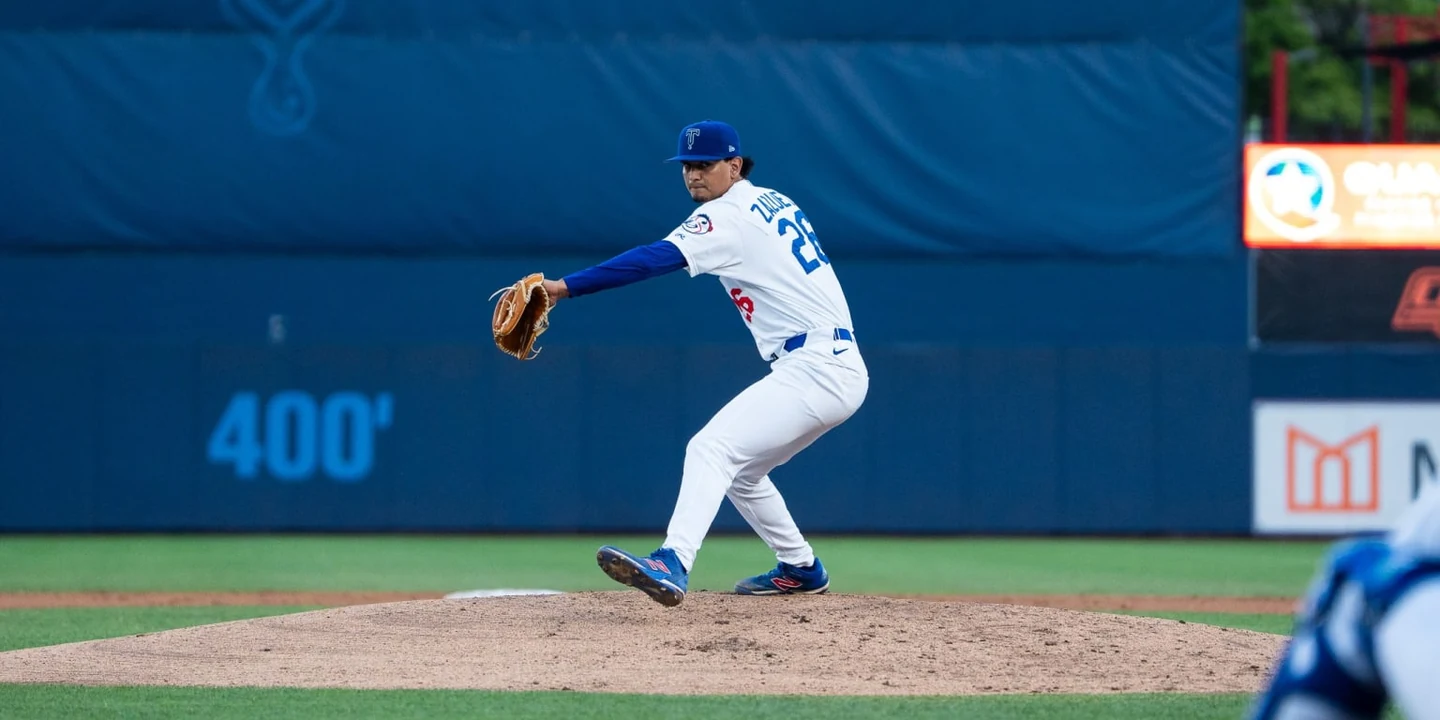
Los Angeles added right-hander Christian Zazueta and three left-handers in the same transaction announcement. It designated pitcher Jake Cousins and infielder Christian Cairo for assignment to make room. The moves illustrate the cost of protecting several players at once. Each one needs a reservation on the 40-man roster, and creating space for one player can affect a different position group. Zazueta spent 2026 with High-A Great Lakes and Double-A Tulsa, while Ferris pitched for Triple-A Oklahoma City. Both received the same 40-man protection despite pitching at different levels during the season. Dodgers roster announcement
St. Louis protected infielder Jesús Báez and right-hander Jacob Odle. Their 40-man additions tell you which organization protected their contracts. Their spring assignments remain separate decisions. If you follow either organization, keep the transaction list open alongside the Dodgers schedule or Cardinals schedule. A roster spot is established by the transaction, and the schedule tells you where and when games are played. Cardinals transaction history
What it means when a prospect stays exposed
When a club leaves an eligible player exposed, it leaves open the possibility that another team will choose him. The decision leaves the player's current organization in place. Minnesota's Yasser Mercedes was among the available ranked players in MLB Pipeline's November 17 rundown. Jacob Reimer appeared without a protection mark for the Mets, even though that club did protect Jefferson Rojas. A team can take different paths for two players at the same deadline. The draft will establish whether another club actually picks either exposed player. Minnesota's decision · MLB Pipeline's team outcomes
For the Yankees, the final additions were Kyle Carr, Carlos Lagrange and Garrett Martin. If you read the Yankees Rule 5 eligibility guide before the deadline, use the dated outcomes to check which names on the earlier watchlist actually got a spot. The order in which a prospect appears in a ranking says little about when or whether a transaction will come through.
How a minor leaguer becomes eligible for the Rule 5 Draft
MLB uses two protection windows based on a player's age when he first signed. A player who signed at age 18 or younger needs a 40-man spot within five seasons to be protected. A player who signed at 19 or older reaches that point within four seasons. Once the applicable window has passed, the Major League phase can make the player available to other clubs if he remains eligible and off the 40-man roster. A player's age this November may help you find the right signing record, but the cutoff is based on his age when he originally signed. MLB's eligibility rules
Imagine two prospects signed in the same period. One was 17 and the other 21. The 17-year-old is on the five-season track. The 21-year-old is on the four-season track. If the younger player reaches Double-A quickly, that promotion doesn't move him to the shorter window. The older player could spend longer at a lower level and still reach his roster decision sooner under the rule. The farm system guide covers what changes between those levels. To check draft eligibility, start with the signing history and then verify which names MLB or the club says faced a decision. MLB's current eligibility and protection rundown
Why the 40-man roster is the protection list
Think of the 40-man roster as the wider set of players a major league team reserves. A club can add a prospect in November and still send him to an affiliate on an optional assignment when spring camp ends, if he has an option available. That move leaves him on the 40-man roster. A protected pitcher who begins the season in Triple-A can thus be developing for a later call-up while remaining under the same club's major league roster control. MLB's 40-man roster definition · MLB on optional assignments
Look for the roster named in the announcement. The November move answers who has been protected. The 26-man list nearer Opening Day answers who is in the active group. That timing explains how a club could protect multiple pitchers in November and have very few openings in its big league bullpen the following March.
What the picking team must do in 2027
In the Major League phase, clubs choose in reverse order of the prior season's standings. A club needs a vacancy on its 40-man roster to select a player, and it can pass even if it has space. A selection costs $100,000, paid to the player's former organization. The 2027 roster place is the longer commitment. A club that wants to retain its pick has to see a way to carry him in the majors, which makes the potential short-term role part of the decision. MLB's rules on order, space and cost
Consider a club weighing two eligible pitchers. One could help out of the bullpen on Opening Day. The other might project as a starter but need time at Triple-A to build innings. Either could be an interesting prospect, yet the active roster obligation gives the club a reason to value a usable 2027 role. That roster obligation matters when another regular gets hurt or the club needs a fresh arm during a long stretch of games. Passing keeps the major league spot available for someone the club can move between levels under the ordinary rules.
The 26-man roster and the 90 active days
To keep a Major League pick under the ordinary Rule 5 arrangement, the selecting club generally carries him on its active 26-man roster for the following season. It can place him on the Major League injured list when appropriate. The active days still matter. If the player spends fewer than 90 days on the active roster, the restrictions continue into the next season until he reaches 90 active days in total. Those are roster days, independent of how many games he appears in. MLB on the active roster requirement · Major League Rule 5(g)(3)
For example, if an injured pick finishes 2027 with 70 active days and the team retains him, the club would still have 20 days to satisfy that part of the rule. Conversely, a player who reaches the 90-day minimum by midsummer still needs to satisfy the initial season's roster obligation. The full-season obligation and the active-days minimum both matter.
Waivers, the offer-back rule and trades
A club looking to remove a pick from its active roster for a minor league assignment must use the waiver process. The written rule also requires a 15-day trial period during spring training or the following season before the applicable release or minor league transfer. If the player clears outright waivers, the selecting club must first offer him back to the original organization. That club can reacquire him for $50,000, half the original draft price. If it declines, the selecting club can outright him to the minors under the applicable rules. Major League Rule 5(g)(1)–(2)
A trade of a player selected in the Major League phase normally carries the same roster restrictions to the receiving club. A separate possibility is a deal with the original organization for the player's full rights. With those rights, the club can use normal options where available. Read the transaction description to see whether the player was returned, traded with restrictions intact, or acquired under a full-rights agreement. MLB on Rule 5 trades and rights
How the Minor League phase works
The Minor League phase, often called the Triple-A phase, draws from eligible players outside the relevant protections at the Major League and Triple-A levels. A club can assign a player it selects in this phase within its farm system without the Major League phase's 26-man retention requirement. In 2025 the selection fee in this phase was $24,000. The Nationals used both parts of that draft, taking Griff McGarry during the Major League phase and six more players during the Minor League phase. That example shows why a club's total Rule 5 selections can be larger than the number of immediate major league roster commitments it made. MLB Pipeline on the two phases · MLB Pipeline's 2025 results
Rule 5, Rule 4 and the Draft Lottery serve different purposes
Rule 5 is a way for clubs to acquire eligible players already in another professional organization. Rule 4 is MLB's First-Year Player Draft, the event through which clubs select eligible amateur players, such as high school graduates and eligible collegians. A December Rule 5 report therefore starts with a player's current organization and ends with a possible move to another one. A First-Year Player Draft report starts with an amateur player and the team that has the opportunity to sign him to a professional contract. MLB's Rule 5 glossary · MLB's Rule 4 glossary
| Event | What clubs get | What to look for in the coverage |
|---|---|---|
| Rule 5 Draft | A selection from another organization if a club chooses to pick | Player, previous club, new club, phase and retention conditions |
| Rule 4 Draft | The opportunity to sign a selected amateur | Player, amateur school or program, draft round and overall pick |
| Draft Lottery | A position at the top of a later Rule 4 draft for a winning club | Club and draft slot |
The lottery can sound like another name for either draft when it appears on a Winter Meetings agenda. It produces slots for the later amateur draft. For example, the lottery held in December 2025 determined the first six picks in the 2026 First-Year Player Draft. The White Sox won the first pick there, then exercised it the following summer. Knowing the order was useful for tracking amateur prospects, but it did not transfer a player on lottery night. The December 9 event discussed here has a separate selection process for already signed players. When a winter headline says a club “won a pick,” see whether it describes a lottery position or identifies a player the club selected in Rule 5. MLB's overview of the 2026 lottery and amateur draft · MLB's Rule 5 calendar
How to check a player's status after November 17
Watch for the transaction language each time a player's name appears. Both the Dodgers and Cardinals used “selected the contract” in their November transactions. The Dodgers selected Zazueta's contract from Tulsa, their own Double-A affiliate. St. Louis selected Odle's contract from Peoria, its own affiliate. Those moves put the players on their clubs' 40-man rosters in time for protection. An eventual Rule 5 results entry can also use “selected,” but it will identify another club as the organization the player came from. Dodgers transaction log · Cardinals transaction log
- Check the November transaction. Use the current club's moves to verify an addition to the 40-man roster and MLB Pipeline's eligible-player report to check exposure.
- Check the December event. Follow the official calendar for changes. If picks are made, record the player, the selecting club, the former club and the phase of the draft. The phase tells you which roster rules to apply. Example of an MLB results report
- Check the spring decision. Follow the active roster and the transactions for any Rule 5 pick the club is trying to keep. A waiver, return or acquisition of full rights can change how to read his next assignment. Continue to check the active list for a protected player whose club may still option him. MLB on the active roster
If the news stops at “exposed,” the player is still in the organization pending a later move. If it stops at “protected,” the organization retained him on its reserve list and will make his active roster decision closer to the season. Following the dates in that order gives you a clearer account of the player's path to Opening Day.
Loading comments...