
As of November 10, 2026, the MLB Winter Meetings are being reported for December 7-9 in San Diego, with important uncertainty around the winter calendar. That reported window should not be treated as a guaranteed programme. MLB's current offseason guide separately lists the Rule 5 Draft as scheduled for December 9. This guide explains those status distinctions, separates November's GM Meetings from the December gathering and identifies what Yankees fans can usefully follow without turning rumors or cancellation forecasts into confirmed events.
What is actually established for the 2026 meetings?
The useful answer is a status check, rather than an unconditional countdown. Several offseason calendars identify a December conference window, while labor uncertainty has prompted forecasts that the major league gathering could change. Those statements describe different levels of certainty. Keep the reported plan, the league's published dates for particular events and any subsequent cancellation or replacement announcement in separate categories.
The reported December window
Just Baseball's offseason calendar reports December 7-9 in San Diego as the planned Winter Meetings window. Treat that as a reported planning window, not a guarantee that every session will proceed. MLB's November 2 offseason guide separately lists the Rule 5 Draft as scheduled for December 9. That narrower official date does not establish the complete conference agenda, registration terms or access to individual events.
| Item | Information available at this update | How to use it |
|---|---|---|
| Winter Meetings window | December 7-9, San Diego, in offseason reporting | Planning context; recheck the operative event notice |
| Rule 5 Draft | December 9 in MLB's November 2 guide | A scheduled selection event, subject to later updates |
| Major League CBA | December 1 expiration in the MLBPA FAQ | A labor checkpoint, not itself a conference cancellation |
A calendar also needs the correct event owner. The team physicians' association publishes its own medical, research and related meeting agenda. A date attached to one of those sessions should not automatically replace the baseball operations conference dates. Read what the listing actually covers before using a matching city or hotel as proof that two agendas are identical.
A cancellation prediction is different from a notice
The MLBPA's current FAQ gives December 1, 2026 as the expiration date of the Major League collective bargaining agreement. It does not convert predictions about a possible work stoppage into an announcement that a particular meeting has already been canceled. Readers should apply that distinction even when a confident forecast comes from a familiar outlet.
For the larger negotiation background, our CBA and lockout guide explains the separate milestones. For this event, look for a dated notice identifying what is changing, who is affected and whether a replacement format exists. An executive conference, a draft and a medical meeting can require different decisions. A single broad headline should not be stretched to answer every one of those questions.
The November GM Meetings are a different event
A search for Yankees winter meeting news can return coverage of the General Managers Meetings taking place in November. The subjects overlap because the same clubs are building rosters, but the event labels are not interchangeable. MLB's current GM Meetings reporting places that gathering at the Aria in Las Vegas. It should not be described as the December Winter Meetings already being underway in San Diego.
The November gathering gives baseball operations executives an opportunity to address league business and begin or advance conversations with other teams and agents. A club can learn which players might be available, how another organization values its prospects and where the free-agent market is heading. That groundwork may influence a transaction weeks later, even when little is formally completed at the gathering itself.
The Winter Meetings are the broader December setting associated with concentrated roster-building coverage and related industry events. A historical example makes the distinction clear: MLB's 2025 GM Meetings wrap described the baseball world reconvening later for the Winter Meetings in a different city. Those were two stops on one offseason calendar, rather than two names for the same conference. The old cities and dates do not establish this winter's programme.
For readers, the practical difference is what a report can tell you. News from the November meeting may reveal a team's priorities or the starting point of a negotiation. A later December update might show whether those discussions developed into an agreement, changed direction or ended. Following that progression is more useful than assuming every offseason gathering must produce a signature transaction before executives leave town.
A club also does not need a conference room to make a deal. The current offseason transaction framework permits activity outside the Winter Meetings, subject to the applicable rules and any later labor developments. Avoid reading a quiet meeting as proof that the market is closed, or an early signing as evidence that the December event has begun ahead of schedule.
When a video or article appears in your search results, check its dateline, publication year and event name before attaching it to the current calendar. An executive discussing winter plans in November is talking about an offseason; that phrase alone does not identify the specific Winter Meetings conference.
What the Winter Meetings can accomplish
The attraction of the Winter Meetings is the concentration of people who can move a roster conversation forward. Executives can compare trade possibilities, agents can discuss their clients and reporters can ask decision-makers to explain their priorities. Having several relevant parties in one setting can shorten the distance between identifying a need and learning whether a workable solution exists. It does not remove disagreements over price, player value or contract terms.
For a hypothetical club seeking a left-handed hitter, the useful work might be comparing a free-agent contract with the prospect cost of a trade. A second conversation can reveal whether the trade partner wants immediate major league help or longer-term talent. That information can matter even if the club leaves without a completed deal. Evaluating the meeting only by counting signatures ignores the decisions that may shape later transactions.
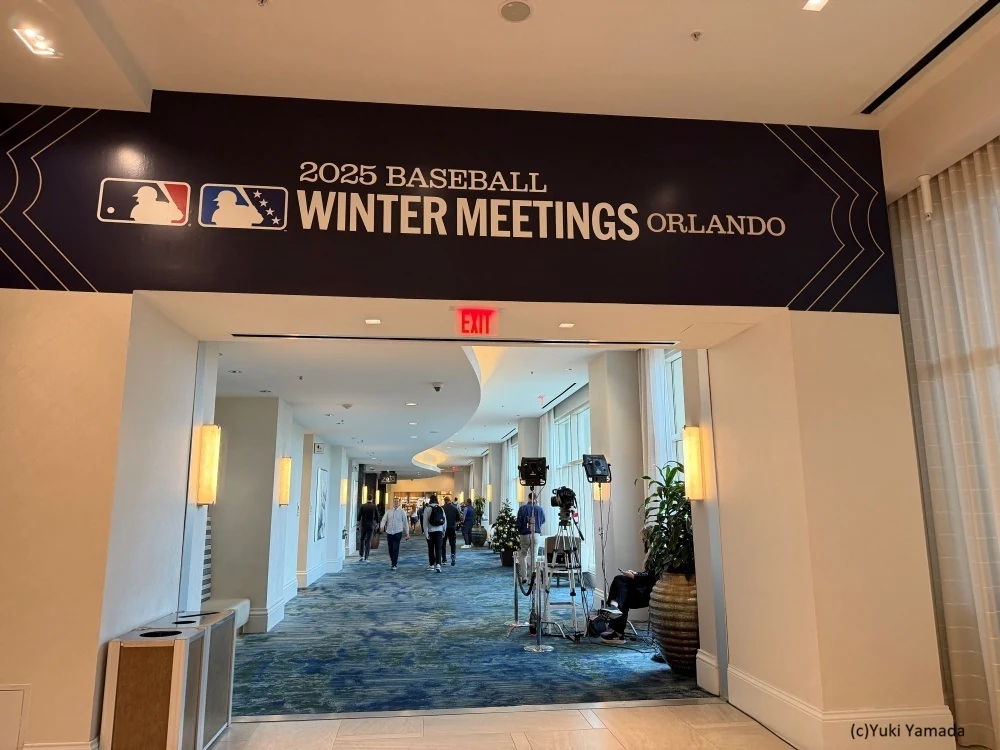
Past coverage also shows why patience can be justified. The Cubs' 2025 meeting wrap discussed work that could continue after the gathering ended. A conference is an opportunity to advance a plan, rather than a universal deadline by which every contender must finish its roster. The quality of the eventual moves matters more than whether their announcement occurred beside a hotel interview area.
An agreement still needs its own confirmation
Pay attention to the status words in transaction reporting. Discussions indicate that the parties are communicating. A reported agreement is a stronger development, but the report may still describe conditions to be completed. A club announcement or official transaction entry provides a different form of confirmation. Those steps should remain visible when an update is summarized or shared.
| Wording | Useful interpretation |
|---|---|
| Interest or discussions | A possible route, without an agreed transaction |
| Agreement reported | Read the attribution and any conditions still identified |
| Pending a physical | The report itself says a step remains |
| Club announcement or transaction | Check the confirmed terms and corresponding roster action |
The gathering also should not be confused with a newly imposed signing window. MLB has discussed calendar changes in bargaining, but a proposal requires its own status check. Our offseason calendar proposal explainer covers that separate debate. The existence of a December conference does not, on its own, create a deadline for a free agent to choose a team.
Keep the draft lottery and Rule 5 Draft separate
Two draft-related headlines can appear during the same period and still describe fundamentally different processes. The amateur draft lottery concerns selection order. The Rule 5 Draft concerns certain players who are already in professional organizations. Seeing the word draft in both places does not mean that a club winning a lottery has acquired a player from another team's farm system.
MLB's Rule 4 Draft explanation describes the amateur draft and the role of the lottery in its order. A lottery result changes an opportunity to make a later selection. The organization still needs to evaluate players and complete the applicable draft and signing process. It is therefore a development and acquisition opportunity, rather than an immediate addition to the next major league lineup.
The Rule 5 process addresses a different pool. Its Major League phase can give an eligible, unprotected professional player a route to another organization under specific roster restrictions. That makes the consequence more immediate for the original club's depth and the selecting club's roster planning. It also explains why November protection decisions can matter before the selection event itself.
| Process | Main question | What a headline does not establish |
|---|---|---|
| Amateur draft lottery | Where eligible clubs will select in the relevant draft order | Which amateur a club will eventually choose or sign |
| Rule 5 protection | Whether the original club shields an eligible player through roster status | That the player has an active major league job |
| Rule 5 selection | Whether another club acquires a player through that process | That ordinary minor league assignment rules apply without restrictions |
Also check which phase a Rule 5 report describes. A Minor League phase transaction should not be summarized as though it carries every condition attached to a Major League phase selection. Nor is either phase the amateur draft lottery. For the background on affiliations and development levels, see our farm system guide.
Finally, do not transfer an old broadcast time or lottery date into the current calendar. MLB's published December 9 Rule 5 listing answers the date of that scheduled event. It does not automatically provide this year's lottery programme. Each event requires its own current announcement, especially while the wider winter schedule remains a subject of uncertainty.
The Yankees questions worth following
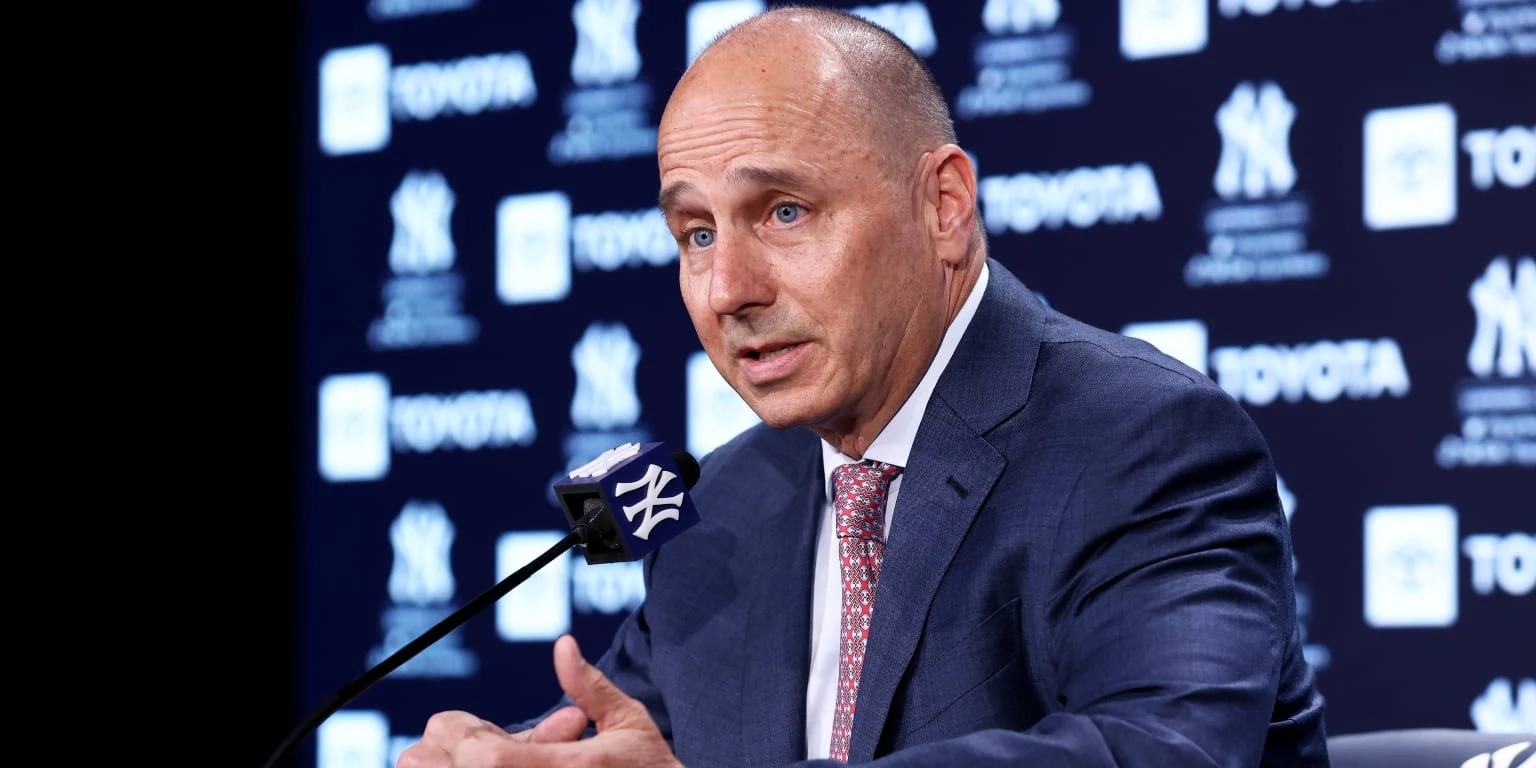
For Yankees fans, the best starting point is the roster problem a potential move would solve. MLB's current GM Meetings analysis points to lineup gaps and bullpen work. That is a more useful frame than treating New York as the assumed destination for every recognizable player. The analysis identifies areas to examine; it does not establish that the Yankees have reached an agreement with any particular target.
Read roster needs before chasing a famous name
Ask where an acquisition would play, whose opportunities might change and whether it improves the mix of skills the club needs. An additional bat can have different value depending on defensive position and expected playing time. A pitcher who raises the staff's ceiling may address a different question from a reliever who supplies dependable innings. Those are roster comparisons, rather than reasons to announce a fictional shopping list.
Availability needs a current check, too. Old search results about Cody Bellinger's free agency can survive long after the Yankees' January 2026 re-signing announcement. Earlier Kyle Tucker-to-New York predictions likewise predate the Dodgers' January signing news. A familiar name plus a current date in a search interface does not turn those earlier market stories into new negotiations.
Use a current pool of candidates before judging the options. Our free-agent guide for the coming season explains why contract options and availability matter. Then separate a plausible fit from a reported conversation, and a reported conversation from a club announcement. A player can make sense on paper without the parties ever reaching terms.
Follow protection decisions alongside outside additions
Internal roster decisions deserve attention beside the prominent market names. The Yankees' November protection questions include documented prospects such as Carlos Lagrange and Roderick Arias. Following their status does not require predicting that either will be lost or promoted. It means watching whether the club creates or uses a protected roster place and reading the actual transaction when it happens.
That accounting can affect how a later acquisition fits. An announcement adding one player may arrive with another move that creates space. Read both actions before concluding that a prospect has been passed over or that a veteran has become expendable. The number of people in a depth-chart graphic is not a substitute for the current contract roster.
Once playing assignments are established, the Yankees schedule becomes the practical next step for watching the resulting club. Until then, distinguish building roster flexibility from assigning a debut date. A protection decision, a signing and an appearance in a particular game each need their own evidence.
Build a useful news routine without treating rumors as results
Use a short evidence trail for each development you want to follow. Record the original report, its timestamp, the person or outlet responsible for it and the status it describes. Add a later confirmation to the same item instead of treating every repost as a new transaction. That makes it easier to see whether a story has advanced or is simply circulating through more accounts.
For a possible Yankees move, the key progression is specific: a reported need, an identified possibility, discussions if they are actually reported, an agreement if one is reached, and an official action when announced. Not every story will move through every stage publicly. Some will end with no transaction at all. Leaving an unresolved item labeled unresolved is more accurate than filling the gap with an invented reason negotiations failed.
Pair broader reporting with the Yankees' official news and the relevant transaction entry. Look for what an announcement confirms and what it leaves unspecified. A salary figure attributed to reporting is different from a term the team has announced. A roster addition may also require a corresponding action that changes how the move should be understood.
The same method works for meeting status. Preserve the date on a planned-event listing, then attach any later change to it. A prediction that the conference could be disrupted should remain a prediction until an operative notice replaces the plan. This avoids the confusing situation in which a reader sees one article describing an anticipated gathering and another writing as though it has already been canceled.
Check coverage and travel claims against the actual event
A past broadcast announcement is useful history, not a current viewing guide. MLB Network's Orlando coverage release is dated December 2025. Its hours and programmes should not be carried into a 2026 listing simply because the search result includes the words live and Winter Meetings. Check a new, event-specific announcement before planning around a stream or television slot.
For attendance, identify the precise session you intend to enter and the organizer responsible for registration. A hotel reservation is not evidence of admission to a baseball operations meeting, a media area or a specialist programme. MLB's 2025 Take the Field coverage, for example, describes a particular career-development event with its own participants. A shared conference setting does not turn all sessions into a public fan convention.
Keep an updated calendar, a list of confirmed roster moves and a separate watchlist of open questions. Each serves a different purpose, and none needs to pretend that a future meeting or transaction has already happened.
Loading comments...