

When is the 2026 MLB non-tender deadline?
The 2026 MLB non-tender deadline is Friday, November 20, 2026. That is the day clubs must decide whether to offer 2027 contracts to their eligible unsigned players. A player who is non-tendered becomes a free agent. A tender keeps the player under club control while the remaining terms of the contract are resolved. The MLB transaction glossary dates the deadline and defines the players it covers.
The two years in that sentence refer to different things. The front office makes the decision in November 2026 for the contract it would carry into the 2027 season. If a team announces it tendered a contract to its backup catcher, the team has taken the step needed to keep him in the organization for now. His salary, his role, and whether he is on the Opening Day roster can all remain open questions. An eligible player who has already agreed to a deal for 2027 has resolved the contract issue in advance.
The current agreement puts tender day on the last Friday before Thanksgiving. MLB collects the clubs' decisions and sends the MLB Players Association a central letter organized by team. The letter distinguishes players getting an offer from players being non-tendered. A club press release or transaction entry is the fan-facing record. If you are trying to confirm a particular player's status, use the dated entry rather than the moment a social post first appears. MLB Basic Agreement, Article XX(A)
| Date | What to watch |
|---|---|
| November 17 | Qualifying offer decisions and Rule 5 roster protection |
| November 20 | Contract tenders for eligible players without a signed 2027 deal |
| Early December | Winter Meetings and further roster activity as the offseason permits |
Those dates may all appear on the same team calendar because the moves are close together. A prospect protected on November 17 and a veteran whose contract comes up on November 20 can both affect the 40-man count. The moves solve different problems. The prospect transaction concerns a club's ability to retain him through Rule 5, while the tender decision concerns the next contract of a player already under club control. MLB's offseason calendar
The deadline also falls before the scheduled 2026 Winter Meetings. A club can enter those meetings with players newly available on the market and extra roster space of its own. The two developments are worth tracking separately. One tells you whom the club still controls, and the other gives you a starting point for following the players it might add.
What happens when a team tenders or non-tenders a player?
Start with three facts about the player. Is he on the 40-man roster? Does the club still control his rights? Has he already signed for 2027? A player in the first two categories who lacks a signed 2027 contract is part of the tender decision. Two backup infielders with similar playing time can face different decisions if one has already signed or reached free agency. The eligibility test matters more than last season's starts. MLB's contract tender glossary
A tender keeps the player under club control
When the club tenders a contract, it offers to keep the player under contract for the upcoming season. Eligible players include those still in the pre-arbitration stage and those who can use salary arbitration. The difference appears after the tender. A pre-arbitration player's salary is handled under the applicable contract and renewal rules. An unsigned arbitration-eligible player and the club can negotiate a salary or agree on a longer deal. An unresolved case can reach a hearing, with a panel choosing one of the two sides' salary figures. MLB's salary arbitration guide
Arbitration eligibility usually begins at three years of Major League service and continues during club control. Some players with less service qualify through the Super Two rule. The same fourth-year player can be on a tender announcement in November and remain a subject of salary reporting later in the winter. Follow the negotiation as its own event. Our MLB salary guide explains how service time affects a player's bargaining position.
Reserve status also differs from an active lineup. Clubs carry a 40-man roster for the organization and a smaller active roster for regular-season games. Players on optional assignments can remain on the 40-man roster. A tender to a player who spent much of the year in Triple-A can therefore preserve depth for spring camp or the next call-up. Competition for the active roster and restrictions on sending a player to the minors still matter. MLB's 40-man roster guide
A non-tender opens free agency
A club that declines to tender an eligible player gives up its control. The player becomes a free agent and can negotiate with other clubs or talk to the organization that let him go. He might find a clearer path to regular at-bats, a different role, or terms that make returning to the same team worthwhile. The new deal has its own terms. An outside estimate of a salary the player could have received through arbitration becomes a reference point in that discussion.
For example, the Dodgers non-tendered right-hander Evan Phillips in November 2025, then signed him to a new one-year deal in February 2026. Both entries describe real and distinct steps. The first opened the market to him. The second returned him to the Dodgers on a newly negotiated agreement. When you see those lines next to each other in an offseason tracker, read the dates in order to see how he moved from club control to free agency and back to a roster. MLB's report on Phillips' return
How a club weighs salary and a roster spot
The front office has two things to budget on tender day. One is the money it expects to spend on a player's next contract. The other is a place on the 40-man roster. An established reliever with a substantial projected arbitration raise and a younger player with a smaller salary can both be at risk, for different reasons. Keeping either player ties up a roster place that a club may need for a signing, a trade, or a player coming up from the minors. MLB's explanation of non-tenders
Projected salary is one part of the decision
Suppose a team expects its arbitration-eligible reserve outfielder to cost about $4 million, while it estimates a possible replacement would cost about $1.5 million. Those are illustrative numbers. The $2.5 million gap gives the front office something to compare with the veteran's defensive value, the positions he can cover, and the expected playing time. It also has to ask whether the replacement is actually available at that price. A familiar player with a reliable glove may be harder to replace than the salary gap suggests.
Even for a player near the minimum, a full 40-man roster can force a choice. The club might need room to add a pitcher before opening camp or to preserve a prospect it expects to promote. Letting a player go creates the room to act. It also exposes the club to the risk of losing the player while it looks for a replacement. Treat a vacancy, a payroll estimate, and a signing as three separate pieces of information. MLB's 40-man roster rules
What the Rangers' 2025 decisions illustrate
Texas announced three kinds of outcomes on November 21, 2025. The Rangers declined to tender 2026 contracts to outfielder Adolis García, catcher Jonah Heim, and relievers Josh Sborz and Jacob Webb. All four became free agents. The club also agreed to a one-year deal with Sam Haggerty to avoid arbitration and said it tendered offers to the other 27 eligible players. García and Heim had both played for the club's 2023 World Series championship team. Rangers press release · MLB's coverage of the moves
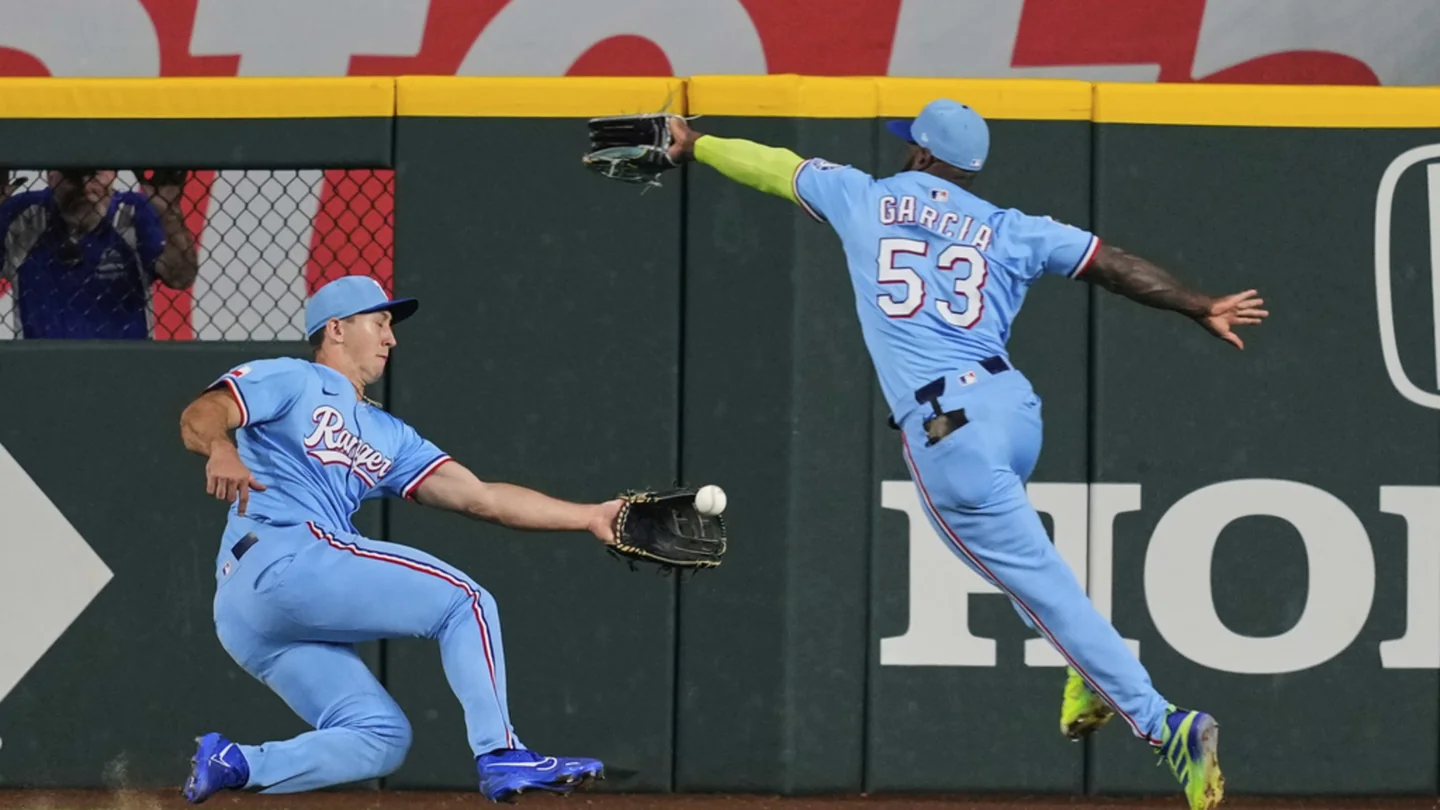
That announcement is a useful model for reading a 2026 club release. The non-tender list tells you who entered the market. The one-year agreement tells you whose contract talks are finished. Tenders for the rest tell you whom the club kept under control at that point. A single team release can contain all three statuses, so check the verb attached to each player rather than assuming every name has the same outcome.
How non-tender differs from DFA and other offseason moves
A non-tender and a designation for assignment can both clear a place on the 40-man roster. The player has different rights and next steps in each case. A qualifying offer or a move to protect a prospect may appear in the same week, even if the two actions matter to different groups of players. Read the transaction label and ask what happened to the player's contract and control rights.
| Move | Who is affected | What the move sets in motion |
|---|---|---|
| Non-tender | Eligible unsigned player under club control | The player enters free agency. |
| Designated for assignment | Player whose existing contract the team is moving off its 40-man roster | The team has a short window to trade the player or put him through waivers. |
| Qualifying offer | Eligible free agent | The player can accept a one-year deal. Declining it can lead to draft-pick consequences if the player signs elsewhere. |
| Rule 5 protection | Eligible prospect on the reserve list | An addition to the 40-man protects the prospect from the Major League portion of the Rule 5 Draft. |
Designated for assignment and outright waivers
A designation for assignment immediately removes the player from the 40-man roster. The club then has seven days to trade him or put him on outright or unconditional release waivers. If another club claims him on waivers, he goes onto that club's 40-man roster. If he clears outright waivers, the original team may be able to assign him to the minors. His service time and prior outright history can give him a choice about the assignment. MLB's DFA glossary · MLB's outright waivers glossary
Imagine two pitchers leave the same 40-man roster in the same week. The first is non-tendered at the contract deadline and can negotiate as a free agent. The second is designated for assignment. While the result of the second move is pending, the club can fill the roster place and the pitcher can still end up in a trade or waiver claim. If you are following the second pitcher, look for the next transaction before assuming he has reached the open market. The date of the DFA tells you when the club opened the spot.
Qualifying offers and Rule 5 protection
A qualifying offer is a one-year deal offered to an eligible free agent. This offseason's offer was worth $23.15 million, and players had until November 17 to accept. A player who declines can keep negotiating as a free agent, with potential draft-pick consequences if he signs with another club. A player who is non-tendered on November 20 enters free agency because his team declined to offer the next contract under club control. That transaction alone carries no qualifying-offer compensation. MLB's 2026–27 qualifying offer results
November 17 also brought the 40-man decisions that protect eligible prospects from the MLB phase of the Rule 5 Draft. Clubs can leave an eligible prospect unprotected and retain him if he is not selected. A prospect and a club-controlled veteran can both be part of a November roster calculation. The prospect has a draft exposure decision, while the veteran has a contract deadline. The 2026 Rule 5 Draft is scheduled for December 9 at the Winter Meetings, subject to the labor situation. See the Yankees' Rule 5 eligibility and protection guide for how a team weighs those spots. MLB's leaguewide protection list
How to check which players were actually non-tendered
Start with a team's dated roster announcement and match it to the official MLB transaction log. Search by the player's name and club, then read the action and the date. A deadline preview helps you decide whom to follow. A release or a dated transaction entry tells you what the team did. A roster page gives you the current list, which can reflect multiple moves made in the same afternoon.
Kansas City offers a current example. An offseason preview on MLB.com identified reliever Nick Mears as a potential non-tender candidate. On November 17, the official log recorded Kansas City designating him for assignment. The confirmed move is a DFA, with its own process described above. If a later transaction resolves his status, that dated entry supplies the next piece. The sequence is a reminder to match the preview to the official transaction before adding anyone to a list of non-tenders. Royals offseason preview · November 17 transaction log
After November 20, you can compare several teams through MLB's offseason transaction tracker. Cross-check the timing if a report attributes a signing to a source or calls it a deal pending completion. An agreement that turns into a confirmed signing belongs in the next column of your notes. Keep that signing beside the separate entry for how the player reached the market.
What changes for the 2027 roster after the deadline
The moves create two lists for the winter. The first is the players who become available to all clubs. Some will fit a very specific need, such as a left-handed bat for a platoon or a reliever who can cover several innings. The second list is the players their clubs retain. For an arbitration-eligible player still without a deal, the next question is whether the sides settle or proceed toward a hearing. For a team with a new 40-man opening, check which transaction eventually uses it. A new roster spot can stay open while the club considers several ways to cover the same role.
As of November 18, the scheduled tender deadline comes before the current Major League agreement expires on December 1. Later roster activity and arbitration timing can be affected by labor developments. Keep the dates attached to the relevant move as you follow the labor timeline and the wider 2027 free-agent market. The tender answers who stays under club control at the deadline. The next set of announcements will show how clubs turn those decisions into a roster.
Loading comments...