
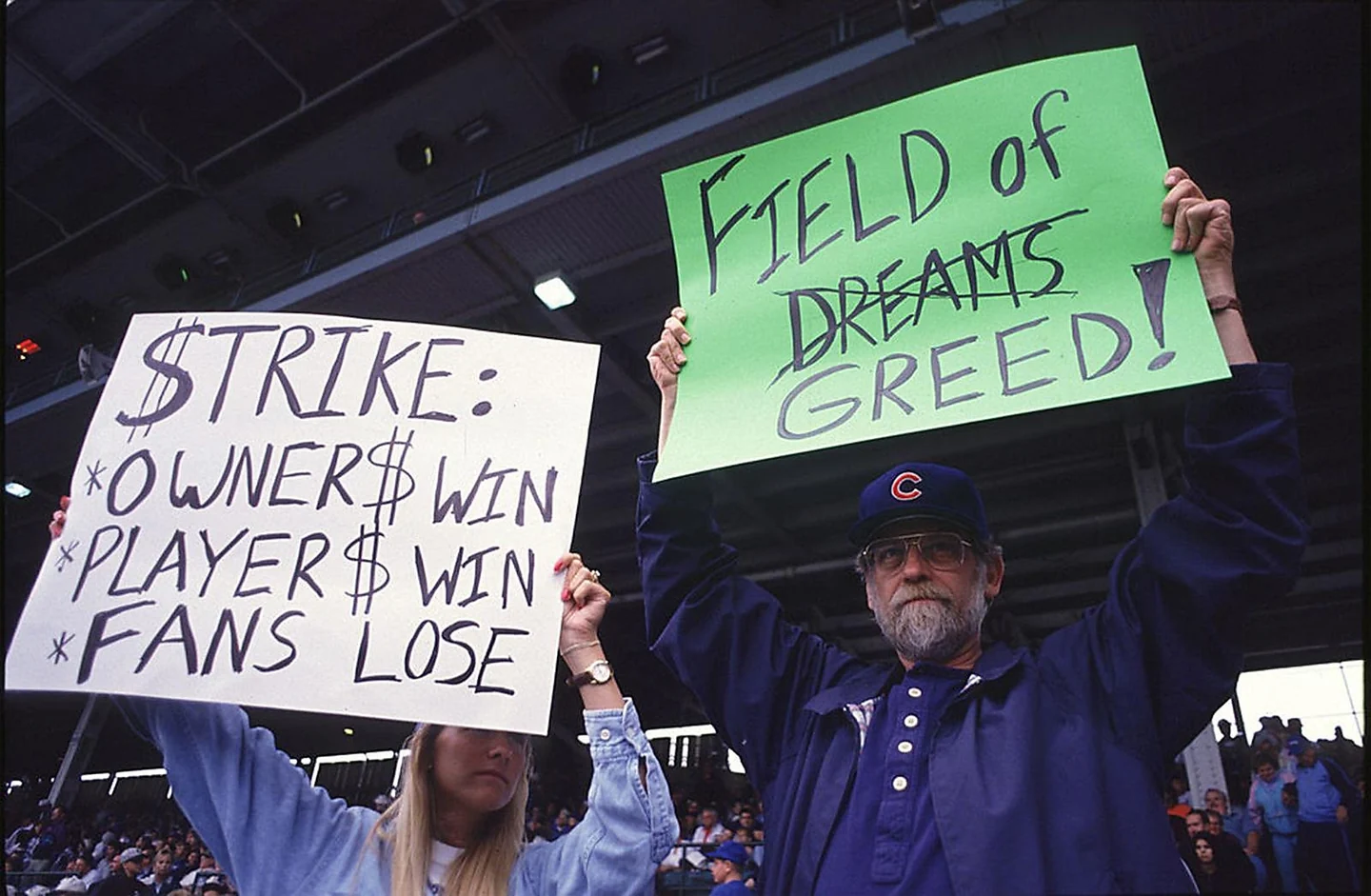
A baseball work stoppage can move Opening Day, take games off the schedule or end a season without a champion. Between 1972 and 1995, fans saw all three. The labor disputes also left quirks in the record book, including division rivals that played different numbers of games and a team with the best overall record in baseball that never made the playoffs.
Who stopped play, and what happened to the schedule?
A strike begins with players withholding their labor. A lockout begins with management withholding work. In MLB, the owners and the Major League Baseball Players Association bargain over the conditions under which games can be played. An expiring agreement is a date in that negotiation. A strike or lockout is a separate action, and the league’s decision about a particular game can come later. U.S. Bureau of Labor Statistics definitions · MLBPA’s work stoppage record
When a report says that a stoppage lasted two days or two weeks, it is measuring elapsed time. When MLB moves a weekend series, the fans and stadium workers affected know that those original dates are gone. The season record asks a third question. Did the clubs still play every game after the schedule was rearranged? A Saturday game replayed as part of a doubleheader two months later changes the original event date and still counts once in the standings. A game removed from the revised season disappears from both clubs’ totals.
Timing can matter as much as duration. In spring there is usually a little room to slide the first series or give players a shorter camp. A summer stoppage creates a backlog of divisional and interleague travel. Late in the season, the calendar has fewer open dates and a fixed sequence of postseason rounds to fit. The league can also change how teams qualify, which is how a schedule dispute can reach all the way into the postseason record book. Use the regular-season and postseason game counts to keep the phases separate. The current MLB labor guide follows the later bargaining cycle.
The first strike and the spring lockouts
The first three major league work stoppages in the modern bargaining era came in a five-year span. The players struck in 1972 and owners closed camps in 1973 and 1976. Each grew out of a different stage in the fight over how players were paid and how much control they had over their careers. For fans, the difference was immediately visible on the calendar. MLBPA’s list of work stoppages
The 1972 strike left the standings uneven
The players walked out before the scheduled opening of the season over pension and benefit funding. MLBPA’s history identifies a $500,000 pension contribution as part of the resolution. By April 15, the first regular-season games were played. A Bureau of Labor Statistics study counts 86 regular-season cancellations. The decision that mattered most in September was to pick up the old schedule at April 15. Clubs had different numbers of games remaining because the early series were never made up. MLBPA’s strike account · BLS labor history · Fenway Park Living Museum
Detroit finished 86–70 and Boston finished 85–70. They lost the same number of games, but Detroit played one more decision and had one more win. The Tigers won the American League East by half a game with a .551 winning percentage to Boston’s .548. The missing dates made that finish possible. They offer no evidence about what Boston or Detroit would have done if all the clubs had played a full schedule. The standings describe the games that survived. Official 1972 standings
The 1973 and 1976 lockouts put spring training on hold
In February 1973, owners withheld the opening of camp while the sides negotiated a new agreement. They reached a deal before the exhibition schedule was disrupted. The agreement created salary arbitration for players who met the service requirement. An eligible player and his team could bring their competing salary proposals to a neutral decision-maker. That gave players an avenue for a raise within the system that still largely tied them to a club. BLS historical review · SABR reserve-system research
In 1976, owners again kept players out of camp, this time after arbitrator Peter Seitz’s ruling in the Andy Messersmith and Dave McNally case opened a path to free agency. Commissioner Bowie Kuhn ordered camps opened on March 17 while the union and owners kept bargaining. The regular season began as scheduled in April. The agreement reached in August established a route to free agency after six years of major league experience. The season went forward under a live negotiation, a reminder that spring reopening and resolution of the underlying bargaining question can happen months apart. SABR’s 1976 account
The 1981 strike split one season into two races
The warning had come the year before. In 1980, players struck for the final eight days of spring training, costing 92 exhibition games. The regular season went ahead. A joint committee took up the question of what a club should get after losing a free agent, and the unsettled issue carried into 1981. A spring dispute had left the standings intact. A summer dispute over the same unresolved question put the shape of the competition up for negotiation. MLB’s account of the 1980 and 1981 strikes · MLB bargaining timeline
Free-agent compensation stopped play in June
The owners wanted direct compensation for clubs that lost free agents. The union viewed the demand as a way to weaken the free agency that players had secured in the previous decade. A team has a different incentive to sign an available player if the purchase also carries a roster cost. That is why the fight was about how freely a player could move as well as what the former team would receive. The sides eventually agreed on compensation rules while preserving the basic path to free agency. MLBPA’s 1981 strike history · BLS labor analysis
Players walked out June 12 and a settlement came July 31. MLBPA and MLB count 713 canceled regular-season games and describe it as a 50-day strike. The pause in play ran longer than the negotiations. Cleveland hosted the rescheduled All-Star Game on August 9, and regular-season games returned August 10. The Dodgers and Reds played that day in Los Angeles, where Jerry Reuss and Steve Howe combined to shut out Cincinnati. The distinction explains how a 50-day strike could leave roughly two months between regular-season games. MLB All-Star archive · SABR’s August 10 game account
Why the best full-season record could miss the playoffs
The league awarded a playoff berth to each division’s first-half winner, then ran a fresh division race after the break. The winners of those two races met in a best-of-five round before the league championship series. The games already played still counted in official regular-season records. Qualification depended on where a club finished in either of the two races. The history of MLB playoff formats puts that one-season arrangement in context. Hall of Fame explanation of the split
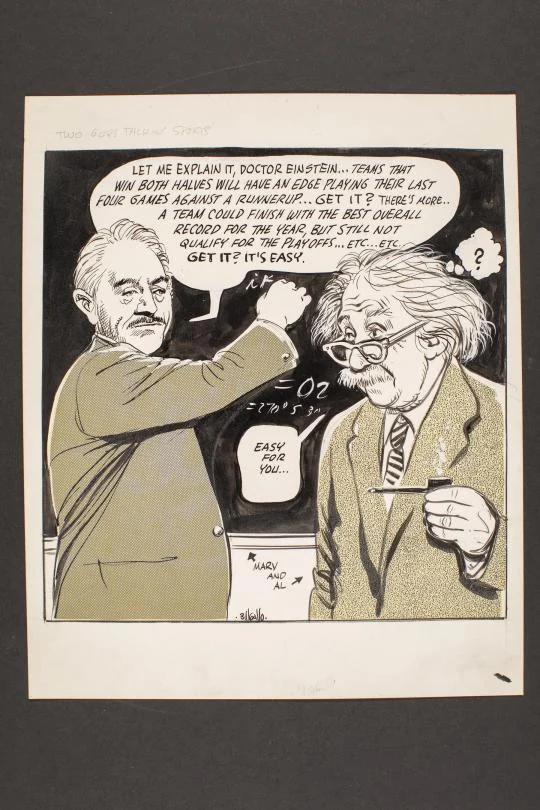
Cincinnati finished 66–42, a .611 winning percentage and the best overall record in baseball. The Reds finished half a game behind the Dodgers in the first half of the NL West race and 1½ games behind Houston in the second. They missed the playoffs. St. Louis also missed out after compiling the best combined record in the NL East. Los Angeles went through Houston in the first round and eventually beat the Yankees in the World Series. The proper way to read that year is to keep the overall standings for statistical history and the two half-season standings for playoff qualification. MLB’s overall 1981 standings · 1981 postseason results
How 1985 and 1990 preserved a full regular season
A short strike in August and a month-long lockout in spring both ended with clubs able to play the scheduled number of regular-season games. The work to preserve those games happened at different points in the calendar. In 1985, MLB had isolated gaps to fill during a season already in progress. In 1990, it had to make room for spring training and reset the start of the regular season.
The 1985 strike interrupted two days in August
The players walked out on August 6, 1985. Salary arbitration was at the center of an economic fight that also involved benefits and the game’s incoming television money. Most players previously had to accumulate two years of major league experience to become eligible for salary arbitration. The new agreement pushed the wait to three years. MLBPA’s history also records increases in minimum salaries and changes to free-agent compensation. The gains and concessions involved distinct groups of players. A rookie earning the minimum and a player on the verge of arbitration could experience the same deal very differently. Red Sox historical timeline · MLBPA’s history · BLS’s arbitration account
The two-day stoppage left 25 games to make up, according to the BLS study. They were played later in the season. For fans who had a ticket or who followed a team from city to city, that meant checking where a game landed on the revised schedule. In the standings, the rescheduled games eventually took the same place as any other wins and losses. The strike changed August’s daily slate without imposing another split season.
The 1990 lockout moved Opening Day
Owners locked players out of spring training for 32 days in 1990. A settlement in mid-March made it possible to open the season on April 9, a week later than planned. BLS counts 78 regular-season games that had to be rearranged and reports that MLB arranged a later postseason window with its broadcaster. MLB’s year review notes that the league added three days at the end of the regular season. Those changes combined to preserve a 162-game schedule. A source reporting 78 postponements and another reporting zero games lost are describing different points in the same calendar adjustment. MLB’s 1990 review · BLS rescheduling account
Cincinnati fans usually expected the Reds to start at home. The revised 1990 schedule sent the club to Houston, where it won 8–4 in 11 innings on April 9. It was only the second road opener in modern franchise history at that point. That is what a saved season could look like on the ground. The Reds still got their full season, and their first game was in a different ballpark. MLB’s account of Cincinnati’s opener
The 1994–95 strike erased a World Series and shortened the next season
The fight over a salary cap and the distribution of revenue reached the schedule in August 1994. Owners had proposed limiting payrolls as part of a restructuring of the game’s economics. Players resisted the cap and changes to the way individual salaries were negotiated. They struck while the season was still going, and negotiations dragged into the following spring. The U.S. Bureau of Labor Statistics describes the resulting dispute as a 232-day strike. Its effects show up in the record books twice, as a lost postseason in 1994 and a revised regular season in 1995. BLS’s history of the strike
A canceled postseason left 1994 without a champion
Clubs played their last games on August 11, 1994, and the strike began August 12. For several weeks, a restart remained a question. On September 14, acting commissioner Bud Selig announced the World Series was canceled, the first time in 90 years that it would go unplayed. The rest of the regular season and the playoffs were gone as well. That sequence distinguishes the day games stopped from the later decision to erase the remaining schedule. U.S. Senate historical account · MLB’s 1994 postseason archive
Montreal stood at 74–40, the best record in baseball. San Diego’s Tony Gwynn finished with a .394 batting average. Both are real results. Neither resolves the questions that might have played out over a full schedule. A title in the World Series champions list requires a played championship, and 1994 has no winner. Gwynn’s batting title also belongs in the record book at the average he posted. The missing games matter because they took away the chance to see those races and pursuits finish. 1994 overall standings · Padres’ franchise history
The court order and the 144-game 1995 schedule
The dispute entered spring with owners preparing to use replacement players. On March 31, U.S. District Judge Sonia Sotomayor granted a preliminary injunction sought by the National Labor Relations Board. It required restoration of the prior employment terms, including provisions governing free agency, salary arbitration and collusion. The order addressed the rules while the labor case continued. It gave players a basis to return under the earlier terms while broader bargaining remained open. The federal court’s opinion
The return to work and the first regular-season pitch happened at different points in April. The Dodgers and Florida Marlins played the first regular-season game on April 25, and the broader Opening Day slate followed April 26. MLB scheduled 144 games per club, 18 fewer than the usual 162. Atlanta ultimately beat Cleveland four games to two in the 1995 World Series. That was the championship of the resumed 1995 season. The gap in 1994 remained. A calendar, a standings table and a postseason bracket answer different questions in a labor-shortened year, and those three records together tell the story. MLB’s 1995 season review · 1995 postseason results
Loading comments...