
An MLB bracket challenge asks you to predict how the postseason will unfold, then awards points when your picks match the results. Before choosing a World Series champion, identify the contest you are entering, read its scoring and entry deadline, and make sure every later-round pick follows the teams you advanced earlier.
As of October 10, 2026, the postseason is already underway. A page displaying a 2026 bracket or leaderboard is not proof that new full-bracket entries are still accepted. You can still enjoy following an existing entry or organize a separate pool for the rounds that remain.
What an MLB bracket challenge asks you to predict
The familiar version starts with the actual playoff field. You choose each Wild Card Series winner, advance those choices into the Division Series, select the league champions and finish with a World Series winner. Some organizers also ask for series lengths or a tiebreaker answer. The entry form determines what you must supply; a champion pick alone may not constitute a complete entry.
In a twelve-team, single-elimination postseason, eleven series decide the champion. Four are Wild Card Series, four are Division Series, two are league championship series and one is the World Series. Picking those series winners is different from choosing a winner for every individual game. A club can lose Game 1 and still make your series prediction correct.
The phrase bracket challenge also appears in searches for other baseball games. A Home Run Derby bracket predicts a different event. A daily player game may ask you to select hitters rather than clubs. Check the game description before spending time on picks: the fact that a promotion is on MLB's website does not make every promotion the postseason bracket you wanted.
A full bracket is different from round-by-round picks
A full bracket makes you forecast future matchups before they exist. If you select a Wild Card club to win the World Series, you must also advance it through every necessary earlier round. If it loses immediately, those later selections cannot become correct simply because you would now prefer the team that beat it.
A round-by-round pool can let you choose from the actual survivors when each new round begins. Whether edits or new picks are allowed depends on its rules. Do not assume your online entry refreshes when real teams advance, or that you can replace an eliminated championship pick after the deadline.
For practice, use our blank printable playoff bracket and fill the whole route before comparing it with a results copy. That sheet is an independent fan download. Completing it does not register an entry with MLB, ESPN or any other contest organizer.
Find the right contest and check its entry rules
Start from the organizer's own site, not an old screenshot or a social post passed around your group. MLB's Postseason Bracket Challenge destination is the place to begin for that organizer's promotion. ESPN and independent publishers have their own games and terms. An account or bracket on one platform does not automatically enter you on another.
Read the game rules before filling the entire bracket. The details that matter to a fan are usually straightforward: what you are predicting, when selections stop changing, how many entries are allowed, what earns points and whether you qualify for any advertised prize. Keeping those details beside your picks saves confusion after a favorite loses.
Confirm the season and the contest name
Check the year in the heading and the dates in the body. A search result can lead to a previous season's rules even when its navigation shows current teams or current news. Similarly, a page about Base Chase, Beat the Streak or the Home Run Derby may be a genuine MLB promotion while answering a completely different question.
Do not carry over an old prize amount or entry limit from memory. MLB's 2019 perfect-bracket story discussed a historical $250,000 prize; that is not evidence of a 2026 prize. The same principle applies to points. A friend saying “the final is worth sixteen” may be remembering another sport, another publisher or another year.
For 2026, ESPN's published contest timeline placed full-bracket completion in late September and checking existing brackets during the postseason. The GIST's published 2026 entry dates also fell in September. By October 10, those advertised full-bracket entry windows were past. Check the organizer directly for any separate later-round game rather than assuming a visible sign-up button reopens the original competition.
Check eligibility, the deadline and your saved entry
Participation and prize eligibility can be different. An organizer may let a broad audience fill out picks for fun while limiting prizes by age, residence or other conditions. Read the eligibility section for the specific promotion you choose. A leaderboard position by itself does not establish that you qualify for a prize.
Write down the published lock date, time and time zone. Set your own reminder earlier, so account verification or a connection problem does not consume the last minute. If a landing page and the official rules show different times, resolve that with the organizer instead of treating the later time as permission to wait.
After submitting, reopen your entry while changes are still permitted. Verify the champion, every earlier winner and any required tiebreaker. Look for an entry name or saved-entry confirmation, then keep a copy of your picks. Registering an account, joining a group and saving a complete entry can be separate steps. Finish each required step before considering your bracket entered.
Understand scoring before choosing a champion
There is no single scoring table that applies to every MLB bracket challenge. Find the points in the rules of your chosen game, then list the value of a Wild Card pick, a Division Series pick, a league champion and the World Series winner. If later rounds carry more weight, picking the eventual champion can matter much more than collecting a few early points.
As one specific organizer example, The GIST's 2026 landing page listed two, four, six and eight points for correct round winners. Its rules also made the series-length bonus conditional on picking the winning club correctly. That is a reason to read beyond the headline: getting a series to last six games may not earn a bonus if you chose the losing team.
For a simple home pool, you could use the following different system. This is an original house-rule example for your group, not a claim about MLB's or ESPN's official scoring.
| Round | Points per correct winner | Number of series | Maximum round points |
|---|---|---|---|
| Wild Card | 1 | 4 | 4 |
| Division Series | 2 | 4 | 8 |
| League Championship Series | 4 | 2 | 8 |
| World Series | 8 | 1 | 8 |
That example offers twenty-eight winner points in all. Four correct Wild Card picks earn four points, while one correct World Series champion earns eight. A person who starts slowly can therefore remain competitive. If your group prefers every series to count equally, award one point each instead, for eleven possible points. Both approaches are easy to understand when you announce the choice beforehand.
Decide what later-round correctness means. Does the selected winner earn points regardless of its opponent, or must the exact matchup also be right? If you picked the correct AL champion but the wrong club to face it, the answer changes the score. Online games resolve this through their own rules; a home pool needs the same clarity.
Check the tiebreaker wording carefully, too. Total runs scored by the champion throughout the postseason, total runs in the World Series and the score of the clinching game are three different questions. Write the requested answer, not the statistic you expected to see. If it asks for a series length, use a possible number of games for that round.
A perfect bracket and a high-scoring bracket are not identical goals. Once one early pick is wrong, a perfect entry is gone, but a points-based pool may still reward every correct later selection. Keep following the games and the scoring rather than discarding a sheet after one surprise result.
Make picks that fit the postseason bracket
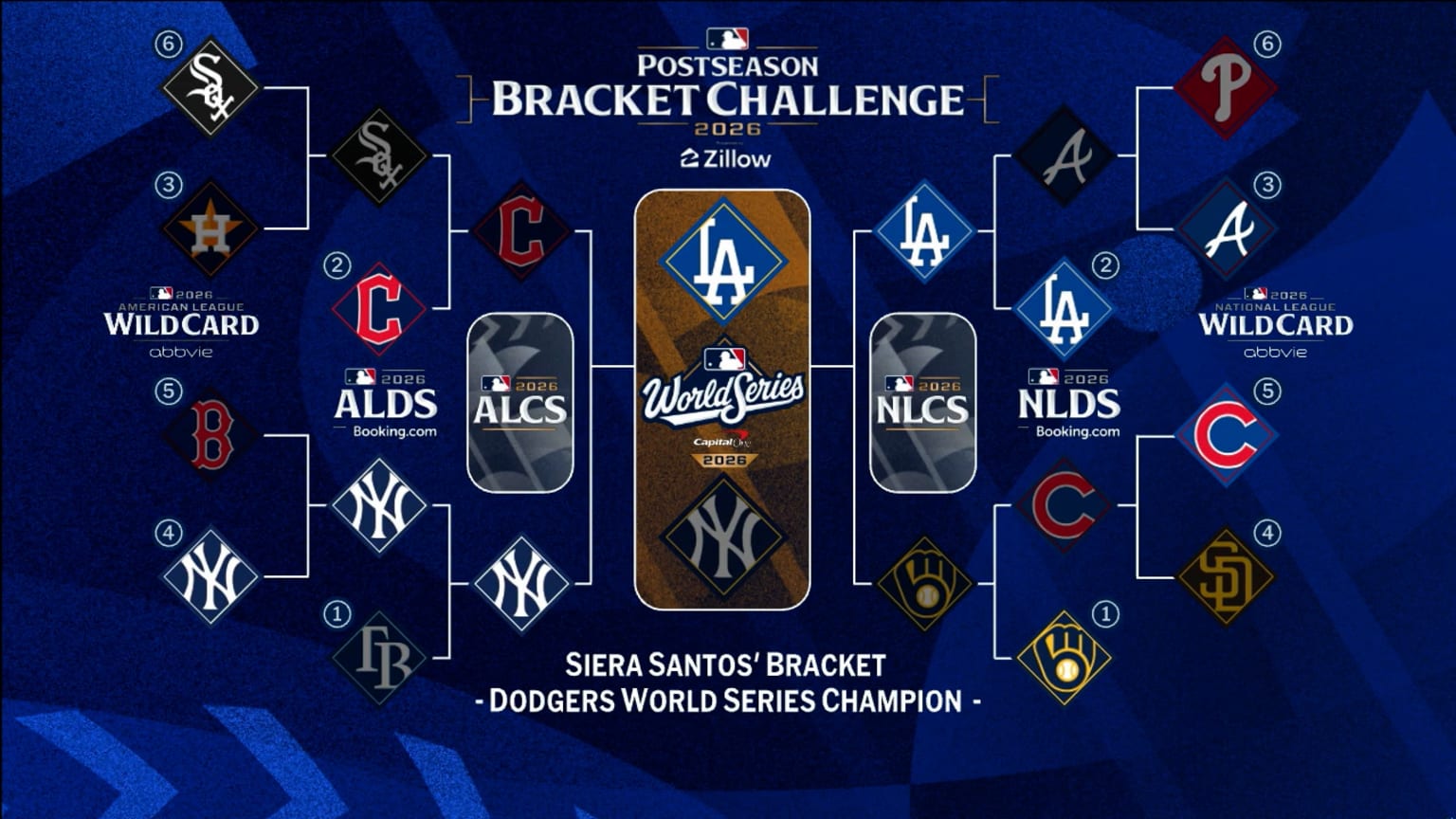
A good bracket starts with legal paths, then adds your baseball opinions. You can pick a favorite, an underdog or your own team, but the clubs you select for later rounds must be able to reach those rounds in your entry. Before debating who has the better bullpen, make sure you have not put two teams from the same side of a league bracket into its championship series.
Trace the fixed paths before selecting later winners
In each league, the 4/5 Wild Card winner advances to face seed one. The 3/6 winner advances to face seed two. An upset does not trigger reseeding. Picking seed six to win its Wild Card Series therefore sends that team into the seed-two matchup, not into whichever matchup seems easier.
Work forward through your opening-round picks, then check backward from your champion. Your World Series winner must also appear as your league champion, Division Series winner and, if necessary, Wild Card winner. A bye team starts in the Division Series, so it does not need an invented Wild Card victory. Our MLB playoff format explanation provides the full seed and round map.
Match your series-length pick to the round
A Wild Card Series can last two or three games. A Division Series can last three, four or five. An ALCS, NLCS or World Series can last four through seven. Those limits give you an immediate check on an entry: a five-game Wild Card prediction or a three-game World Series prediction cannot fit the current tournament.
Choose the winner first, then the length. A pick such as “Team A in six” means Team A wins four games and Team B wins two. It does not mean Team A scores six runs in the final game. If a form asks for both length and runs, answer each field separately and check the wording of its tiebreaker.
Choose upsets with a reason, not just for variety
Before taking an underdog, identify the matchup you expect to favor it. Strong starting pitching in a short series, an available bullpen, a lineup that handles the opposing pitchers or a healthier confirmed roster can be reasons to prefer one club. Treat those as parts of your judgment, not promises that a particular outcome must occur.
Use current roster and availability information. A player being famous, or being on a team's September roster, is not enough to establish that he will play the relevant postseason series. Teams submit series rosters, and those can change between rounds. Read the actual team updates rather than building a forecast around an old injury headline.
Think about the whole route. An underdog needs to survive the first opponent before the next matchup helps your champion pick. A strong bye team has a shorter route in rounds played, but still has to win its series. A higher regular-season win total is evidence to weigh, not an automatic October victory.
For a season-specific forecast, compare our 2026 postseason predictions with your own reasoning. Keep the distinction clear: a forecast explains what someone expects; the bracket results tell you what actually happened.
Run a friends-and-family pool and follow the results
A home bracket pool works best when everyone can explain the rules in a sentence or two. Choose one entry per person, set a common deadline, publish the point values and collect named copies. If you permit multiple entries, say how many and whether each one competes separately. Agree on a tiebreaker before the tournament rather than inventing one after two friends finish level.
For an online group, creating a bracket and adding it to the group may be separate actions. ESPN's group help describes creating an entry first, then selecting it for the group. Follow the instructions for the specific game you are using and verify that the right entry appears in your group standings. A link invitation on its own is not a guarantee that your picks have been added.
For a paper pool, use a shared folder or a simple table with each person's name and selected winners. Keep an original copy of every entry, then maintain a separate score table. When a series ends, record the confirmed winner, award the relevant points and leave the submitted picks unchanged. That lets someone check a disputed score without relying on anyone's memory.
Do not score a series after the first game. A two-game sweep finishes a Wild Card Series, three victories finish a Division Series and four finish the later rounds. You can note who is leading while a series is in progress, but those notes are different from earned points. If you show a projected score, label it projected rather than treating it as a finished result.
Start a remaining-round pool if October is already underway
Missing a full-bracket deadline does not stop you from having fun with a new, separate group game. Start with the actual clubs remaining in the next round. Everyone makes selections before the same agreed deadline, and only those future series count. If a round has already started, decide whether to wait for the next one or explicitly allow picks with the same information available to everybody.
Give that pool a clear name, such as league-championship-and-World-Series picks. Do not compare its score directly with someone who selected the full postseason before the Wild Card games. The two entries faced different information and different possible points. Keeping the formats separate makes the game fair and the conversation much easier.
Use today's games to follow the action and the TV schedule to plan a group watch. Return to the organizer's leaderboard for an official entry, or to your own table for a home pool. A printable sheet does not update or award points by itself.
Your useful final record is the saved entry plus the finished score. It shows which picks worked, where an upset changed the route and whether your champion choice carried the pool. You can learn from that record next October while still enjoying the games after your first prediction goes wrong.
Loading comments...