
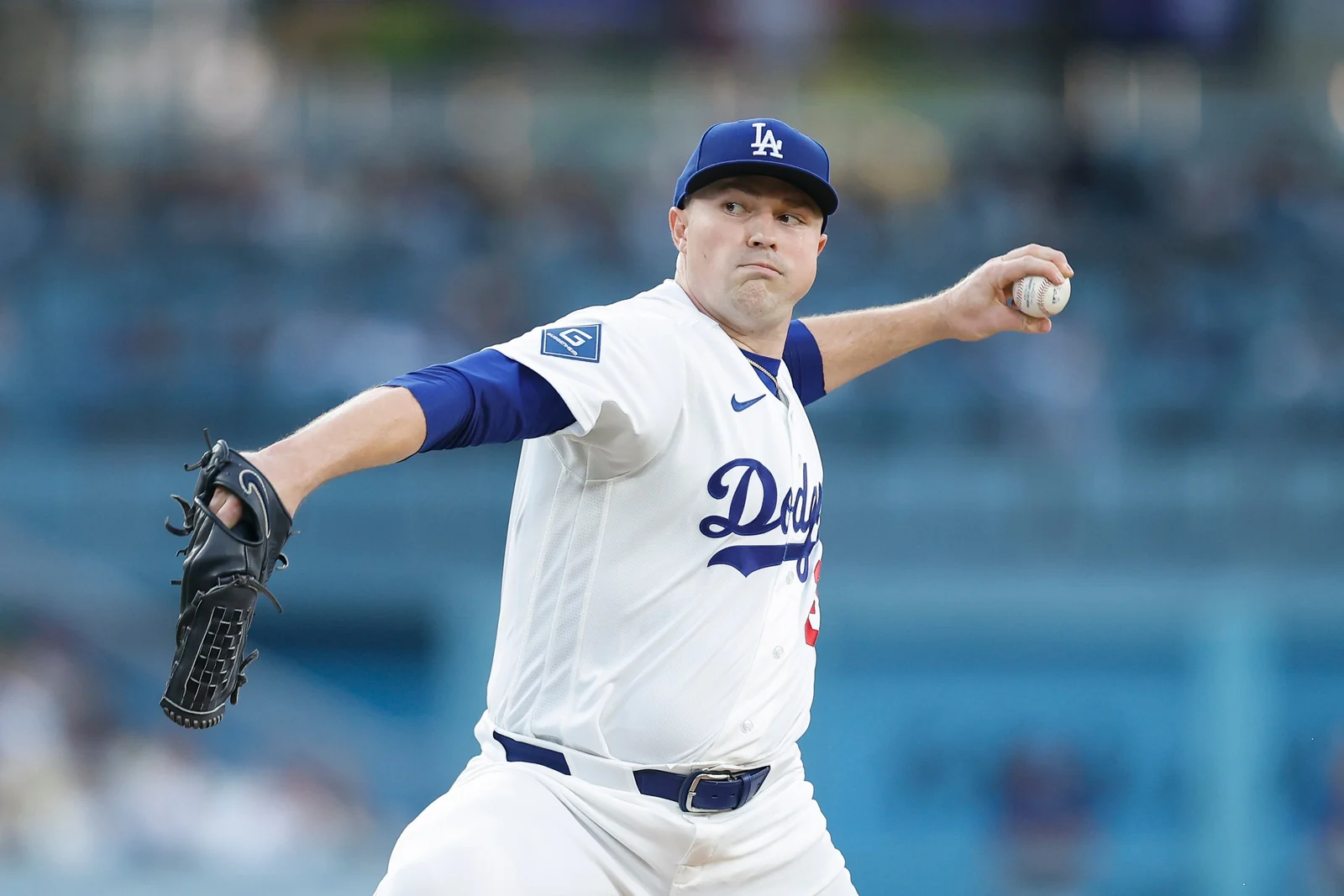
Our 2026 MLB Postseason Predictions at a Glance
Prediction snapshot published August 19, using games completed through August 18: our projected World Series matchup is the Los Angeles Dodgers against the Tampa Bay Rays, with Los Angeles winning the championship. The tables below are our editorial picks for the final seeds, not the official bracket and not a copy of any projection model.
| Seed | Team | Projected route | Confidence |
|---|---|---|---|
| 1 | Tampa Bay Rays | AL East winner | High |
| 2 | Chicago White Sox | AL Central winner | Medium |
| 3 | Houston Astros | AL West winner | Low |
| 4 | New York Yankees | Wild Card 1 | High |
| 5 | Boston Red Sox | Wild Card 2 | High |
| 6 | Texas Rangers | Wild Card 3 | Low |
| Seed | Team | Projected route | Confidence |
|---|---|---|---|
| 1 | Los Angeles Dodgers | NL West winner | High |
| 2 | Milwaukee Brewers | NL Central winner | High |
| 3 | Atlanta Braves | NL East winner | High |
| 4 | Chicago Cubs | Wild Card 1 | High |
| 5 | Philadelphia Phillies | Wild Card 2 | Medium-high |
| 6 | San Diego Padres | Wild Card 3 | Medium |
The official standings at our cutoff had exactly those 12 clubs in playoff position, but not in that final order. Milwaukee owned MLB's best record at 78-48, one and a half games better than the 76-51 Dodgers. We nevertheless project Los Angeles to finish as the NL's No. 1 seed. FanGraphs' FG WAR forecast, updated August 18 at 11:49 p.m. ET, projected 98.2 Dodgers wins and 96.7 Brewers wins. That model gap informs our choice; it does not make the choice official.
Three evidence labels matter throughout this forecast. A current standing is an MLB result through August 18. A model probability is a dated FanGraphs estimate that will move as inputs change. An author prediction is our judgment about the final field or a future series. The confidence words in the tables are editorial labels, not hidden percentages.
Our conditional October path has the Rays winning the AL pennant and the Dodgers winning the NL pennant, then Los Angeles taking the World Series. “Conditional” matters because none of these matchups had been set. The first two division winners in each league would receive byes under the current structure; readers who need the mechanics can use our complete MLB playoff format guide.
Late-August leaders deserve respect, not certainty. MLB's historical review found that 72% of eventual division champions in the Wild Card era, excluding 2020, led or shared first on August 1. That also means more than one quarter did not. Treat this board as a dated answer, and expect the low-confidence AL West and final AL Wild Card calls to be the first pieces that could move.
American League Projected Seeds and Wild Card Bubble
Five of our six American League selections have a reasonably clear case; the sixth is almost a coin flip. Through August 18, Tampa Bay led the East at 75-50, Chicago led the Central at 65-60 and Houston led the West at 63-63. New York at 70-55 and Boston at 68-58 held the first two Wild Cards. We project all five to stay in the field, but that statement mixes two very different confidence levels: the Rays, Yankees and Red Sox had substantial cushions, while the White Sox and Astros still had real divisional work ahead.
The dated model agreed on the top of the field more strongly than on its order. FanGraphs' FG WAR forecast, updated late on August 18, put Tampa Bay's playoff chance at 100.0%, New York's at 99.5% and Boston's at 95.8%. Chicago was at 69.2% and Houston at 56.8%. Those are model estimates, not clinches. They also include both division and Wild Card routes, which is why a team's total playoff chance is not the same thing as its chance to win its division. Our projected standings guide explains that distinction in more depth.
Why Texas gets the last spot — barely
Our lowest-confidence field pick is Texas as the No. 6 seed. The Rangers were 62-64 and occupied the last Wild Card position at the cutoff. Minnesota and Toronto were only half a game behind, while Cleveland, Baltimore and Detroit were one game back. Seattle was three games behind. That is a crowded race, not a meaningful cushion.
Texas gets the nod for two modest reasons. First, it already owned the spot. Second, the same FanGraphs snapshot gave the Rangers a 36.5% total playoff chance, the highest figure in that immediate group. Cleveland was close at 31.8%, Seattle at 31.5% and Minnesota at 27.8%. A four- or five-point model edge is useful tie-breaking context, not enough to support confidence.
The strongest reason this pick can fail
The scoring margins argue against complacency. Texas had a minus-42 run differential through August 18, compared with Cleveland's minus-25. Detroit was the most dramatic warning: the Tigers were only 61-65, yet had outscored opponents by 83 runs. Records determine qualification; run differential does not. Still, that disconnect says Detroit's record may understate how well it had played in aggregate.
Cleveland is our first team out because it combines proximity in the standings with a better scoring margin than Texas. Minnesota and Toronto have the shortest immediate climb, Seattle retains a meaningful model path, and Detroit has the strongest underlying run signal. None is eliminated. Check the latest results before treating “Rangers sixth” as current, because one night can reorder almost this entire paragraph.
National League Projected Seeds and Wild Card Bubble
Our National League forecast keeps the same six teams that occupied postseason places after August 18, but it does not freeze their order. Milwaukee held baseball's best record at 78-48, Atlanta led the East at 74-52 and Los Angeles led the West at 76-51. Chicago, Philadelphia and San Diego held the three Wild Cards. We project those six to survive; the deliberate change is moving the Dodgers above the Brewers for the final No. 1 seed.
Why Los Angeles moves ahead of Milwaukee
This is a forecast, not a correction to the standings. Milwaukee had earned the top current position. FanGraphs' FG WAR snapshot, updated August 18 at 11:49 p.m. ET, nevertheless projected the Dodgers to 98.2 wins and the Brewers to 96.7. A one-and-a-half-win estimate is narrow enough to change quickly, but it supplies a defensible reason to project Los Angeles first while respecting what Milwaukee had already banked.
The model was far more decisive about both clubs reaching October: it listed each at a 100.0% playoff chance after rounding. That still is not a mathematical clinch. Our seed order combines the model's rest-of-season view with an author judgment; the Brewers' existing lead is the cleanest reason that judgment could be wrong.
The middle of the field looks sturdier
Atlanta is our No. 3 seed, with the Cubs fourth and Phillies fifth. The dated model projected both Atlanta and Chicago to 92.4 wins, Philadelphia to 88.4, and gave them playoff chances of 98.9%, 99.3% and 86.8%, respectively. Their route labels differ — Atlanta is the projected division winner while Chicago and Philadelphia are Wild Cards — but the larger point is that all three had more separation from the cutoff than San Diego did.
Deadline additions make the conditional matchups more interesting without making them inevitable. The Associated Press reported that Philadelphia added Luis Arraez. The Dodgers acquired Tarik Skubal. Those moves are reasons to reassess October roster strength, not reasons to overwrite the official standings or assign a guaranteed series win.
San Diego holds off Arizona in our final call
The Padres were 68-59 and two games ahead of the 66-61 Diamondbacks for the last spot. FanGraphs placed San Diego at a 69.2% playoff chance and Arizona at 29.2%. We take San Diego sixth, supported by the lead, the model gap and deadline additions of starters Robbie Ray and Casey Mize. Arizona is the first team out.
That is a medium-confidence choice, not a dismissal of the Diamondbacks. Two games can disappear in one series, and pitcher availability matters more than the names on an August transaction list. St. Louis was three games behind the Padres and Miami four back, so the race was not limited to two teams either. If San Diego and Arizona trade places, both our projected Wild Card matchup and the later Dodgers path must be rebuilt rather than cosmetically edited.
Wild Card Series Predictions: Four Best-of-Three Picks
These four matchups are conditional author predictions built from our projected seeds; MLB had not scheduled them as of August 19. Under the current format, the No. 3 division winner would host No. 6, while No. 4 would host No. 5, with each best-of-three series staying at the higher seed's park. That compact format magnifies one poor start or one exhausted bullpen, so every pick here carries more upset risk than a full-season forecast.
Yankees over Red Sox
New York gets the pick because it held the better record, 70-55 to Boston's 68-58, and would host this projected matchup. The August 18 FanGraphs snapshot also gave the Yankees a slightly higher World Series probability, 8.9% to 7.7%. That figure measures the entire postseason path, not this head-to-head series, but it supports the narrow lean.
Boston's upset route is substantial. The Red Sox had the better run differential, plus-96 to New York's plus-87, and added Adley Rutschman at the deadline. In a short series, that profile is far more important than a two-game record gap may look. Pick: New York, with low-to-medium confidence.
Astros over Rangers
This is the most fragile selection. Houston was only 63-63, one game better than 62-64 Texas, and both clubs had negative run differentials. The Astros' minus-32 was less concerning than the Rangers' minus-42, and FanGraphs gave Houston the better title estimate, 3.7% to 2.3%. Those are small edges, not a dominant case. Pick: Houston, low confidence.
Texas can overturn it by reaching the round with the healthier, better-aligned rotation. We are not naming an August pitcher as a future Game 1 starter; rotation order and availability cannot be known this far out. A seed change could also erase the matchup entirely.
Cubs over Phillies
Chicago's current résumé drives this call: 74-53 with a plus-103 differential, compared with Philadelphia at 69-58 and plus-12. The Cubs would also host all games in this projected pairing. Pick: Chicago, medium confidence.
The model supplies the caution. FanGraphs actually assigned Philadelphia the higher World Series chance, 6.6% to Chicago's 5.4%, and the Phillies added Luis Arraez. That does not become a direct series probability, but it is a useful warning that a better August record does not settle a three-game October test.
Braves over Padres
Atlanta had the strongest record-and-scoring-margin case of these four hosts: 74-52 with a plus-112 differential. San Diego was 68-59 with a plus-5 differential, while FanGraphs' title figures favored Atlanta 4.9% to 2.7%. Pick: Atlanta, medium-high confidence.
San Diego's upset path runs through pitching depth after adding Robbie Ray and Casey Mize. Health and final rotation order will decide how much that depth matters. Recheck the official playoff schedule and bracket guide once the field is set; until then, these are matchup forecasts, not appointment viewing.
American League Pennant Prediction: Rays Over Astros
Our conditional AL bracket has Tampa Bay beating the Yankees, Houston beating the White Sox, and the Rays beating the Astros for the pennant. The Rays are the pick because they combine the league's best record at our cutoff, the most favorable projected seed and a rotation that was moving closer to full strength. This is our bracket judgment, not the outcome produced by FanGraphs.
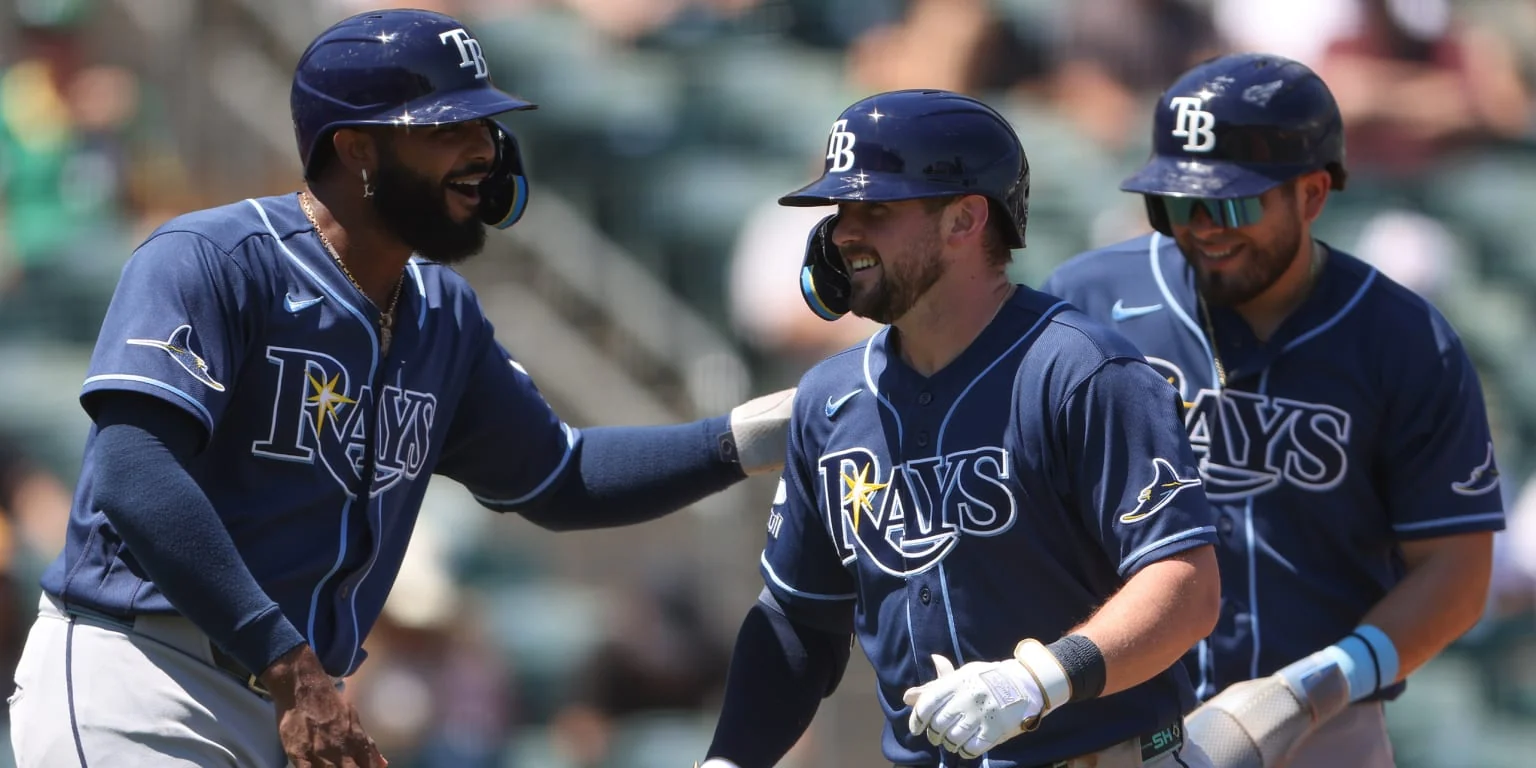
Division Series: Rays over Yankees
Tampa Bay was 75-50 through August 18. FanGraphs' late-August 18 snapshot gave the Rays a 100.0% rounded playoff chance and a 9.2% World Series chance, the highest title figure in the AL. New York was close behind at 8.9%, which is an important warning: the model did not see a large quality gap. The projected No. 1 seed and the rest advantage that accompanies a bye are what break the tie for us.
The Rays also supplied current evidence beyond their record. They completed the first 9-0 road trip of at least three series in franchise history on August 12, winning through a mix of power, contact and timely offense. One hot trip does not predict October, but winning in several ways is more persuasive than relying on a single hitter or a single streak statistic.
Division Series: Astros over White Sox
This is the weak joint in our bracket. Chicago had the much better regular-season record, 65-60 to Houston's 63-63, and earned the projected bye. We nevertheless take Houston in the series because FanGraphs gave the Astros a modestly better championship estimate, 3.7% to 2.9%, suggesting that its rest-of-season roster assessment was stronger than the standings alone. That is a thin reason, so the pick stays low confidence. A rested White Sox rotation can make it look foolish quickly.
ALCS: Rays over Astros
Tampa Bay's rotation upside supplies the final lean. MLB.com reported that Shane McClanahan returned from the injured list on August 18, throwing 57 pitches over 3 1/3 innings. He rejoined a group that included Drew Rasmussen, Nick Martinez, deadline arrival Freddy Peralta and Ian Seymour. That is depth on paper, not a promise of October availability. Griffin Jax was still injured, and McClanahan's controlled workload shows why every future rotation plan remains provisional.
FanGraphs' 9.2% Rays title estimate is not a 9.2% chance to win this ALCS, and its rounded 100.0% playoff figure is not an official clinch. The Yankees and Red Sox had title estimates of 8.9% and 7.7%, both above Houston's 3.7%, so another reasonable bracket could make either East rival the pennant pick. Ours favors Tampa Bay's seed, current record and broadened rotation. If health or seed order changes, the pennant choice should change with it.
National League Pennant Prediction: Dodgers Over Brewers
Our conditional NL path has Los Angeles beating the Cubs, Milwaukee beating the Braves, and the Dodgers beating the Brewers for the pennant. Los Angeles is the pick because its projected seed, high-end rotation possibilities and independent title estimate form the best October ceiling in the league. Milwaukee is the opponent because its 78-48 record and plus-158 run differential were the strongest results any team had produced through August 18.
Division Series: Dodgers over Cubs
The Dodgers were 76-51 with a plus-143 differential at the cutoff; Chicago was 74-53 at plus-103. Those are two excellent résumés, not a favorite and an afterthought. FanGraphs' August 18 snapshot nevertheless created a large championship-probability gap: 27.7% for Los Angeles and 5.4% for Chicago. Those values cover each club's entire possible postseason, so they cannot be read as odds for this particular series. They do show why the model viewed the Dodgers' path and roster more favorably.
Our pick follows that signal, with a health condition attached. The Associated Press reported that Los Angeles added two-time reigning AL Cy Young Award winner Tarik Skubal to a group that could include Shohei Ohtani, Yoshinobu Yamamoto, Blake Snell and Tyler Glasnow. The key words in the report were “if everyone is healthy.” A list of famous starters is not a usable October rotation unless those pitchers are available, built up and lined up for the correct games.
Division Series: Brewers over Braves
Milwaukee gets the more straightforward selection. The Brewers had the better record, 78-48 to Atlanta's 74-52, and the better run differential, plus-158 to plus-112. FanGraphs also gave Milwaukee the higher World Series probability, 7.8% to Atlanta's 4.9%. Pick: Brewers, medium confidence.
Atlanta's upset route is that those season-level gaps shrink dramatically inside one series. A rested No. 3 seed would enter the matchup directly while Milwaukee waited after its bye in our bracket; neither path ensures sharpness. We will not project a starter order in August, and one high-leverage bullpen inning can outweigh weeks of regular-season separation.
NLCS: Dodgers over Brewers
This is where achieved results and forecast strength pull in opposite directions. Milwaukee owned the better record and scoring margin. Los Angeles held the far larger FanGraphs championship estimate and had just added Skubal. We choose the Dodgers because a healthy, deep rotation offers more ways to arrange a longer series and because the model gap is too large to ignore. Pick: Los Angeles, medium confidence — not the “safe” side.
Milwaukee's upset path is not mysterious: keep playing like the team that built the best record and differential in baseball. A 27.7% Dodgers championship probability sounds large beside every rival, but it is still below 30%; the model therefore placed more than 70% of the title probability on the rest of the field. If two Los Angeles starters are limited, or if Milwaukee retains home-field advantage by finishing with the better record, we would revisit the pennant choice rather than defend an obsolete bracket.
2026 World Series Prediction: Dodgers Over Rays
Our pick is the Los Angeles Dodgers over the Tampa Bay Rays in six games. The opponent and length are editorial predictions published August 19, not scheduled facts. Los Angeles gets the call because its rotation ceiling is unusually high, its projected seed creates the cleaner route, and the dated independent model made it the strongest single championship candidate.
Through August 18, the Dodgers were 76-51 with a plus-143 run differential; the Rays were 75-50 at plus-48. Those figures describe what the teams had achieved. FanGraphs' late-August 18 forecast placed Los Angeles at 27.7% to win the World Series and Tampa Bay at 9.2%. Those figures describe one model's range of simulated futures. “Dodgers in six” is our judgment about one path through those futures.
Why the matchup leans toward Los Angeles
The Dodgers' strongest argument is the number of credible ways they could cover a postseason series. The Skubal trade added a two-time reigning AL Cy Young Award winner to a potential group with Shohei Ohtani, Yoshinobu Yamamoto, Blake Snell and Tyler Glasnow. It is not sensible to assume all five will be healthy or available in a preferred order, but that ceiling gives Los Angeles more margin for one poor start than most contenders possess.
Tampa Bay's route to overturn our pick begins with turning games into bullpen contests before the Dodgers can exploit that depth. The Rays' varied offense during their 9-0 August road trip is relevant here: they had recently shown they could win with power, contact and two-out production. Their 9.2% model title chance was also the AL's highest, narrowly ahead of the Yankees. This is a credible finalist, not a convenient underdog placed opposite the favorite.
Three things that would invalidate this bracket
- Rotation health: the AP's description of Los Angeles's potential staff carried the condition “if everyone is healthy.” Skubal allowed three runs over five innings in his August 10 home debut, a reminder that adding an ace does not produce automatic dominance. If multiple Dodgers starters are limited, Milwaukee becomes our preferred NL pick.
- Short-series volatility: one defensive mistake, one bullpen matchup or one cold week can overwhelm months of data. MLB's historical study found that 19 of 29 World Series winners in the Wild Card era, excluding 2020, led their division on August 1. A majority did; 10 did not. Late-summer position is evidence, not destiny.
- A changed field: Texas held the final AL spot by only half a game over two teams, while San Diego led Arizona by two in the NL. A different No. 6 seed changes the Wild Card round and can change which opponent reaches a division leader. A coherent forecast must rebuild the path, not swap one logo in the final line.
How to keep the prediction current
Start with completed results, not headlines. Check the latest MLB games and scores, update all six seeds after the slate is final, then review injuries and likely rotation availability. Refresh model percentages only after noting their timestamp. Finally, replay every conditional matchup from the Wild Card round forward.
That routine protects the distinction this article depends on: standings are facts, probabilities are estimates, and picks are opinions. As of the August 19 publication snapshot, the answer remains Dodgers over Rays. It should be updated when the inputs change, not defended after the bracket it assumed no longer exists.
Loading comments...