
A printable MLB playoff bracket is most useful when you can put your own teams and winners into it. This free download gives you a blank, fillable 12-team sheet for the American League and National League, with the rounds laid out in order. Use it for your 2026 picks, keep a paper record of actual results, or start a friendly bracket with people you watch baseball with.
Download the blank, fillable MLB playoff bracket PDF
Download the free blank MLB playoff bracket PDF. The file is a single landscape page. You can print it and write in the boxes, or open it in a compatible PDF reader and type into the fields. There is no account requirement and no purchase needed to use this independent fan resource.
Download the original before filling anything in. Keep that untouched copy as your master, then make another copy for each person or purpose. A filename such as 2026-playoff-picks-Alex.pdf is easier to recognize than a folder full of files called bracket-final. If you are following actual results, label that copy results instead of picks so you do not confuse what you predicted with what happened.
What is included in the download
The PDF has six seed slots for each league, two Wild Card winner boxes per league, two Division Series winner boxes per league, a league champion box on each side, and space for the World Series champion and series result. Its 24 text fields keep the sheet compact enough to fit on one page without asking you to write every individual game score.
The labels show which early-round winner goes where. That matters more than a decorative connecting line: you can trace the route from a seed to a league championship without moving a club into an impossible matchup. The sheet also identifies the round lengths, so a winning team needs two, three or four victories depending on the round.
It does not fetch results, fill in teams automatically or calculate a contest score. It is a document you control. If you want to see which games are happening now, open today's MLB games alongside it and update the sheet after a series has finished.
Blank brackets versus year-specific brackets
A blank bracket keeps the team slots empty. A year-specific bracket usually arrives with that season's teams, dates or finished results already printed. This download uses the current 12-team structure without prefilled clubs or calendar dates, which makes it suitable for your 2026 postseason notes without pretending an unfinished tournament has a final result.
For current start times and matchups, use our 2026 playoff schedule and bracket guide. For an older season, check its actual format before using this form: a tournament with eight, ten or sixteen teams needs a different starting layout. You can still use this sheet for a practice pool, but the teams and year should match the tournament you intend to follow.
Fill in the six seeds in each league
Start with the twelve seed boxes at the top of the page. Fill the American League section from one through six, then do the same for the National League. Finish that step before choosing a single winner. A misplaced seed can send several later picks down the wrong path, even when you correctly predict that a particular club will advance.
If the postseason field is already settled, copy the official seed order rather than rearranging the teams by your personal power ranking. If you are building a preseason or September prediction sheet, label it projected seeds. Once you mix a projected qualifier with a confirmed seed, a reader cannot tell whether the bracket represents a forecast or the actual tournament.
Division winners and Wild Card teams belong in different slots
The first three places in each league belong to its division winners. The other three places belong to its Wild Card qualifiers. That means the twelve participants do not simply form a league-wide list sorted from the best record to the sixth-best record. A Wild Card team stays in the Wild Card group even if it has more wins than one of the division champions.
For a simple practice example, imagine a division champion with 88 wins and a Wild Card club with 95 wins. The division champion still belongs among seeds one through three; the Wild Card club belongs among seeds four through six. The example is about how to fill a slot, not a claim that those records occurred in this season.
On the form, the seed labels are separate from the team-name fields. You only need to enter the club's name beside the appropriate number. Use a short, recognizable name if a full city-and-mascot name becomes crowded. If two teams share a city, include the mascot so that a note such as New York cannot be mistaken for the other club.
- Identify each league's three division winners.
- Place those winners into their official one-through-three order.
- Put the remaining three qualified clubs into the four-through-six Wild Card order.
- Check both league panels against the official bracket before moving to the winner boxes.
Do not break a record tie yourself by alphabetical order, last week's form or whichever club you prefer. MLB's regular-season tiebreaker procedure determines official positions. Our playoff format guide explains those qualification and seeding rules in more detail; for this sheet, the important action is copying the resulting order correctly.
Seeds one and two receive byes and first appear as opponents in the Division Series. Do not invent a Wild Card game for either team. Seed three has won a division but still plays in the opening round. Keeping those distinctions visible is the quickest way to catch an incorrectly completed blank bracket.
Follow the fixed path through every round
Once the seeds are in place, work down the page one round at a time. The two Wild Card winner boxes have opponent labels, and the Division Series boxes show which winner belongs against each bye team. Read those labels each time you advance a team. MLB does not rearrange this bracket after an upset, so the lowest surviving seed does not automatically become the top seed's next opponent.
Wild Card winners need two wins
Each league starts with seed three against seed six and seed four against seed five. Those are best-of-three series: the first club to win two games advances. On a results sheet, leave the winner field empty after Game 1, even if your team wins by a large margin. A 1–0 series lead is a lead, not a place in the next round.
If a team wins the first two games, you can enter its name immediately after Game 2 goes final. There will not be a necessary Game 3 in that series. If the clubs split the first two games, wait for the deciding game. The higher seed hosts the Wild Card Series, but hosting the games does not guarantee winning them.
The PDF asks for the winner of 3 versus 6 and the winner of 4 versus 5. Those descriptions remain correct whether the favorite wins or loses. On a predictions copy, enter your selected team ahead of the games; on a results copy, enter only the confirmed winner.
Division Series winners need three wins
The 4/5 winner plays seed one, and the 3/6 winner plays seed two. Each Division Series is best of five, so it ends when a team has three victories. A sweep is 3–0; a series that reaches its deciding game ends 3–2. Do not write a 4–1 result into a Division Series field because that belongs to a seven-game round.
Here is a useful path check: suppose seed six beats seed three in the Wild Card round. Seed six still advances to face seed two. It does not move over to face seed one just because it is the lowest seed left. If you choose seed six again in the Division Series, write that same team into the winner box marked 2 versus 3/6.
You will finish this round with two surviving clubs in each league. Those two Division Series winners play one another for the league championship. A team that lost its Division Series cannot return to your actual-results bracket, even if you think it would have matched up better in the next round.
League champions and the World Series winner need four wins
The ALCS, NLCS and World Series are best-of-seven series, each requiring four wins to advance or win the title. Enter the ALCS winner into the American League champion box and the NLCS winner into the National League champion box. Then choose or record the winner of the matchup between those two league champions in the bottom section.
The World Series result field is for the series count, such as 4–2, rather than the final game's run score. If you want both, put the series result in the field and add a separate note in the margin. Before settling in to watch a deciding game, check the MLB TV schedule for its viewing details; the blank PDF itself intentionally has no channel or starting-time information.
Print the bracket or save a filled-in copy
You can use the same file for a paper bracket and a digital one. Decide which copy you want to keep before filling it out. If several people are joining a pool, let each person start with a fresh download or an untouched duplicate. Passing around one editable file without saving separate copies makes it easy to overwrite somebody else's picks.
Printing on Letter or A4 paper
The PDF is designed for US Letter paper in landscape orientation. Open the print preview and confirm that both league panels and the World Series section fit on the page. If you use A4 paper, select a fit-to-page or shrink-to-printable-area option. Printer margins vary, so the preview is more useful than assuming every printer can reproduce the page at its exact original size.
Print one test copy before making copies for a group. Look at the outside edges, the seed labels and the footer. If any text is cut off, change the page orientation or scaling before trying again. Selecting actual size on a differently sized sheet can crop content; squeezing the whole sheet into portrait orientation can make the boxes too small for comfortable handwriting.
Black-and-white printing is fine for this form because the information comes from the labels and boxes. You do not need a color printer to understand its route. Use pencil if the sheet is your live results tracker and you expect to correct a copying mistake. Use pen for locked contest picks, or photograph the completed paper before the first relevant game so your group has a clear record.
If you have already typed entries and they disappear from the print preview, pause before printing the whole batch. Reopen the saved file in a form-capable reader and check the preview there. Also check that your print setting includes the document and filled fields rather than only a selected area of the page.
Saving your entries in a PDF reader
Open the downloaded file, click one of the team-name fields and enter a short test name. Save a copy under a different filename, close it, then reopen that saved copy. Confirm that the name remains visible. That quick test tells you whether your chosen reader is preserving the form entries before you spend time completing the whole postseason.
Some browser previews display PDF form fields but handle saving differently. If a download button gives you a fresh blank file after you have typed picks, use the reader's save-a-copy function or try a dedicated PDF reader. Do not assume that seeing text on screen means that text has already been written into the file on your device.
After entering all your teams, review the saved document rather than just the open editing window. Check long names, spelling and the final champion box. For sharing, send the actual completed file or a clear image of it. A link to the original blank download gives your friends the blank master; it does not send them the picks you entered on your own computer.
Keep predictions and actual results on separate copies
The easiest way to enjoy a bracket all October is to keep two copies: one for what you think will happen and one for what actually happens. Your predictions copy is complete before the games you are picking begin. Your results copy starts with the qualified teams and gains a winner only when each series is decided.
That separation prevents a common frustration. If your World Series pick loses in the Division Series, your original bracket still tells the story of your forecast. You can keep tracking the real postseason on the second sheet without erasing the choice you made. At the end, comparing the two is more interesting than trying to remember which winner you originally liked.
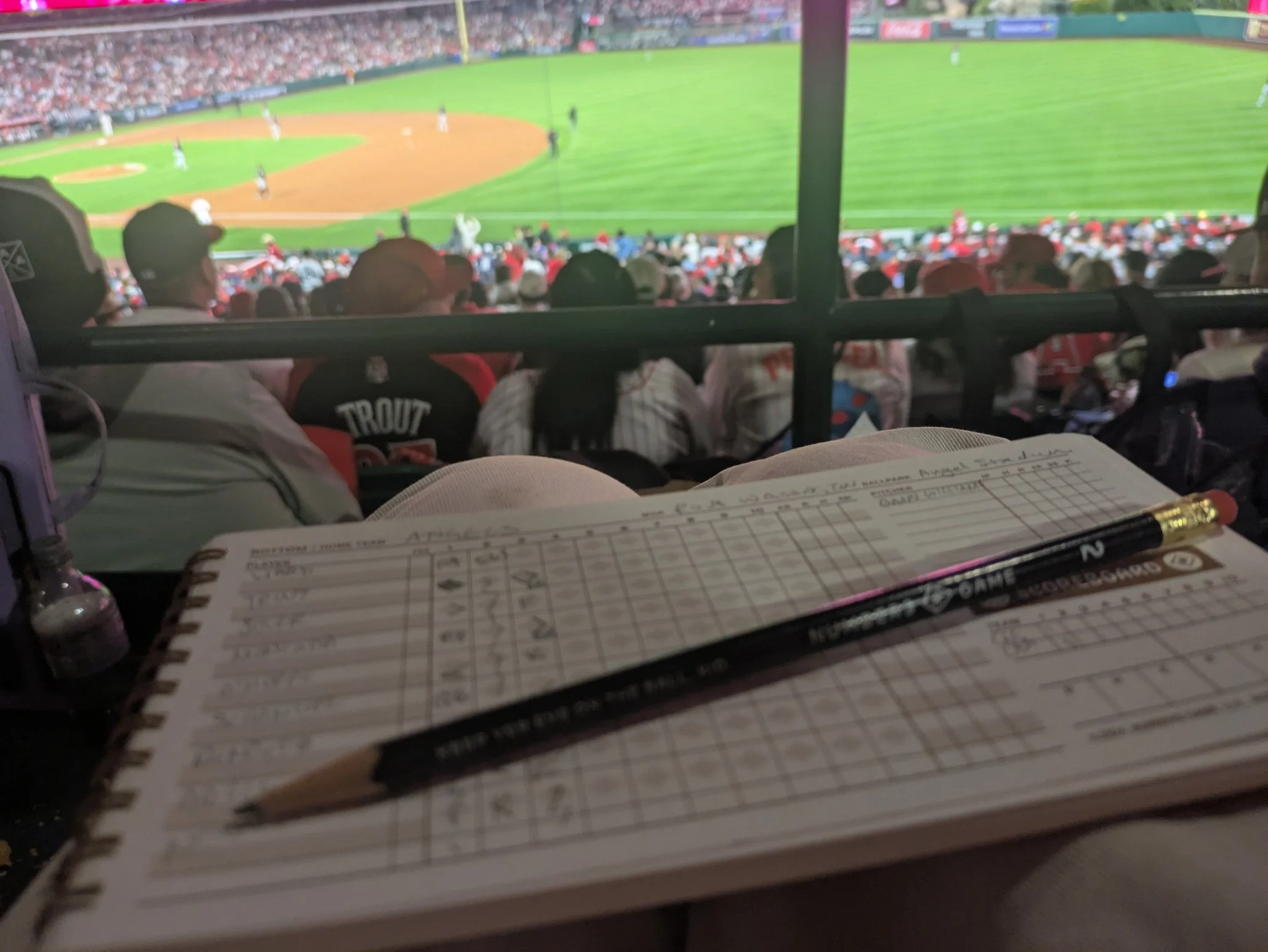
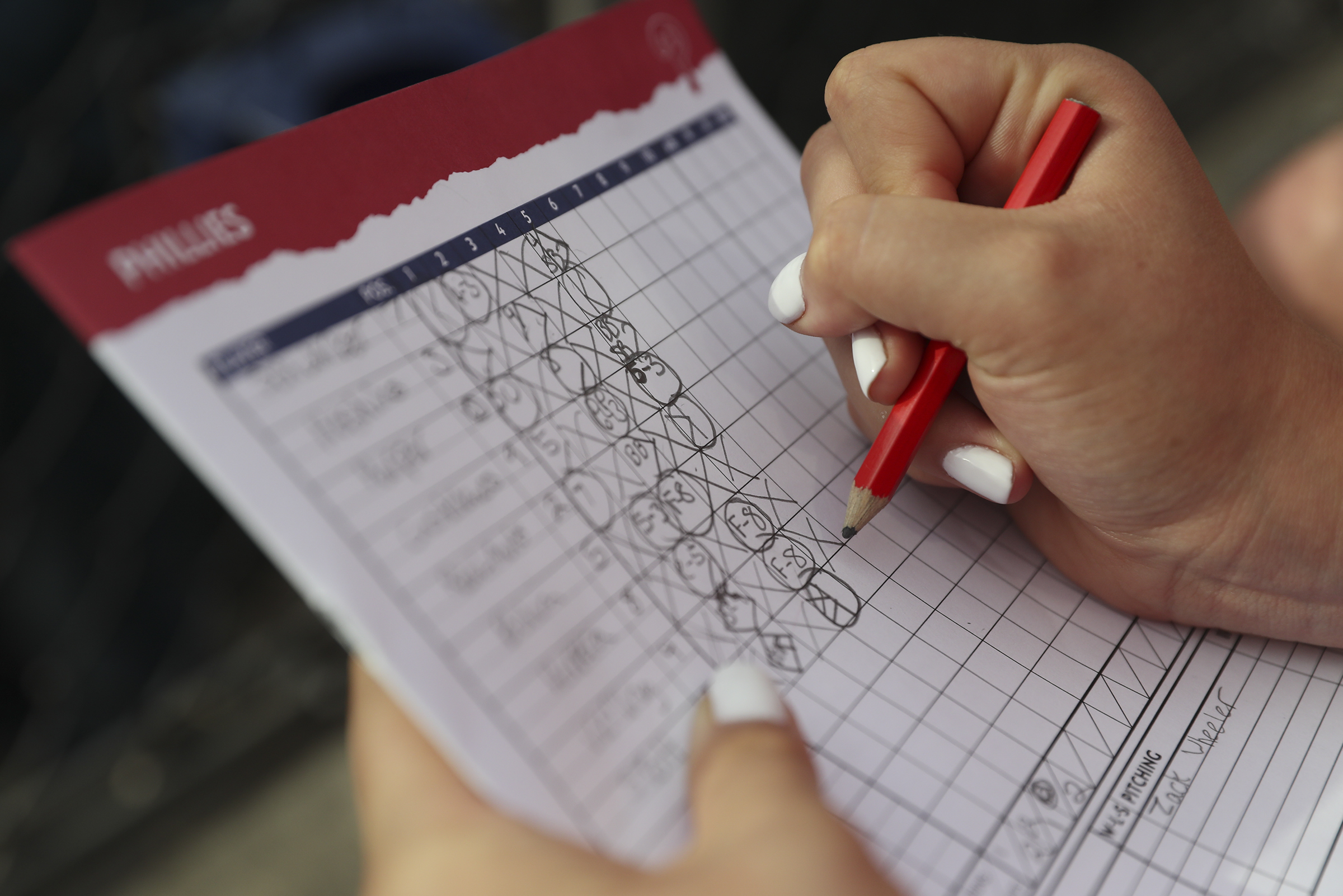
Paper records are part of baseball's appeal: a fan can mark what happened and return to the same notes later. A scorecard follows individual plays; this bracket follows series winners. They serve different purposes, but both reward writing down the confirmed result instead of relying on memory after several games run together.
For a friends-and-family pool, agree on a deadline and a simple scoring system before collecting the sheets. You might award one point per correct series winner, or increase points for later rounds. Those are house-rule choices, not official MLB contest rules. Write them where everyone can see them, and decide in advance whether a correct series length earns a bonus.
If your group starts watching midway through October, create a new pool for the rounds that have not started. Do not present that as a preseason-perfect bracket or an entry in an official promotion. Label it remaining-round picks, list the eligible matchups and save everyone's selections before the chosen deadline.
After a completed series, confirm the winner and series count, then update only the corresponding result field. You do not need to reprint the whole bracket after every game. Keep game scores in a separate note if you want them; the winner boxes are deliberately focused on the route through the tournament.
A downloaded PDF will not update automatically after a game. You must type or write the new information yourself. Its advantage is that your predictions stay exactly as you saved them. At the end of the World Series, compare your final champion with our World Series winners list, save your completed sheet and leave the untouched master ready for your next bracket.
Loading comments...