
The 2028 class means the offseason after the 2027 season
Here, 2028 MLB free agents means players who could reach the market after the 2027 season and sign for the 2028 season. It does not mean players whose contracts run through the end of 2028. Those belong primarily to the following winter's discussion.
This is an early watchlist checked on October 17, 2026, not a list of players already free to sign. Extensions, trades, contract options, opt-outs and future eligibility rules can change it. A familiar name on a future list is a reason to follow the contract, not evidence that a club can negotiate with that player today.
MLB's future free-agent classes separates candidates by the season after which they might become available. Its after-2027 group is the starting point for this guide. Read that heading carefully before comparing any two lists, because publishers use the year in different ways.
| Season completed | Offseason discussed | Typical next season |
|---|---|---|
| 2026 | 2026-27 winter | 2027 |
| 2027 | 2027-28 winter | 2028 |
| 2028 | 2028-29 winter | 2029 |
Keep another distinction in view: an ordinary projected contract expiration is different from a conditional route to free agency. A club option for 2028 can keep a player under contract if exercised. A player opt-out can create an opportunity to leave an existing deal. Combining both groups without labels makes a future class look more certain than it is.
The MLBPA's current eligibility explanation connects free agency with service time and the absence of a contract for the next season, among other routes. That makes a one-year salary agreement for an arbitration-eligible player different from the end of all club control. The salary's expiration alone does not establish unrestricted free agency.
Use the names below as selected evaluation cases. This is not an exhaustive transaction database, a prediction of who will change teams or a ranking of future contract values. The useful question in October 2026 is which players and clauses deserve monitoring over the next year.
If you are following a club's longer-term planning, note the player's expected availability year alongside the route that could produce it. That small addition makes a watchlist far more informative than a column of names labeled simply "free agents."
Position players to keep on the early watchlist
The position-player group is interesting because its candidates would fill very different roster needs. A future market can contain excellent catchers, a veteran first baseman and everyday up-the-middle players without offering interchangeable solutions. These selected cases are monitoring priorities, not a predicted order of signing bonuses.
Catchers require a playing-time and position check
William Contreras and Adley Rutschman are notable catching names in the projected after-2027 group. A useful evaluation should ask how much they are catching, how much offense comes in that role and whether their expected workload changes before the market arrives. Do not price a player as a full-time catcher solely because that was the position beside his name on an old list.
For any catcher, compare total plate appearances with innings behind the plate and designated-hitter usage. Two players can produce similar offensive totals while requiring different roster support. A club signing one may still need a substantial second catching option. Those are planning questions to revisit with the completed 2027 season, not assumptions that either player has already changed position.
Freddie Freeman and Steven Kwan offer different evaluation questions
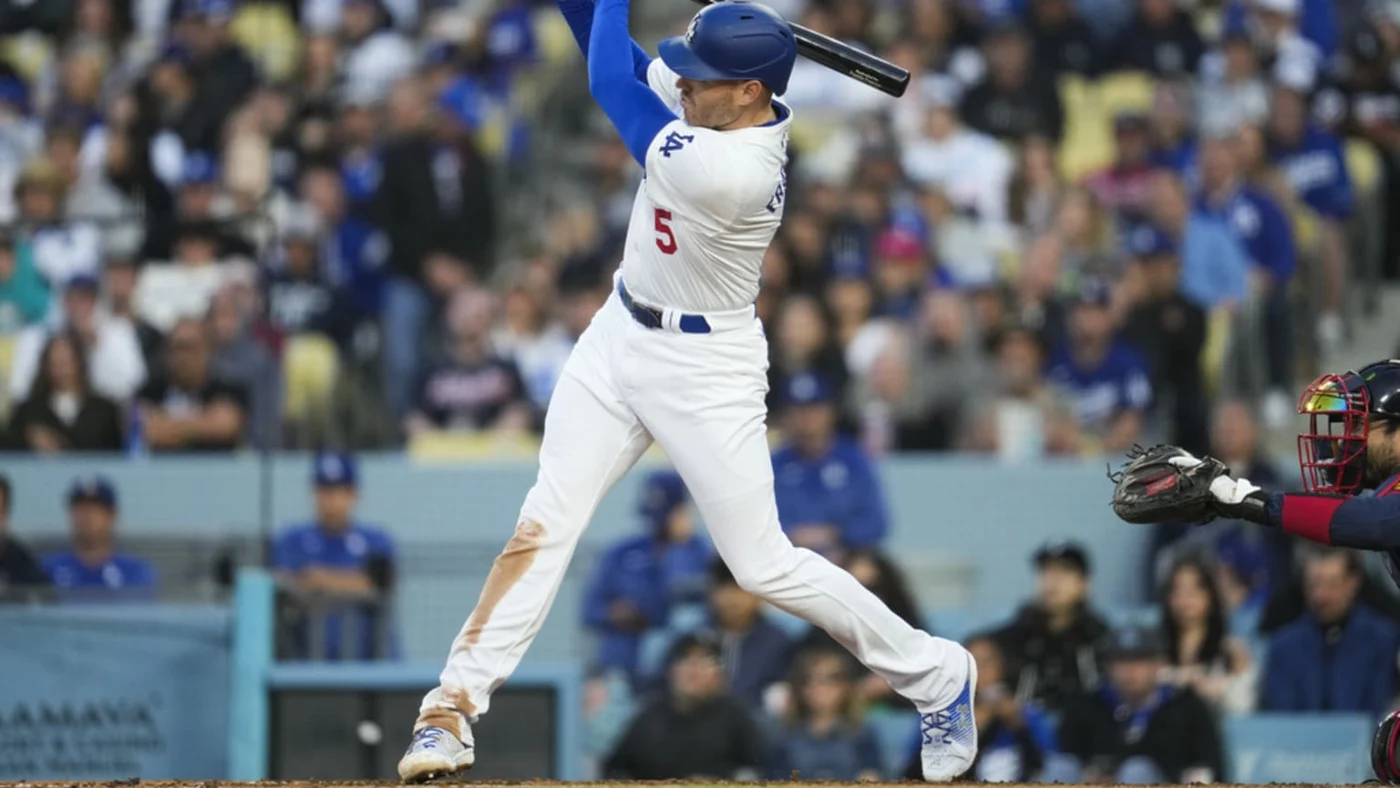
Freeman's six-year Dodgers agreement runs through 2027. His case therefore begins with a defined contract endpoint, subject to any subsequent extension. For a veteran first baseman, the next evaluation should focus on offensive production, availability and the role a club would expect over the new deal.
Kwan presents a different kind of comparison as an outfielder. Contact, on-base contribution, defense and the amount of offensive production expected from the position all belong in the discussion. A club seeking a different lineup balance might value those contributions differently from another club seeking primarily additional power.
Neither profile establishes a future salary. The relevant evidence includes the next season's performance and the alternatives available at the same position. A future-market guide should explain those questions before turning a reputation into an unsupported contract prediction.
Jeremy Peña and Ozzie Albies need different contract labels
Peña belongs in the ordinary projected after-2027 discussion. Albies requires an earlier checkpoint: his original extension includes a club option for 2027. He remains a potential after-2027 candidate only if the preceding contract decisions leave him on that timeline.
That difference matters when building a team's planning sheet. Write "projected after 2027" beside a baseline case and "depends on earlier option" beside the conditional case. If the earlier option is declined, the player can enter an earlier market instead; a new contract can then remove him from the original 2028 watchlist entirely.
Starting pitchers could shape the market
A class with several credible rotation candidates can influence planning well before free agency. It can also change quickly. Pitchers' workloads, injuries and contract extensions are reasons to keep the list conditional, even when the projected availability year looks straightforward.
Logan Gilbert, Joe Ryan and Justin Steele
Gilbert, Ryan and Steele are among the starting-pitching names on the early after-2027 watchlist. The useful comparison is not simply which one has the lowest ERA in a small sample. Consider availability, innings, strikeouts, walks, pitch effectiveness and whether the role remained stable through the most recent completed season.
For Gilbert, a practical monitoring sheet would record the next season's workload and any extension announcement alongside the projected free-agency year. Do the same for Ryan and Steele. One outstanding start or one difficult month should not silently replace that broader record.

Also ask what the prospective club needs. Replacing one injured starter for a short window is different from rebuilding several rotation spots for multiple seasons. A pitcher can be an attractive candidate without being the best fit for every club. That is an evaluation judgment, not evidence of negotiations.
Separate veteran starters from guaranteed future availability
Zack Wheeler and Pablo López illustrate the importance of checking a defined contract endpoint. Their published extension timelines run through 2027. That provides a reason to monitor them, but it does not guarantee that either will enter a bidding contest or seek a particular length of deal afterward.
For veteran pitchers, the next season's health and the player's own plans matter. A career reputation can explain why a name draws attention, but it cannot establish future innings. Avoid labeling a player a certain signing target when an extension, retirement decision or other development could change the situation.
Do not turn the watchlist into medical speculation. Public injury updates can explain availability; they do not let a writer diagnose a pitcher or promise recovery. Record the announced status and date, then revisit the assessment when there is new information.
For fans wanting to evaluate these candidates directly, use today's MLB schedule to find the relevant game and confirm the announced starter. Watching several outings, with their actual context, is more useful than treating one highlight clip as a complete forecast of the 2028 market.
Options and opt-outs can change who reaches the market
Conditional contracts deserve their own column. Treating every possible exit as a scheduled expiration inflates the apparent supply of players. The first question is who controls the decision; the second is which season and conditions the clause actually covers.
A player decision is different from a club decision
Kyle Tucker's announced Dodgers agreement includes opt-outs after its second and third seasons. The first creates a potential after-2027 decision. It does not mean that his entire agreement ends then, and it does not tell us whether leaving the remaining deal would be his preferred choice.
Cody Bellinger's reported agreement also includes a potential opt-out after 2027. Contract-specific conditions must still be checked against the current reporting and the actual circumstances. Do not assume that a clause described in one player's deal appears identically in another player's contract.
Ronald Acuña Jr. illustrates the opposite decision-maker. Atlanta's original extension announcement specifies club options for 2027 and 2028. An exercised 2028 option would keep him under that contract for 2028. Calling him an automatic free agent after 2027 would leave out the clause that matters most.
| Route | Question to verify | What you should not assume |
|---|---|---|
| Player opt-out | Can the player end the remaining deal at this point? | That the player will use it |
| Club option | Can the club retain the player for the option year? | That the listed option year is guaranteed free agency |
| Vesting provision | Have the stated conditions been met? | That it works like an unconditional choice |
Earlier decisions can move a name out of this class
A name can disappear from the projected class before the 2027 season begins. If an earlier option is declined and the player signs a longer new agreement, the old future-market entry becomes obsolete. If the option is exercised, the relevant next decision may remain in place. You need the sequence, not just the final year printed on an old chart.
For an example without a named player's private terms, imagine a 2027 club option followed by a separate 2028 option. The first decision determines whether the second remains relevant under the original contract. You cannot jump directly to the later option while ignoring what happened one winter earlier.
Keep the watchlist labeled with a route such as ordinary projection, earlier-option dependent, player opt-out or club-option dependent. That vocabulary is more honest and useful than placing every recognizable star in one undifferentiated 2028 list.
Evaluate potential free agents without inventing future contracts
A responsible early comparison begins with what can be checked. Record the player's role, age at the relevant season, recent availability, production and route to the market. Keep those observations separate from a prediction about a destination or contract size. An attractive fit on paper is not a reported negotiation.
For hitters, identify what the club actually needs. A lineup seeking more reliable on-base opportunities may evaluate a candidate differently from one that already reaches base often but lacks power. Defensive position and the likely distribution of playing time also matter. One offensive statistic cannot answer every roster question.
For pitchers, consider how much of the rotation the club must replace and what kind of workload it needs. A team looking for one short-term starter faces a different planning problem from one replacing several established innings sources. The same candidate might make sense for both, but for different reasons and at different levels of commitment.
Use broader metrics as checks, not automatic price tags. WAR is a contextual measure of value, while OPS combines on-base and slugging percentages. Neither tells you what a player will earn in a future market. They can help organize a comparison, but the assumptions about future performance remain assumptions.
Consider this hypothetical club: it expects two young starters to arrive in 2028, but neither has yet established a full MLB workload. Signing a veteran could provide depth, while waiting might preserve opportunities for the prospects. The decision depends on development, health and alternatives, not simply whether a recognizable free-agent name appears on a list.
Our farm-system guide provides context for those development paths. A prospect's expected arrival is itself uncertain. Avoid treating a player's minor-league level today as a guaranteed major-league role two seasons later.
When reading a projected contract, ask whether the writer has identified its basis. Is it an explicitly labeled estimate, an agent's public position, an actual offer or merely a fan's preferred number? Those are different forms of information. The number should not become a fact simply because several websites repeat it.
The most useful early conclusion is often conditional: this type of player could address this need if the club still has the need, the player reaches the market and the performance supports the role. That sentence is less dramatic than a guaranteed signing prediction, but it gives you clear questions to revisit when the offseason actually arrives.
Keep the watchlist current as transactions and rules change
A future free-agent page needs an update routine. Recheck it after extensions, option decisions, opt-outs and major transactions, rather than assuming that an unchanged URL means the underlying class is unchanged. Record both the date of the information and the event that altered the player's status.
Trades deserve precise wording. A player can change teams while remaining on the same projected free-agency timeline. That is a change in current club, not automatically a change in contract endpoint. An extension signed after the trade is a separate event that can change the expected market year.
For the nearer winter, use the separate 2027 free-agent guide. Keeping the 2026-27 and 2027-28 discussions separate prevents an already-available player or a near-term option decision from being mistaken for a new 2028 development.
A future labor agreement is part of the uncertainty
The MLBPA states that the current Major League collective bargaining agreement expires on December 1, 2026. The 2027-28 market therefore sits beyond that agreement's stated term. Existing contract and service-time expectations provide a baseline, but a guide written now should not claim that every future procedural detail is settled.
A proposal is not an adopted rule. Reports about possible changes to free agency, qualifying offers or offseason timing need that label until an agreement establishes what actually applies. A proposed change can be important context without being a reason to rewrite every player's eligibility date immediately.
Our CBA and potential lockout explanation follows that distinction. The offseason calendar proposal guide likewise concerns a proposal, not a guaranteed future transaction schedule. Neither should be read as a firm announcement that a particular player becomes available on a particular November date.
For your own watchlist, keep six fields: player, role, projected offseason, route to availability, source date and the next event to check. "Club option decision" is a better next-event entry than "signs elsewhere" when the latter is only a prediction. Delete or revise an obsolete row when a new agreement changes its premise.
The early 2028 discussion is most useful as a map of questions. Which candidates remain on the timeline? Which options will matter? Which performances and roster needs endure through 2027? Updating those answers is how a provisional list becomes a useful offseason guide without presenting future decisions as completed transactions.
Loading comments...