
An MLB save is not restricted to the ninth inning, a three-run lead or a team's designated closer. A relief pitcher must finish a win, receive credit for at least one out, avoid being the winning pitcher and satisfy one of three qualifying conditions. Those alternatives explain why a one-out save and a three-inning save can both be legitimate.
What a pitcher must do before a save is possible
Start with the requirements that apply to every save. The pitcher must be the finishing pitcher for the winning team. A dominant appearance in the seventh inning cannot receive a save if someone else completes the game. The pitcher also must receive credit for at least one-third of an inning, the pitching-line notation for one out.
The pitcher cannot be credited with both the win and the save in the same game. That separates the game's statistical winning pitcher from a later reliever who preserves the lead through the finish. A club can have a winning pitcher and a saving pitcher, but those credits belong to different players.
Those basic requirements are necessary without being sufficient. A reliever can record the final out of a win and still have no save because the outing did not qualify through any of the three additional paths. Conversely, the fact that a pitcher is usually a starter, setup reliever or long reliever does not disqualify an otherwise eligible relief appearance.
The Official Baseball Rules linked by MLB set out the scoring rule in section 9.19. MLB's save glossary gives a shorter explanation. Read the conditions as a sequence: establish that the pitcher is an eligible finishing reliever, then ask which qualifying path applies.
That order avoids a common mistake. Seeing three innings beside a pitcher's name does not by itself settle the question. The team still has to win, that pitcher still has to finish and the winning-pitcher restriction still applies. The duration is one piece of the rule rather than a substitute for all the other requirements.
The three ways an outing qualifies for a save
After the universal requirements are met, the pitcher needs only one of the following three paths. They are alternatives. The three-run condition does not have to be added to the three-inning condition, and the one-inning requirement does not have to be added to the tying-run condition.
A lead of three runs or fewer and at least one inning
The familiar route is to enter with a lead of no more than three runs and pitch at least one inning. A reliever entering the ninth with a 5-2 lead and recording all three outs while preserving that lead is a straightforward example. The inning need not be the ninth; what matters is that the pitcher ultimately finishes the win.
The one-inning requirement is easy to overlook. Entering with a three-run lead does not automatically qualify a pitcher who records only the final out. That shorter appearance would need to satisfy another path, usually the tying-run condition. A graphic displaying a save situation does not remove the need to examine the actual entry circumstances.
Pitching notation can add confusion. One inning means three outs. In a box score, 0.1 means one out and 0.2 means two outs; neither is a decimal fraction in the everyday sense. A line showing 1.2 means five outs, not roughly an inning and a quarter.
The tying run is on base, batting or on deck
The second path concerns the potential tying run when the reliever enters. If that run is already on base, is the batter at the plate or would be the batter on deck, the outing can qualify without a full inning. The pitcher still needs at least one out and must satisfy the other universal requirements.
Consider a four-run lead with the bases loaded. A home run by the current batter would tie the game, so the tying run is at the plate. A reliever who enters and records the final out can earn a save despite the lead exceeding three runs. With a five-run lead and the bases loaded, the potential tying run is on deck, which also fits this path.
Now compare empty bases with two outs. With a two-run lead, the potential tying run is on deck: the batter represents one run and the next batter another. A one-out save is possible. With a three-run lead, the tying run is beyond the on-deck batter. One final out alone would not meet this path or the full-inning path. The extra run of cushion can therefore change the statistical outcome even when both appearances look similar on television.
At least three innings to finish the win
The third path is the long save: pitching at least three innings. It does not include the first path's three-run limit. A reliever can take over with a much larger lead and finish the final three innings of the win, subject to the other requirements.
That does not mean any three innings of relief produce a save. If another pitcher finishes, the long reliever cannot get it. If the reliever becomes the game's winning pitcher, that pitcher cannot also get a save. If the lead is lost and the team later wins, simply adding up three innings does not restore a preserved-lead save. Always keep the entire sequence and the other conditions in view.
Why Aaron Ashby's nine-out save counted
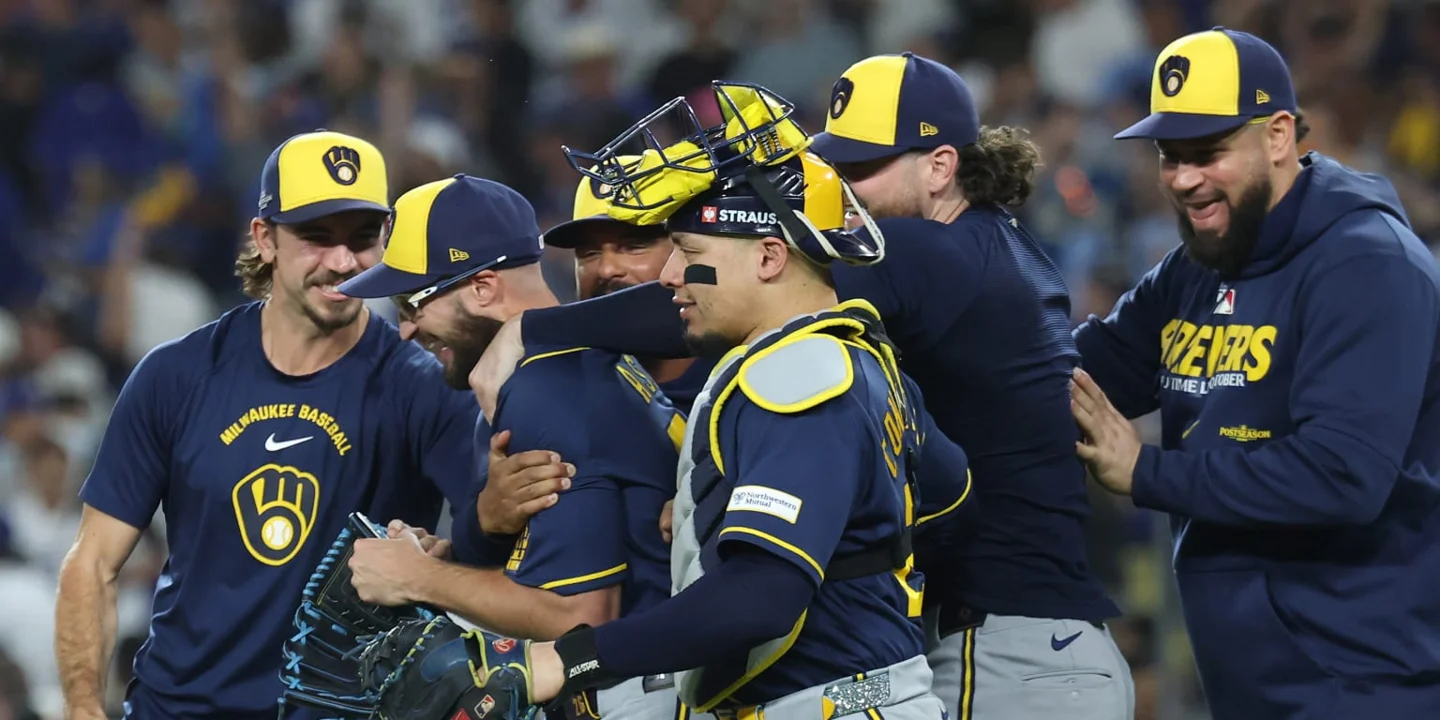
Aaron Ashby recorded the final nine outs of Milwaukee's 6-4 NLCS-clinching win on October 15, 2026. The official Game 4 video shows his three scoreless innings. The performance offered a timely example of a save extending well beyond the familiar final inning.

It is worth checking both qualifying paths rather than describing the appearance as a mysterious exception. Ashby finished three innings, meeting the long-save route. He also entered with a two-run lead and pitched more than one inning, meeting the familiar small-lead route. The same outing can satisfy more than one condition without producing more than one save.
The 2026 NLCS schedule and results guide supplies the series context. For the scoring question, the essential information is narrower: when Ashby entered, how long he pitched, whether the lead was preserved and who finished. The team's celebration and the importance of the game do not create additional save criteria.
A multi-inning save does not require the closer label
Closer is a description of a bullpen role. Save is a statistical credit with defined conditions. A manager can use a different reliever for the finish because of matchups, availability or the way the game has unfolded. The official scorer then evaluates that appearance under the same rule.
A setup pitcher can therefore earn a save, while the usual closer may not appear at all. A long reliever can qualify by covering the final three innings. A pitcher who generally starts can also make a qualifying relief appearance. None needs to hold a permanent job title before receiving credit.
For fans assessing workload, nine outs remain very different from three even though both can produce one save in the statistics. The credit identifies a qualifying finish; it does not describe every aspect of the effort. Compare innings, pitches and the game situation before treating two saves as equivalent performances.
Why finishing a win does not always earn a save
Consider a reliever entering the ninth with empty bases and a four-run lead. If that pitcher records three clean outs, the outing finishes the win but does not qualify by the small-lead path, the tying-run path or the three-inning path. A perfect inning can therefore produce no save at all.
Now compare a reliever entering with a two-run lead who allows one run but finishes the inning and the game ahead. That appearance can qualify for a save. Scoreless pitching is desirable, but it is not an independent requirement. The save tells you that the lead was preserved under qualifying conditions, not that the pitcher allowed no hits, walks or runs.
The entry situation is particularly important. A pitcher cannot take over with a comfortable lead and create eligibility merely by allowing enough runners to reach later. The two entry-based paths refer to conditions when the pitcher enters, not the most dangerous point that the pitcher subsequently creates. Always look back to the substitution rather than only the final batter.
The final margin can mislead in the opposite direction. A reliever may enter in a qualifying situation, remain in the game and benefit from teammates adding runs between innings. Looking only at the final score may make the save seem impossible. The starting conditions of that relief outing, its duration and the sequence of the lead are more informative.
MLB separately tracks games finished. That category records the finishing relief role without requiring a save; it can include a pitcher finishing a loss. GF and SV are therefore not interchangeable columns. Neither should be used alone to rank the difficulty or quality of every bullpen appearance.
Managers also make choices that the save rule does not prescribe. A closer might pitch without a save opportunity to get work, while another reliever might finish a qualifying game. The postseason roster and replacement rules explain who is available to a club. They do not require the manager to reserve a particular pitcher for situations that earn a save.
How saves differ from holds, blown saves and wins
Bullpen statistics describe different parts of the same game. A team may use several relievers effectively before the final pitcher gets a save. It may also win after a reliever loses a lead. Reading the credits separately is more useful than assuming that the pitcher with a win had the strongest outing or that the pitcher without a save had no important role.
A hold hands the lead to another reliever
A hold recognizes a qualifying relief appearance that preserves the lead for the next pitcher, with at least one out recorded. Unlike a save, it does not require finishing the game. More than one reliever can earn a hold in the same game, while the finishing reliever may earn the save.
For example, one qualifying reliever might handle the seventh, another the eighth and a third the ninth. The earlier two can have holds while the last has a save. The sequence does not require the team to call those players setup men or closers, and it does not make every scoreless middle inning a hold. The entry situation and what happens to the lead still matter.
A pitcher cannot receive a hold and a save, or a hold and a win, for the same game under MLB's glossary description. The labels should not simply be added to reward every stage of one appearance. Look at each pitcher's particular job in the sequence.
A blown save can coexist with a later win
A blown save occurs when a reliever enters a save situation and allows the tying run to score. The tying runner does not have to be charged to that reliever. If a pitcher inherits a runner at third and allows that runner to score the tying run, the blown-save credit can belong to the new pitcher even though the run belongs elsewhere in the pitching line.
The team can recover afterward. A pitcher with a blown save may later receive a win, a loss or no decision depending on the rest of the game and the scoring rules. A later team victory does not erase the earlier lost lead. Conversely, a blown save is not automatically the same thing as being the losing pitcher.
A win generally identifies the pitcher of record when the team takes the lead it keeps, subject to the official scoring exceptions. It is not a vote for the best performance. In extra innings, also check the rules for the automatic runner and postseason exceptions before interpreting the situation. The presence of an inherited runner, an earned run and a blown save are related facts, but they do not mean the same thing.
How to read the box score after an unusual save
Start with the final pitcher and the winning-pitcher credit. If the same pitcher earned the win, there cannot also be a save for that player. Next, find the substitution in the play-by-play. Record the lead, occupied bases and out count at entry. Then count the outs recorded through the finish and check whether the lead was preserved.
The following hypothetical comparisons assume that the pitcher finishes the win, records the stated outs, preserves the lead and is not the winning pitcher:
| Entry and duration | Save result | Reason |
|---|---|---|
| Two-run lead, empty bases, final out only | Can qualify | The potential tying run is on deck. |
| Three-run lead, empty bases, final out only | Does not qualify | No full inning, and the tying run is beyond the on-deck batter. |
| Four-run lead, bases loaded, final out only | Can qualify | The tying run is batting. |
| Large lead, final three innings | Can qualify | The three-inning path has no three-run entry cap. |
| Qualifying entry, two innings, then another reliever finishes | No save for the first reliever | The saving pitcher must finish the game. |
If a result still appears surprising, compare the official pitching line with the inning-by-inning sequence rather than judging from the final score alone. The score at entry and the final margin can differ, an inherited runner may affect a blown save, and a dominant appearance may be credited as a hold rather than a save. Each question requires a different piece of the record.
Use today's MLB games to find the current matchup and the MLB TV schedule to follow the next appearance. During the broadcast, a useful habit is to note the entry situation when a reliever arrives. It makes an unusual save much easier to understand when the final out is recorded.
Loading comments...