
2026 NLCS final results and series winner
The Milwaukee Brewers won the 2026 National League Championship Series, sweeping the Los Angeles Dodgers four games to none. The series began October 11 in Milwaukee and ended October 15 in Los Angeles. Milwaukee won the clincher 6–4 and advanced to the World Series. There is no remaining 2026 NLCS game to watch live.
The final results belong in a series archive rather than a changing regular-season standings table. Each victory counted once toward the four required to win the pennant. Milwaukee won twice at home and twice on the road, leaving none of the conditional final three dates necessary. The postseason bracket shows how that completed series connects to the remaining championship matchup.
| Game | Date | Ballpark | Final score | Series position |
|---|---|---|---|---|
| 1 | October 11 | American Family Field | Brewers 2, Dodgers 1 | Milwaukee 1–0 |
| 2 | October 12 | American Family Field | Brewers 7, Dodgers 4 | Milwaukee 2–0 |
| 3 | October 14 | Dodger Stadium | Brewers 6, Dodgers 2 | Milwaukee 3–0 |
| 4 | October 15 | Dodger Stadium | Brewers 6, Dodgers 4 | Milwaukee wins 4–0 |
The dates above are the local game dates. A late U.S. evening game can appear under the following date in a feed displayed in UTC or in an overseas viewer’s time zone. That does not make it a different game. Identify the matchup and series game number before comparing a saved listing with a box score.
Milwaukee scored 21 runs across the four games and allowed 11. Those totals help describe the series, but they did not decide it through an aggregate-score rule. The Brewers advanced by winning four separate contests. A one-run victory in the opener had the same value as the four-run victory in Game 3.
The sweep also hides how often the score moved against Milwaukee before turning back. The final margin alone cannot tell you who led in the middle innings, when a tying run scored or whether a lead changed hands. The game-by-game sequence below explains the most useful difference between the four-win result and the baseball that produced it.
Games 1 and 2: Milwaukee takes control at home
The first two games gave Milwaukee a 2–0 series lead, but neither was a wire-to-wire win. Los Angeles scored first in both. The Brewers answered, then protected leads established in the middle innings. That pattern is more informative than treating two home victories as automatic consequences of the venue.
Game 1: a one-run opening victory
Los Angeles moved ahead in the second inning when Andy Pages singled home Shohei Ohtani. Milwaukee tied it in the fourth on Brice Turang’s solo home run, then went in front in the fifth when Luis Lara’s single brought Garrett Mitchell home. The score stayed 2–1 through the end of the game.
The decisive offensive events were separated by an inning. Turang’s homer erased the deficit; Lara’s hit supplied the run that ultimately won the game. A highlight reel containing only the home run would therefore leave out the actual go-ahead play. For a complete understanding of the opener, watch both scoring sequences and the innings that followed them.
Milwaukee starter Jacob Misiorowski allowed one earned run in four and one-third innings. The bullpen recorded the remaining fourteen outs without allowing another run. That division of the workload matters in a one-run game: the final score depended on keeping Los Angeles scoreless after Milwaukee took the lead, not simply on the starter’s performance.
The Dodgers finished with seven hits to Milwaukee’s six and left nine runners on base. More hits did not translate into more runs. The contrast is a reminder to read a box score alongside its scoring sequence: the timing and placement of hits can matter more to a single game’s result than the hit total by itself.
Game 2: an answer after falling behind
Game 2 produced a different score but another Milwaukee response. Los Angeles took a 1–0 lead in the first; Milwaukee tied it in the bottom half. The Dodgers went ahead again in the third before Christian Yelich’s two-run single gave the Brewers a 3–2 lead. Two Los Angeles runs in the fifth changed the lead once more.
William Contreras answered with a solo home run in the bottom of the fifth, tying the game 4–4. His sixth-inning single then put Milwaukee ahead 5–4. Two additional Brewers runs in the eighth provided room that had been missing from the opener. The final was 7–4.
Milwaukee collected twelve hits while Los Angeles had three, and both clubs were charged with two errors. Those figures describe a much different game from the opening night’s narrow hit totals. Across the two contests, the Brewers found more than one way to score and still reached the same series outcome: a victory on each day and a two-game advantage before the trip west.
Games 3 and 4: the Brewers finish the sweep
Moving to Los Angeles did not end Milwaukee’s ability to answer a deficit. The Dodgers led during both games at their home ballpark. In each case, the Brewers scored the final runs of the contest and finished with the victory. The two games explain how a 2–0 series advantage became a sweep rather than a longer trip.
Game 3: the seventh inning changes the game
Jackson Chourio’s first-inning home run gave Milwaukee a 1–0 lead. Los Angeles eventually moved in front in the sixth, when Will Smith’s double drove in two runs. At that point, the Dodgers led the game 2–1 and had an opportunity to cut their series deficit to one game.
The top of the seventh reversed that position. Jake Bauers hit a two-run homer, scoring Christian Yelich and putting Milwaukee ahead 3–2. Garrett Mitchell added a solo homer in the same inning, making it 4–2. Milwaukee then scored once in the eighth and once in the ninth to produce the final 6–2 margin.
Bauers’ swing was the go-ahead event; Mitchell’s provided additional separation. Together they changed a one-run deficit into a two-run lead before Los Angeles batted again. A final-score alert showing a four-run Milwaukee victory would miss that the Dodgers had been ahead immediately before that seventh inning.
The Brewers’ win made the series 3–0. Los Angeles had not yet been eliminated, but it now had to win every remaining game. Milwaukee needed one more victory from four possible opportunities. That asymmetry shaped the stakes for Game 4 even though both clubs began its first inning at 0–0.
Game 4: recovering from a four-run deficit
Los Angeles built its largest scoring burst of the clincher in the second inning. Andy Pages drove in the first run, and Ohtani’s three-run home run extended the lead to 4–0. Milwaukee could not win the pennant merely by holding that score; it needed an offensive comeback.
Bauers cut the deficit in half with a two-run ground-rule double in the fourth. In the fifth, David Hamilton’s run-scoring single brought Milwaukee within one, and a bases-loaded walk to Bauers tied it. Mitchell then homered in the sixth to give the Brewers a 5–4 advantage. Hamilton’s ninth-inning solo homer made it 6–4.
Milwaukee held Los Angeles scoreless from the third inning through the ninth. Aaron Ashby worked the final three scoreless innings, completing the pitching work behind the comeback. The Brewers had recovered the entire four-run deficit, taken the lead and added another run before recording the last out.
There was no further chance for Los Angeles after that fourth loss. The celebration followed a completed elimination game, while the unused dates remained only remnants of a schedule built to accommodate a longer series. Milwaukee’s National League championship was settled on the field in Game 4.
What the four-game sweep tells us
The clearest pattern is that Milwaukee won all four games after trailing at some point. A sweep describes the series record; it does not mean the winner controlled every inning. Game 1 required recovering from a one-run deficit, Game 2 involved several lead changes, Game 3 turned in the seventh, and Game 4 required erasing a four-run lead.
Milwaukee’s winning margins were one, three, four and two runs. There was no extra value awarded for the larger margin in Game 3, and no reduced value attached to the narrow opener. In a short elimination series, a team must convert favorable moments into completed wins. It cannot bank unused runs from an earlier game for the next day.
The location split was equally decisive: two wins in Milwaukee and two in Los Angeles. Home-field advantage gave the Brewers the opening venue and reserved the final two dates for their park, but those final dates were never used. The actual sweep required success away from Milwaukee, including the two late offensive responses at Dodger Stadium.
The four-game record supports those observations. It does not, by itself, prove a permanent difference in talent between the rosters or guarantee Milwaukee’s next result. A later opponent presents a new set of matchups, and the World Series begins without any wins carried over. Avoid turning a completed series recap into a certainty about a different competition.
For a useful rewatch, compare the inning immediately before each lead change with the inning after it. Look at who reached base before the home run or RBI hit, then watch how the leading club handled the next defensive half-inning. That sequence gives the scoreboard its meaning. A collection of home runs alone can miss the walks, earlier baserunners and scoreless outs that connected the decisive plays.
The NLCS schedule, ballparks and unplayed games
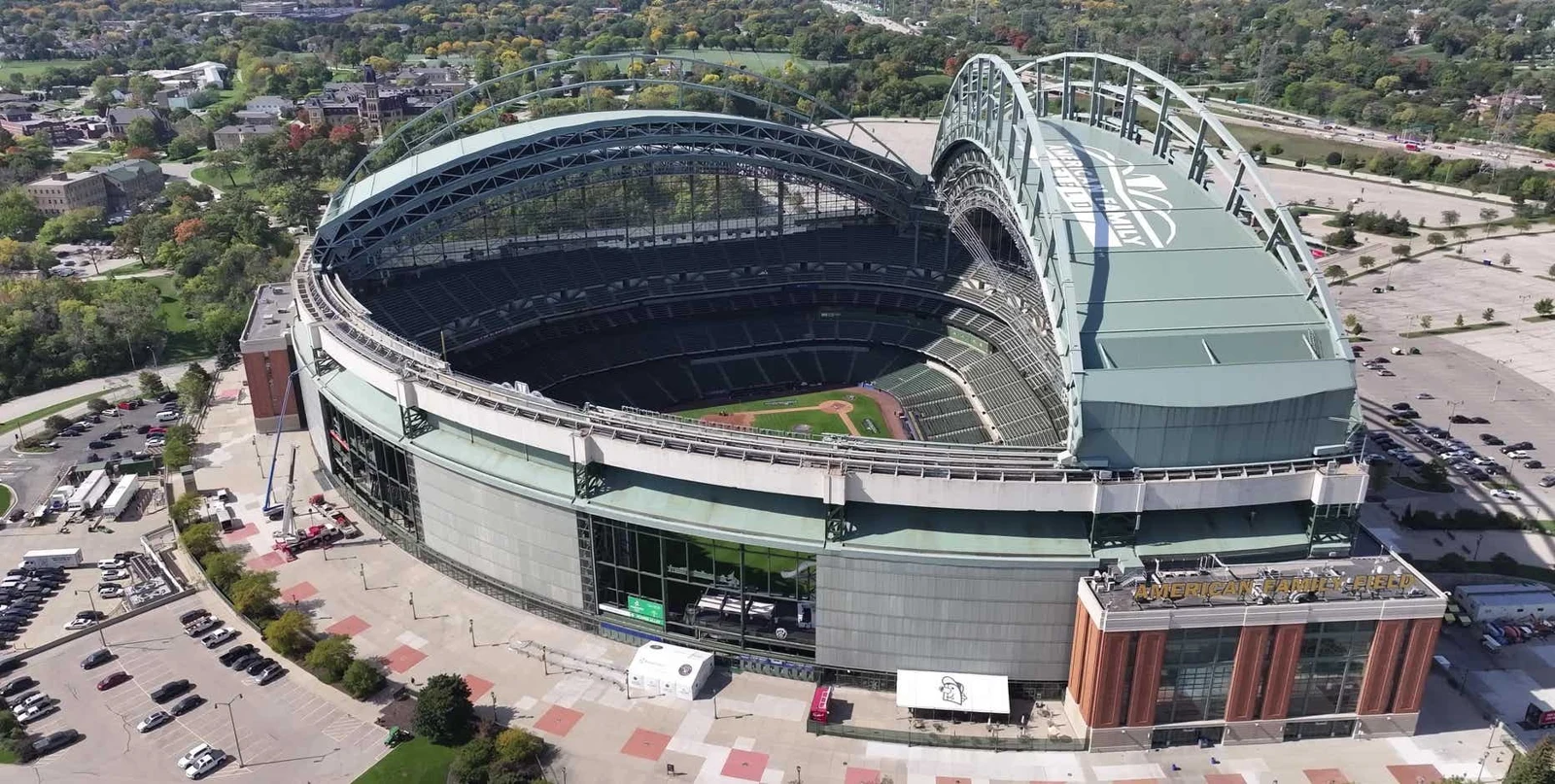
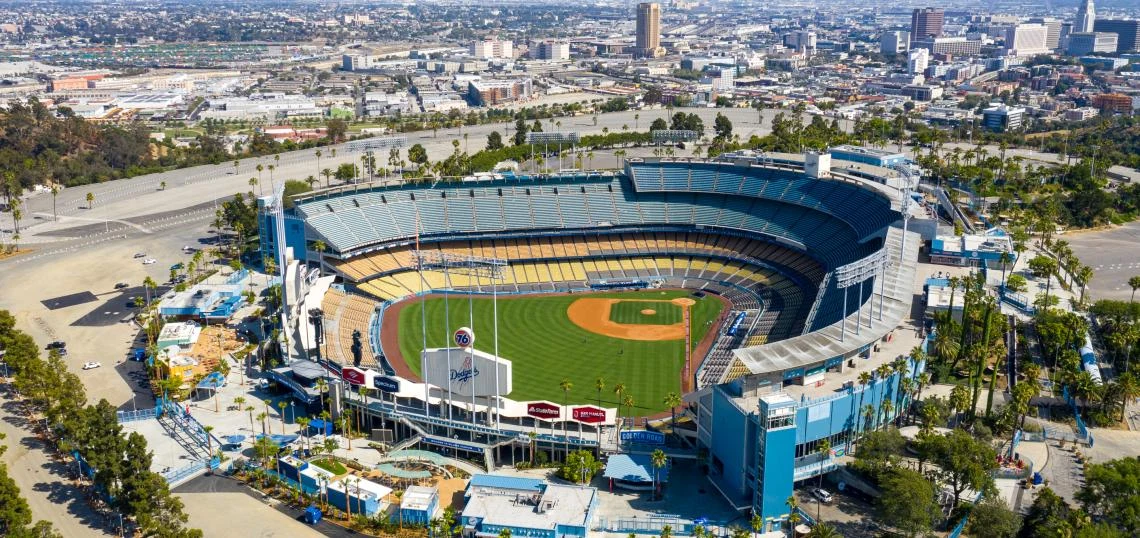
The series opened with consecutive games at American Family Field on October 11 and 12. October 13 separated the Milwaukee and Los Angeles portions of the schedule. Games 3 and 4 followed at Dodger Stadium on October 14 and 15, where Milwaukee finished the competition.
That two-city sequence is important when interpreting a photograph, broadcast introduction or ticket listing from the series. The Brewers were the home club for the first two games and the visiting club for the final two. Their pennant-clinching celebration occurred in Los Angeles, even though Milwaukee had begun with home-field advantage.
Milwaukee uses Central time and Los Angeles uses Pacific time. Older national listings may instead display Eastern time. For an archive search, the local game date and opponent are usually more reliable identifiers than a remembered national broadcast hour. A report published after midnight can also carry a later publication date than the game it describes.
Why Games 5, 6 and 7 disappeared
A best-of-seven series reserves enough opportunities for either team to earn a fourth win. It does not require seven games to be played. Once Milwaukee won Game 4, Los Angeles had four losses and no remaining path to win the series. Game 5 was unnecessary, along with the possible return games in Milwaukee.
Those unused slots are different from a postponement. They were not games waiting for a better-weather date, and their absence does not leave an incomplete result. A final series record of 4–0 is complete. If you still have an early seven-game calendar, remove the conditional reminders rather than searching for revised NLCS first-pitch times.
The playoff-format explainer describes why other rounds end after different numbers of wins. Apply the format for the round being reviewed: a Division Series result and a League Championship Series result do not use the same maximum number of games.
TV coverage, highlights and full-game replays
Because the series has ended, a viewing recommendation now needs to distinguish an archive from a live broadcast. An old preview can correctly identify the original channel while being unhelpful about what is available to watch today. Look for the game date and a replay or archive label before starting a subscription.
The original FOX and FS1 broadcasts
Games 1 and 2 were listed on FOX and FOX One. Games 3 and 4 were listed on FS1 and FOX One, with Spanish-language coverage through FOX Deportes. Those assignments explain why a viewer following only one linear channel could miss part of the series. FOX and FS1 are different channel entries even though both belong to the same sports operation.
For future baseball broadcasts, use the current MLB TV schedule rather than applying an NLCS listing to another round. The original broadcaster is useful when identifying a recording or checking an existing provider’s library. It is not a guarantee that every completed broadcast remains available indefinitely within every subscription.
Watching the series after it ended
Begin with MLB’s official video and game pages for recaps and individual highlights. Choose the date and matchup deliberately: Milwaukee and Los Angeles have met in other seasons, and a search using only the two club names can return an older playoff game. The 2026 NLCS archive consists of the four dates in the table above.
For a full game, check the archive available to your MLB.TV account or the replay library included with your broadcaster or television subscription. Confirm the actual game is playable before buying a package for one recording. Live blackout rules, archive access and television-provider authentication are different questions. Our full-game replay guide explains those viewing routes in greater detail.
Highlights are useful for revisiting the decisive swings; a full replay supplies the earlier baserunners, defensive outs and pitching changes around them. If you have limited time, Game 3’s sixth and seventh innings and Game 4’s second through sixth innings provide a focused way to revisit the major score changes described here.
To watch without further spoilers, enter through a saved game date or archive page and avoid browsing team news headlines first. Pause sports notifications on the device you will use. The result is already public, so a recap thumbnail or search headline can reveal it before the video begins.
Milwaukee’s next step after the NL pennant
Milwaukee’s next series is the World Series, scheduled to begin October 23 at American Family Field. As of October 17, the opponent is still either Cleveland or Tampa Bay. The National League side of the matchup is settled; the American League side remains unresolved.
The pennant does not give Milwaukee a starting lead in the next round. The World Series begins 0–0, and a championship requires four new victories. Any comparison with Cleveland or Tampa Bay must therefore be treated as preparation for a new series, not as an extension of the NLCS score.
Milwaukee is scheduled to host the opening two games. The American League winner hosts the middle portion, with a possible return to Milwaukee for Games 6 and 7. Fans planning travel should wait for the confirmed opponent and use the current playoff schedule to identify the correct city and date. A reserved conditional game does not establish that the series will reach that stage.
World Series coverage shifts to the round’s FOX, FOX One and FOX Deportes listings. Recheck the actual event and subscription rather than relying on a saved NLCS reminder. An archive of the Brewers’ sweep and the upcoming championship broadcast are different viewing choices.
For the completed NLCS, the enduring record is clear: Milwaukee won all four games, answered deficits in each contest and finished the job in Los Angeles. The scores are final. The next question is how the Brewers fare against a different opponent, which will be decided by the World Series itself.
Loading comments...