
How to judge the greatest MLB players across different eras
Babe Ruth, Willie Mays, Hank Aaron and Ted Williams belong near the center of any serious discussion of baseball's greatest players. Walter Johnson and Cy Young make the question broader than hitting. Josh Gibson, Jackie Robinson and Barry Bonds show why records and historical context cannot be separated from the debate.
This guide uses three criteria: peak performance, sustained career value and historical significance. The featured players are an editorial shortlist, not an official ranking or a claim that everyone agrees on a single greatest player. Changing the weight given to those criteria can reasonably change the answer.
Peak asks how far a player rose above the competition at his best. Career value asks how long and how consistently he contributed. Historical significance asks what the career changed, represented or revealed about baseball. A short, extraordinary peak and two decades of excellence are both meaningful, but they are not identical achievements.
Position matters. A center fielder's contribution includes what happens when he does not have a bat in his hands. A pitcher's opportunities differ from those of an everyday hitter. Measures such as WAR can help frame those comparisons, but a decimal difference is not a complete verdict about two careers.
Era matters too. Schedules, ballparks, equipment, travel, pitching usage and access to the leagues changed. Most importantly, segregation excluded outstanding players from opportunities available to their white contemporaries. A comparison that ignores that exclusion describes an incomplete sport.
For that reason, "Major League" here includes the recognized Negro Leagues record, rather than treating American and National League participation as the only legitimate historical standard. Recorded statistics and biographical context should be read together, with the scope of each figure made clear.
Postseason achievement contributes to a career's story, but championship counts are also team outcomes. Our World Series winners archive supplies that context. A great player on a weaker club should not disappear from the discussion simply because teammates and circumstances produced fewer October opportunities.
There is also a difference between asking who accomplished the most and imagining who would win a matchup under modern conditions. The first can be investigated through evidence. The second requires assumptions about training, adaptation and competition. Keeping those questions separate makes the debate more informative than a confident but untestable claim about a time-travel game.
Four hitters who define different versions of greatness
These four careers offer useful starting points because their strongest arguments are not identical. Ruth changed the scale of power hitting, Mays contributed across the field, Aaron sustained exceptional production and Williams provides an extraordinary case built around hitting.
Babe Ruth: a power revolution with a pitching career behind it
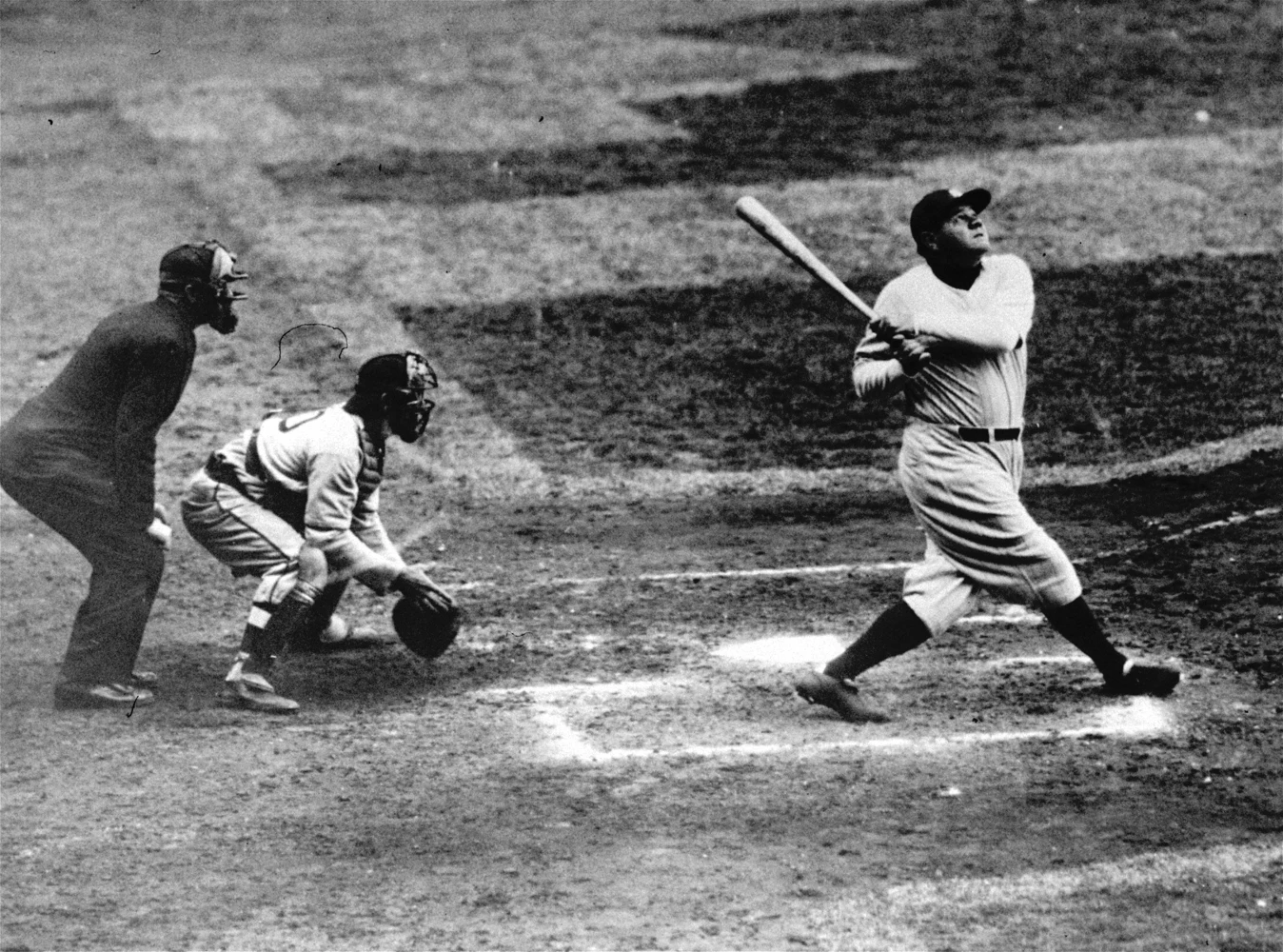
Ruth finished with 714 home runs, but the total is only one part of his case. His Hall of Fame biography also describes a successful pitching career before his transition into a full-time slugger. That earlier contribution distinguishes him from a player whose value came entirely from the batter's box.
The progression from 29 home runs in 1919 to 54 in 1920 and 59 in 1921 helps explain his significance. Those figures describe a dramatic change in the game's offensive possibilities, not merely a player adding several good seasons to a long career.
Ruth is therefore a strong answer when the criterion is transformative dominance. The limitation is historical context: the competition and opportunities of a segregated era must remain part of the assessment. Recognizing his extraordinary achievement does not require pretending that the sport then provided equal access.
Willie Mays: the all-around standard
Mays' argument begins with the combination of power, defense and baserunning. His 660 home runs establish the offensive scale; his 12 Gold Gloves help describe why reducing the career to a home-run ranking misses so much of its value. The Hall's Mays profile presents that wider career.
The over-the-shoulder catch in Game 1 of the 1954 World Series remains the most famous visual example. The play involved more than reaching a ball: the immediate throw also mattered. It is a useful illustration of how an elite fielder can influence a game without a plate appearance.
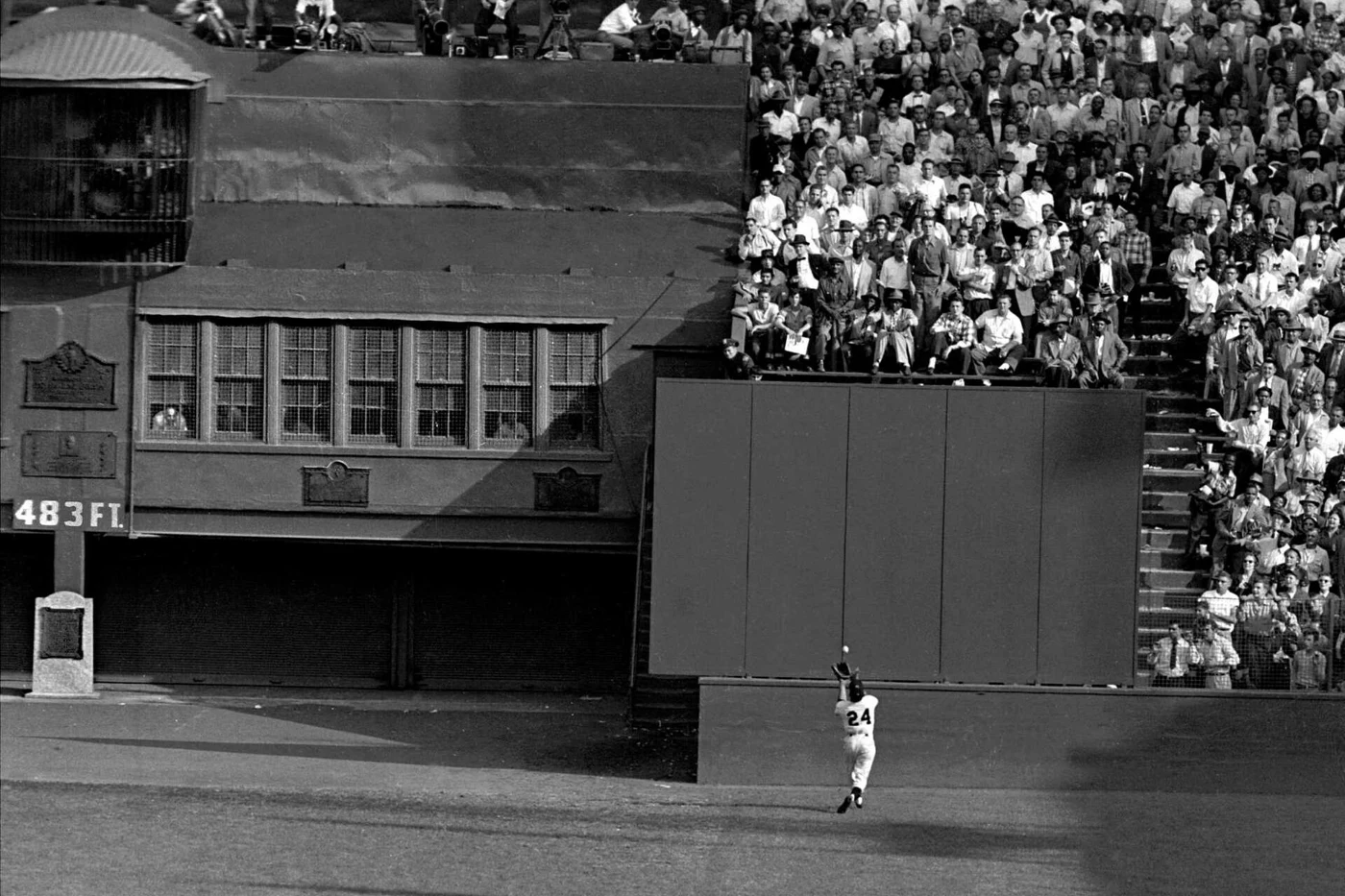
If your greatest-player definition emphasizes contributing in many ways, Mays becomes especially persuasive. That conclusion is a statement about criteria, not a claim that one famous highlight alone settles the question.
Hank Aaron: sustained excellence beyond the home-run chase
Aaron finished with 755 home runs after passing Ruth's mark in 1974. His Hall of Fame record also identifies 2,297 RBI and 6,856 total bases. Those broader totals show why the career deserves more than a retelling of one record-breaking swing.
His case rewards the ability to remain excellent for a very long time. A career comparison should value the seasons that built the total, rather than treating the pursuit of 715 as if it were the only meaningful chapter. Sustained production creates opportunities for a team year after year.
The racist abuse surrounding the pursuit is also historical context, not a footnote that changes nothing about how the achievement was experienced. Aaron's legacy includes performance under that pressure. It should not be flattened into either statistics alone or a story that forgets the exceptional player.
Ted Williams: the case for exceptional hitting
Williams hit .406 in 1941 and finished with 521 home runs despite military-service interruptions. His Hall of Fame biography supplies the career context. The batting average is an important landmark, but his ability to reach base and hit for power belongs in the same evaluation.
A reader prioritizing the quality of hitting can reasonably place Williams very high. A reader prioritizing complete all-around value may weigh defense and baserunning more heavily. Both should state the comparison being made.
Military service creates understandable questions about what might have been. It does not justify inventing an exact number of missing home runs or wins. The documented career is exceptional enough without presenting a hypothetical replacement history as a fact.
Pitchers belong in the conversation on their own terms
An all-time list built only from home runs and batting averages has already chosen to exclude half of baseball's central contest. Pitchers prevent runs, work under different schedules and accumulate value through different opportunities. Their records should be evaluated in that role rather than treated as an awkward addition to a hitters' ranking.
Walter Johnson: dominance and run prevention
Johnson finished with 417 wins and 110 shutouts, spending his major-league career with Washington. His Hall of Fame biography documents the combination of peak dominance and sustained work that makes him essential to the discussion.
The shutouts help frame the kind of achievement being considered: preventing the other club from scoring across complete games. The wins provide a career landmark, but wins alone depend partly on teammates, run support and opportunities. A fuller case looks at how effectively he prevented runs while handling an enormous workload.
Johnson is especially persuasive when greatest means a pitcher who was both exceptionally dominant and productive for a long time. Evaluating the performance against its own era does not diminish it. It identifies the competitive environment in which the achievement occurred.
When comparing him with later pitchers, ask whether you value the best individual season, a sustained peak or the full career. Switching those definitions midway through the comparison is an easy way to make a preferred answer seem inevitable.
Cy Young: extraordinary volume in a different pitching era
Young's 511 wins remain an extraordinary career landmark. His Hall of Fame record also reflects a workload far beyond the ordinary expectations placed on modern starters. The achievement combines durability, effectiveness and a pattern of pitching usage that belongs to its time.
It would be misleading to say that a modern pitcher with fewer wins must therefore have been less talented. It would be equally misleading to treat Young's total as merely a scheduling accident. A serious comparison recognizes the opportunity and the exceptional ability required to capitalize on it for so long.
A peak-focused list can reasonably favor another pitcher over a career-volume candidate. A longevity-focused list will naturally give Young considerable weight. State that choice instead of presenting a single statistic as an instruction that every reader must reach the same conclusion.
The broader lesson applies to every position: records are evidence, and the interpretation depends on what you are trying to measure. You can admire an almost unimaginable career total while still comparing run prevention, league context and peak performance separately.
Records and opportunity change how the shortlist should be read
A greatest-player discussion becomes more useful when it makes its historical assumptions visible. Three different questions arise here: whose accomplishments were recognized, which opportunities existed, and how a reader weighs achievement alongside the controversies of an era.
Josh Gibson and the Negro Leagues record
Gibson was an exceptional power-hitting catcher whose career belongs in the central conversation. His Hall of Fame profile describes that reputation and career. Excluding him because he did not receive an American or National League opportunity would repeat the consequence of segregation rather than evaluate the player.
MLB incorporated recognized Negro Leagues statistics into its official historical record in 2024. That change makes the scope of older leaderboards especially important. An old graphic labeling an AL/NL rate statistic the all-time major-league record may no longer describe the full recognized record.
At the same time, documented league figures should not be mixed casually with legends about exhibition totals. A claim about hundreds of unverified home runs is not interchangeable with an official career total. Respect for Gibson's ability does not require treating every famous story as a measured statistic.
Shorter recorded schedules and incomplete surviving evidence also affect comparisons of accumulated totals. The right response is to explain the limits and examine the rate of performance, contemporary context and career evidence together. Missing opportunities are not evidence of missing talent.
Jackie Robinson: elite play and a larger legacy
Robinson broke the twentieth-century AL/NL color line with Brooklyn in 1947 and won the 1949 National League MVP award. The Hall's Robinson biography documents a career that cannot be reduced to the significance of his debut alone.
Calling him a historical pioneer should not obscure the quality of the player. His offensive contribution, baserunning and defensive work belong in the evaluation. The larger legacy makes the career more consequential; it is not a substitute for acknowledging the baseball performance.
It is also important to state the historical milestone accurately. He was not the first Black player in all of major-league history. His breakthrough concerned the twentieth-century color line in the American and National leagues. Precision preserves the achievement while acknowledging the earlier history.
Our teams through expansion and relocation guide provides another reminder that today's league map is not the setting in which every great career occurred.
Barry Bonds: records with an unavoidable historical debate
Bonds' official home-run totals are 762 for the career and 73 in 2001. Those records are part of the statistical history. His career also sits within the sport's performance-enhancing-drug debate, a subject the Hall addresses in its historical exhibit discussion.
A reader can acknowledge the recorded achievements while deciding that the surrounding controversy changes a personal ranking. Another can choose to separate the statistical record from that judgment. Neither approach benefits from pretending that the question does not exist or that a personal asterisk has erased official results.
The clearest method states the rule being applied and applies it consistently. This guide identifies Bonds as essential to understanding the greatest-player debate without claiming that numerical records settle every question about legacy.
Build a defensible comparison instead of a false consensus
Begin your own comparison by stating the question in one sentence. "Who had the most valuable completed career?" asks something different from "Who was the best hitter at his peak?" A list can change substantially without becoming inconsistent, provided its criterion changes openly rather than halfway through an argument.
| Your main priority | Useful starting cases in this guide | What else to check |
|---|---|---|
| Transformative offensive dominance | Ruth and Williams | Era, opportunity and the difference between hitting and total value |
| All-around everyday contribution | Mays and Aaron | Defense, baserunning, peak and sustained production |
| Pitching greatness | Johnson and Young | Run prevention, workload and usage within their eras |
| Historical opportunity and legacy | Gibson and Robinson | Segregation, record scope and documented achievement |
Next, choose a consistent source for the statistic you are comparing. A career total and a single-season rate answer different questions. A number from a plaque can reflect the information available when it was created, while a current database can incorporate later research. Check the scope before assuming that different figures represent an error.
For rate statistics, look at the qualification rules as well as the displayed value. A remarkable performance over a limited recorded schedule needs context. For counting statistics, consider the opportunities to accumulate them. Neither approach requires dismissing the achievement; it requires explaining the comparison honestly.
Avoid treating awards as if the rules and opportunities were identical across every era. Gold Gloves, MVP voting and postseason formats do not provide a single uniform historical measuring stick. Awards can document recognition and strengthen a career's story, but they should sit beside performance and context rather than replace them.
The same caution applies to franchise identity. A great player's club might have moved or changed its name. Use a current team list for today's organization and a historical reference for the period being discussed. That prevents a modern label from quietly rewriting the setting of a career.
When comparing active players with these completed careers, separate what has already happened from what you expect. An extraordinary current peak deserves recognition. It does not automatically supply another ten years of production. You can follow today's games and appreciate a developing career without assigning it a final historical total in advance.
Finally, explain one limitation in your preferred answer. If you choose Ruth for transformative dominance, address the era. If you choose Mays for complete contribution, explain how you weigh hitting against defense. If you choose a pitcher, state how you compare his opportunities with an everyday player's. A defensible answer does not need universal agreement; it needs evidence, consistent criteria and an honest account of what the evidence cannot settle.
Loading comments...