
MLB teams by year: the American and National League timeline
The American and National Leagues grew from sixteen teams in 1901 to thirty teams in 1998. Expansion added new franchises in 1961, 1962, 1969, 1977, 1993 and 1998. Relocations and name changes altered the teams fans saw in their hometowns, but did not increase that combined total.
| Seasons | AL teams | NL teams | Combined teams | Change at start of period |
|---|---|---|---|---|
| 1901–1960 | 8 | 8 | 16 | Modern AL/NL baseline |
| 1961 | 10 | 8 | 18 | Two AL expansion teams |
| 1962–1968 | 10 | 10 | 20 | Two NL expansion teams |
| 1969–1976 | 12 | 12 | 24 | Two new teams in each league |
| 1977–1992 | 14 | 12 | 26 | Two AL expansion teams |
| 1993–1997 | 14 | 14 | 28 | Two NL expansion teams |
| 1998–2012 | 14 | 16 | 30 | Two expansion teams; Milwaukee switched leagues |
| 2013–2026 | 15 | 15 | 30 | Houston switched to the AL |
This table counts AL and NL franchises. It does not count every league recognized as a major league in baseball's wider historical record. That distinction matters for periods that also included the Federal League or the recognized Negro major leagues. MLB's recognition of seven Negro leagues from 1920–1948 is part of that broader history.
The year ranges help answer a common question quickly. A 1965 season had twenty AL/NL teams; a 1985 season had twenty-six; a 1995 season had twenty-eight. To identify the actual names and cities in one of those seasons, also check the relocation and naming dates below.
How to read expansion, relocation and name changes
Expansion creates a new franchise and increases the number of teams. An expansion team's first season is the useful date for a year-by-year standings search. The announcement that a city has been awarded a club can occur earlier.
Relocation moves an existing franchise to another city. Its earlier seasons remain part of the same franchise history. A move can leave one city without a team and give another city a club without changing the total number of AL/NL franchises.
A name change alters the club's name or nickname. It can accompany a relocation, but it can also happen while the franchise stays in the same market. A new nickname is therefore not sufficient evidence that a new team was created.
A league switch changes whether a team competes in the American or National League. The switch affects the league columns in the table, rather than the combined total. Keeping these four events separate makes old standings, championship histories and franchise records much easier to follow.
From sixteen teams to thirty: every expansion wave
Fourteen expansion franchises joined the AL and NL between 1961 and 1998. The original names below are the names used when each club began major-league play. A later city or nickname change belongs to that same franchise's subsequent history.
| First season | New AL franchises | New NL franchises | Combined total afterward |
|---|---|---|---|
| 1961 | Los Angeles Angels; Washington Senators | None | 18 |
| 1962 | None | New York Mets; Houston Colt .45s | 20 |
| 1969 | Kansas City Royals; Seattle Pilots | Montreal Expos; San Diego Padres | 24 |
| 1977 | Seattle Mariners; Toronto Blue Jays | None | 26 |
| 1993 | None | Colorado Rockies; Florida Marlins | 28 |
| 1998 | Tampa Bay Devil Rays | Arizona Diamondbacks | 30 |
1961 and 1962: Angels, Senators, Mets and Colt .45s
The AL expanded first, adding the Angels and a new Washington Senators club in 1961. The previous Washington franchise moved to Minnesota for that same season. One move plus two new clubs increased the AL from eight teams to ten; the city change itself did not create the additional teams.
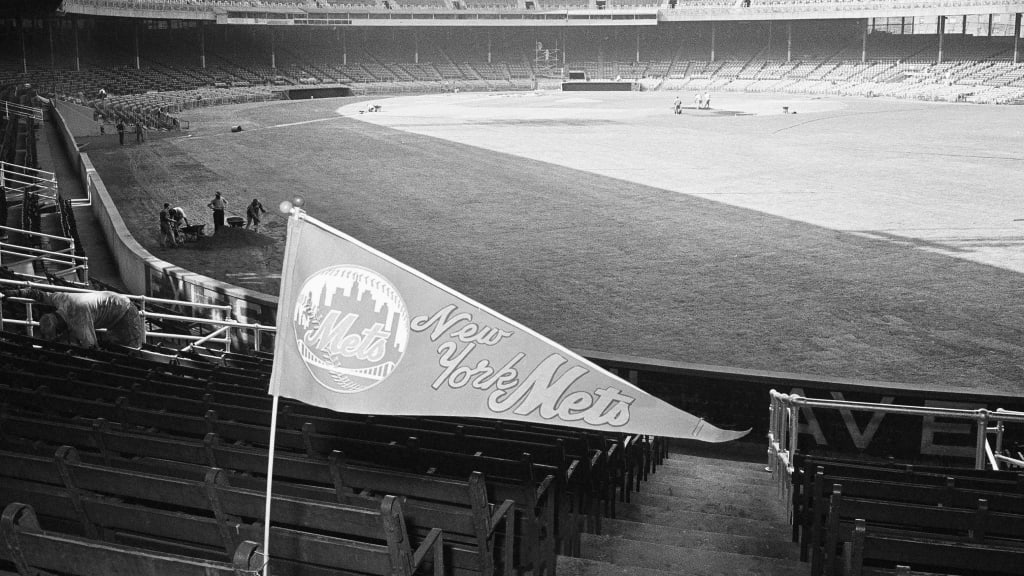
The NL followed in 1962 with the Mets and Houston Colt .45s. The Mets restored National League baseball to New York after the Dodgers and Giants had moved away. They were a new franchise, rather than either departed team's continuation. Houston's new club later became the Astros.
The two leagues consequently had different team counts in 1961, then matched at ten apiece in 1962. This is why a list that applies “twenty teams” to the entire early 1960s needs a more precise starting year.
1969 and 1977: six more franchises joined
The four-team expansion of 1969 introduced the Royals and Pilots in the AL, and the Expos and Padres in the NL. Each league reached twelve teams. Montreal became the home of a new Canadian major-league franchise.
The Pilots lasted one season in Seattle before moving to Milwaukee. Their franchise continued as the Brewers. When the Mariners began in 1977, they were a different expansion franchise, rather than the Pilots returning to their former city.
The Blue Jays also began in 1977. Those two new AL clubs took the combined total to twenty-six. Seattle's official franchise timeline separates the 1976 award and expansion draft from the Mariners' first season in 1977, a useful distinction when comparing sources.
1993 and 1998: the final four expansion teams
Colorado and Florida entered the NL in 1993, bringing each league to fourteen teams. The Florida franchise later adopted the Miami Marlins name. Neither that name change nor the opening of a new ballpark created an additional franchise.
Arizona and Tampa Bay began in 1998, with Arizona joining the NL and the Devil Rays joining the AL. They brought the combined total to thirty. Milwaukee also changed leagues for that season, so the actual 1998 alignment was fourteen AL teams and sixteen NL teams. The Brewers' official timeline confirms that arrangement.
These are first-season dates. Expansion drafts occurred before the new clubs played their opening games, and stories about future expansion can describe possible teams rather than additions already present in the standings. Use the established thirty-team field when reading the 2026 season.
Major franchise relocations and their first seasons
The following moves explain many unfamiliar city names in old AL/NL standings. The year identifies the franchise's first season in its new home, rather than the date owners announced or approved the move.
| First season | Previous location or team | New location or team |
|---|---|---|
| 1902 | Milwaukee Brewers | St. Louis Browns |
| 1953 | Boston Braves | Milwaukee Braves |
| 1954 | St. Louis Browns | Baltimore Orioles |
| 1955 | Philadelphia Athletics | Kansas City Athletics |
| 1958 | Brooklyn Dodgers | Los Angeles Dodgers |
| 1958 | New York Giants | San Francisco Giants |
| 1961 | Original Washington Senators | Minnesota Twins |
| 1966 | Milwaukee Braves | Atlanta Braves |
| 1968 | Kansas City Athletics | Oakland Athletics |
| 1970 | Seattle Pilots | Milwaukee Brewers |
| 1972 | Expansion Washington Senators | Texas Rangers |
| 2005 | Montreal Expos | Washington Nationals |
| 2025 | Oakland Athletics | Athletics, playing in West Sacramento |
The Braves, Dodgers, Giants, Orioles and Athletics
The Braves' route runs through Boston, Milwaukee and Atlanta. They began playing in Milwaukee in 1953 and Atlanta in 1966. A Milwaukee Braves season belongs to the Braves franchise, rather than today's Brewers, even though both clubs played in the same city at different times.
The Orioles' modern franchise played the 1901 AL season as the Milwaukee Brewers, then became the St. Louis Browns in 1902 and the Baltimore Orioles in 1954. That 1901 Milwaukee club is separate from the franchise that arrived from Seattle in 1970. Reusing a familiar nickname did not merge their histories.
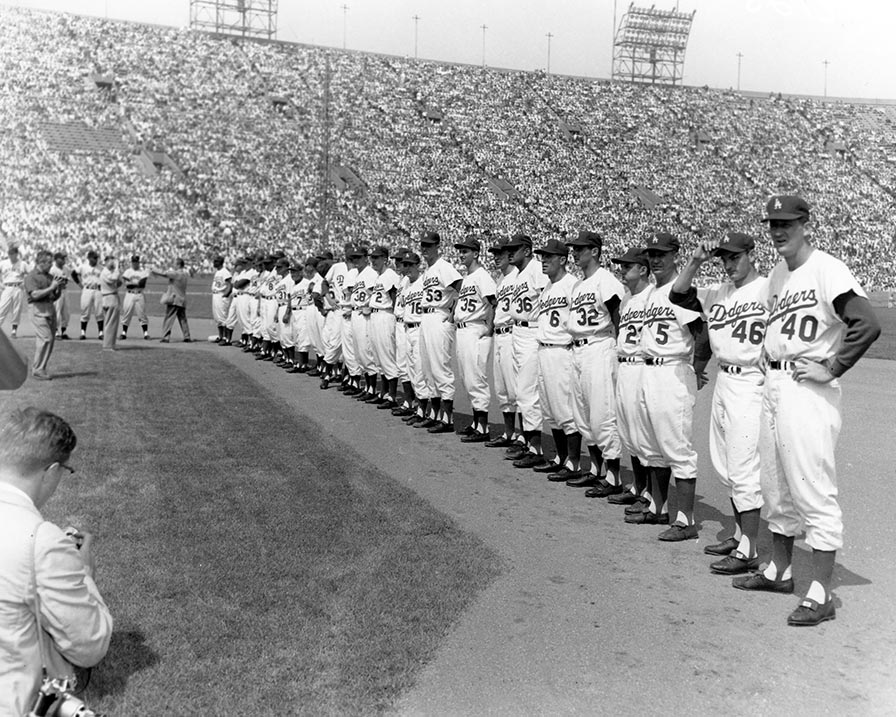
The Dodgers and Giants both began their California seasons in 1958. Brooklyn and Los Angeles Dodgers records belong to one franchise; New York and San Francisco Giants records belong to another. The cover photograph shows the Dodgers lining up for their first Los Angeles home game at the Coliseum, a new-city debut for an existing club.
The Athletics moved from Philadelphia to Kansas City in 1955, then to Oakland in 1968. In 2025 they began playing at Sutter Health Park in West Sacramento. Their current team name is simply Athletics. “Sacramento Athletics” is not the official name to substitute in a team list. The official ballpark page confirms their current home.
Two Washington Senators franchises, two different histories
The Senators in a 1955 standings table and the Senators in a 1965 table were different franchises. The original AL Washington club played there through 1960, then became the Minnesota Twins in 1961. A new expansion Senators franchise began in Washington in 1961 and remained through 1971.
That second club began playing as the Texas Rangers in 1972. It follows that the original Senators' earlier seasons belong to the Twins franchise history, while the expansion Senators' eleven Washington seasons belong to the Rangers. MLB's Washington baseball history overview distinguishes the two moves.
Today's Nationals have a third lineage. Their Washington arrival came much later and did not reverse either Senators move. The city, nickname and season must be read together to identify the right club.
Seattle Pilots, Montreal Expos and their successors
The Pilots began in Seattle in 1969 and moved to Milwaukee for 1970. The Brewers therefore trace their franchise to that one Pilots season. The Mariners began as a new Seattle expansion club in 1977, with a separate history.
The Expos began in Montreal in 1969 and played there through 2004. They became the Washington Nationals for the 2005 season. A Montreal player or season can appear in a Nationals franchise record book because the franchise continued after relocation.
These distinctions are useful for baseball trivia as well as standings research. A city can lose a franchise and later gain a different one; a franchise can move without losing its earlier record. Check which kind of continuity a question is asking about before combining team totals.
Name changes and league switches did not add teams
Several familiar modern names began well after their franchises' first seasons. Houston began as the Colt .45s in 1962 and adopted Astros in 1965. Tampa Bay began as the Devil Rays in 1998 and used Rays from the 2008 season. Florida began in 1993 and became the Miami Marlins for 2012. Cleveland began using Guardians in the 2022 season.
| First season with change | Franchise | Change | Effect on team total |
|---|---|---|---|
| 1965 | Houston | Colt .45s became Astros | No new franchise |
| 1998 | Milwaukee | AL to NL | Thirty combined; changed league balance |
| 2008 | Tampa Bay | Devil Rays became Rays | No new franchise |
| 2012 | Miami | Florida Marlins became Miami Marlins | No new franchise |
| 2013 | Houston | NL to AL | Thirty combined; fifteen in each league |
| 2022 | Cleveland | Indians became Guardians | No new franchise |
Houston's two changes answer different questions. The 1965 event explains why an early Houston baseball card says Colt .45s. The 2013 event explains why older standings place the Astros in the National League. Neither event means a second Houston franchise joined MLB.
Milwaukee's league switch is similarly important when reading the 1998 expansion. Adding Arizona and Tampa Bay increased the total from twenty-eight to thirty. Moving Milwaukee from the AL to the NL then produced a fourteen-team AL and sixteen-team NL. Treating expansion as the only event would miss the actual league alignment.
Houston's move to the AL for 2013 balanced the leagues at fifteen apiece. Its official season review identifies 2013 as its first American League season after fifty-one seasons in the NL. A 2012 Astros result belongs in the NL; a 2013 result belongs in the AL, despite the same team name appearing in both.
Cleveland announced its new name in 2021, but the club played its first Guardians season in 2022. The 2022 opening-day account confirms the debut. When searching old scores, use Indians for a 2021 game and Guardians for a 2022 game; both belong to the same franchise.
Find the right franchise when reading an old season
Begin with the season, then identify the club's city, nickname and league in that year. After that, follow its franchise history forward. This order prevents a modern team name from being applied to a club that did not yet exist in that location.
For a present-day matchup, the current MLB teams by division guide helps you find the clubs and their current league and division. For an old pennant race, historical standings and the team's official timeline are more useful. If the question concerns which clubs qualified for the playoffs, also check the postseason format history: the number of MLB teams and the number of playoff teams are different totals.
Three worked examples for historical standings
A 1965 Milwaukee entry: the team was the Milwaukee Braves. Its franchise would play in Atlanta the next season. The Brewers had not yet arrived from Seattle, and the Pilots themselves would not begin until 1969. MLB's 1965 standings preserve the Braves' Milwaukee identity.
The same standings show Washington Senators in the AL. Because the season was 1965, this was the expansion franchise that later became the Rangers. The original Senators were already playing as the Minnesota Twins. Looking at the year resolves the ambiguity without treating both Washington clubs as one team.
A 1969 Seattle entry: it refers to the Pilots. Follow that franchise into the 1970 standings and it appears as the Milwaukee Brewers. Do not continue its Seattle history into the Mariners' 1977 debut: that was a new expansion franchise. A city-based search and a franchise-based search produce different timelines.
A 2004 Montreal entry: it refers to the Expos. Their next season was the Nationals' first season in Washington. The Nationals' official historical standings page still displays Montreal Expos for 2004. The modern website name around the table does not change the historical name inside it.
Check the season rather than the announcement year
Owners can approve a team, move or name change months before the corresponding season begins. The Mariners were awarded their franchise and selected players in 1976, then debuted in 1977. The Dodgers and Giants announced their California moves in 1957, then played their first seasons there in 1958.
Use three checks when sources seem to disagree. First, determine whether the date refers to approval, an announcement, an expansion draft or actual major-league play. Second, determine whether the source is describing a franchise or a city. Third, check whether a league switch changed where that team appears in the standings.
For the Athletics, the current distinction is between their temporary West Sacramento home and a planned future Las Vegas move. The temporary home is already part of the season record; a future plan is not an additional completed relocation to enter into an old-season table.
These checks let you use a historical team list confidently, whether you are following a player's career, comparing division races or identifying the team on an old ticket. For the games being played now, return to MLB games today and select the current club rather than its historical city name.
Loading comments...