
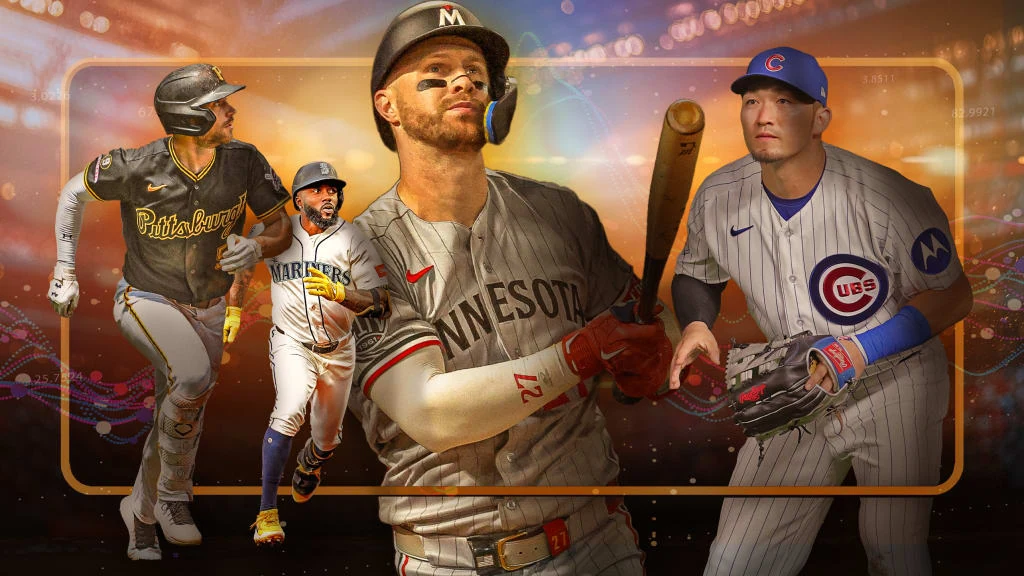
Who accepted the 2026–27 MLB qualifying offer?
New York Yankees closer David Bednar and Minnesota Twins catcher Ryan Jeffers accepted MLB qualifying offers on November 17, 2026. Each agreed to a one-year contract worth $23.15 million for the 2027 season. Eight players received offers in all. Six declined, including Jake Bauers, who took a four-year deal with the Boston Red Sox. MLB's results listed the other five decliners as unsigned.
The offer came from each player's 2026 club. The response column shows what happened to that offer, while the last column shows where the player stood when MLB announced the results. That date matters when you go back to the list later in the winter: a player who signs next week will still have declined his offer in November. The table is a record of the decision, with a separate snapshot of what came next. MLB's November 17 results
| Player | Offering club | Decision | Status in the results |
|---|---|---|---|
| David Bednar | Yankees | Accepted | Returns to New York |
| Ryan Jeffers | Twins | Accepted | Returns to Minnesota |
| Jake Bauers | Brewers | Declined | Signed with Boston |
| Randy Arozarena | Mariners | Declined | Listed unsigned |
| Brandon Lowe | Pirates | Declined | Listed unsigned |
| Adrian Morejon | Padres | Declined | Listed unsigned |
| Trevor Rogers | Orioles | Declined | Listed unsigned |
| Seiya Suzuki | Cubs | Declined | Listed unsigned |
Bednar's return gives New York a familiar arm to finish close games when the Yankees' next season begins. He finished 2026 with 35 saves and a 2.47 ERA. Knowing who can handle the ninth lets fans make more sense of the club's other bullpen moves, especially additions who might work ahead of him. It also lets the Yankees address that depth without waiting for the top of the relief market to settle. Yankees report on Bednar's return
Jeffers' decision settles a different roster question. He returns as Minnesota's primary catcher after batting .256 with a .353 on-base percentage and a .461 slugging percentage in 2026. A stretch on the injured list limited him to 369 plate appearances. The Twins retain a regular catcher whose bat can contribute near the heart of the order, and supporters following the Twins' 2027 schedule have one fewer starting job to watch this winter. Twins report on Jeffers' return
Why some headlines say five players declined
Five is the count of players who turned down their offers and were still looking for their next contract in the results. MLB counted six declines because its list also includes Bauers. Boston announced his four-year contract on November 17, after he had already agreed to the deal. The two counts answer different questions. One is how many players declined across the full group. The other is how many remained available afterward. Boston's contract announcement coverage
On deadline day, a roundup could put Bauers under signings and count the other five under declines. If you're tracking the 2027 draft, keep Bauers in the rejected-offer group. His departure is the one already tied to a new club in the November 17 results, making it the first case in this class where the draft consequences can be traced from a completed signing. November 17 deadline coverage
What a qualifying offer does to a player's free agency
A qualifying offer gives an eligible free agent a guaranteed price for a one-year return if he accepts. The organization he played for that season decides whether to extend one. MLB sets the amount using the mean salary of the league's 125 highest-paid players. That produced the same $23.15 million offer for a closer, a catcher and the six other players in this year's group. During the previous offseason, the figure was $22.025 million. The change of $1.125 million came from the annual calculation. The MLB salaries guide explains how this figure fits alongside other salary measures. MLB qualifying offer definition
There are two deadlines to keep straight. Clubs have five days after the conclusion of the World Series to tender qualifying offers, and players have a later deadline to decide. This offseason, the decision window closed on November 17 at 4 p.m. ET. For the club, sending an offer means being prepared to pay the full rate if the player chooses to stay. For the player, it means he can weigh a known one-year deal against whatever duration, salary and role he might find on the market. MLB offseason deadlines
Which players were eligible?
A player can receive a qualifying offer only once in his career under the current rules. He also has to remain with the same organization from Opening Day through the end of the regular season. Time with an affiliate in the same organization can count toward that uninterrupted stretch. This is why a club acquiring a pending free agent during the season can't make him an offer that winter. MLB eligibility rules
Tarik Skubal provides a clear example. The Dodgers acquired him from Detroit on August 2, 2026, and MLB listed him among the players who did not meet the full-season requirement. Trent Grisham appeared in the ineligible group for the other reason, having already received an offer in a previous year. Eligibility can also leave a player without an offer if his club chooses to let the deadline pass. When reading the 2027 MLB free-agent guide, check each player's distinct offer history before attaching a draft consequence. Dodgers trade announcement · MLB's eligibility list
What happens after a player accepts or declines?
Acceptance puts the player under contract to the offering club for the following season at the preset rate. If Bednar or Jeffers later becomes a free agent again, the current system bars another qualifying offer because each has already received one. That protection also applies to the players who chose to decline. Eligibility runs out when the offer is made, whichever answer the player gives. Twins coverage of Jeffers' contract
A player who declines remains a free agent and can keep talking to his former team. The parties can agree to different terms, such as a longer contract, if both want a reunion. An agreement with the former team leaves no departure to compensate. A deal with another club before the next amateur draft can activate the rules that award an extra selection to the old club and require the new club to forfeit one or more selections. MLB guidance on the two outcomes
How MLB separates compensation from signing penalties
Follow the two clubs separately when a player who declined an offer signs somewhere new. The former club earns a compensatory pick at a position determined by its own classification. The signing club forfeits a selection or selections based on its own classification. The draft adds one pick and removes others through separate calculations, so looking at the order for one club won't tell you the penalty for the other. A club can lose two picks on a deal even when the former club gains only one. MLB's compensation and forfeiture rules
Start with the classifications MLB uses for the transaction. The Competitive Balance Tax, often called the luxury tax, depends on a payroll calculation defined by the agreement. A club's market size or a running tally of salaries won't settle which rule applies. MLB's November 17 report used preliminary 2026 payroll classifications, so keep that caveat in mind when comparing possible compensation for different teams. MLB's competitive balance tax glossary · MLB's November compensation estimates
Where the former team gets a pick
The largest difference in pick placement comes from the former team's revenue-sharing status. For that category, the line is $50 million in total contract value on the new deal. A contract worth exactly that amount clears the threshold. The $23.15 million qualifying offer matters when the player decides whether to accept. Once a qualifying revenue-sharing club loses him, the size of the deal he actually signs determines the pick placement.
| Former club | Compensatory pick placement |
|---|---|
| Competitive Balance Tax payor | After the fourth round |
| Revenue-sharing recipient in the applicable tier | After Round 1 and before Competitive Balance Round A at $50 million or higher. After Competitive Balance Round B below $50 million. |
| Other clubs | After Competitive Balance Round B |
In the draft order, Competitive Balance Round A sits between the first and second main rounds. Round B sits between the second and third. A compensation pick before Round A can therefore come much earlier than one after Round B, even though both clubs can point to a player they lost. If multiple clubs earn picks in the same compensation tier, their order follows the previous season's standings. Wait for the published order for an overall pick number. MLB on pick placement · MLB on the two Competitive Balance rounds
What the signing team gives up
For the signing club, read the penalty in terms of its highest available selections. The club's highest first-round selection is protected. A second-highest selection can differ from an ordinary second-round pick because a club's full set can include additional early choices. Read the club's own set of picks before looking for the missing selection in a league-wide order. MLB on protected and forfeited picks · 2026 draft order as an example of the layout
| Signing club | Draft selections lost | Upcoming international pool reduction |
|---|---|---|
| Competitive Balance Tax payor | Second-highest and fifth-highest | $1 million |
| Revenue-sharing recipient in the applicable tier | Third-highest | None under this rule |
| Other clubs | Second-highest | $500,000 |
A second qualifying signing can take more selections. MLB lists the third-highest and sixth-highest picks as the additional forfeitures for a tax payer. A revenue-sharing recipient would add its fourth-highest, while a club in the remaining tier would add its third-highest. A forfeited draft pick also removes the money associated with that slot from the club's domestic draft bonus pool. That can affect the team's room to sign the players it still selects. An international pool reduction applies to a separate budget for eligible international signings. MLB on multiple signings and bonus pools
The signing date eventually matters as much as the club. Under the published rules, someone in the 2026–27 class who is still unsigned once the 2027 amateur draft begins no longer carries the qualifying-offer draft penalty. For a winter deal, check the rules for both clubs. For a deal around the draft, establish when the transaction took effect before applying those rules. MLB on when the draft effect expires
How the Jake Bauers signing affects the 2027 draft
Jake Bauers' move from Milwaukee to Boston is a complete example of how the rule works. The Red Sox announced a four-year contract through 2030. MLB.com reported that the deal is worth $58 million. For Milwaukee, three facts determine the placement of the pick. The Brewers made a qualifying offer, Bauers joined a different club, and the new contract crossed the $50 million line for a revenue-sharing recipient. MLB put Milwaukee's compensation between the first round and Competitive Balance Round A. Boston's official release · MLB's report on Milwaukee's pick
There is a separate calculation for Boston. CBS Sports identified the Red Sox as a Competitive Balance Tax payor for 2026. Under that tier, the deal costs Boston its second-highest and fifth-highest 2027 picks and $1 million from its international bonus pool. The Brewers get one added selection in an earlier part of the draft. If you're counting a team's 2027 picks, add the extra selection to Milwaukee's list and remove the applicable selections from Boston's list. Follow MLB's final order for the overall numbers and the draft itself for the players teams actually select. CBS Sports on Boston's reported tax status · MLB's rule for tax payors
For a case where the outcome was still open, consider Randy Arozarena. MLB lists an earlier placement for Seattle if he signs elsewhere for at least $50 million and a later placement if he signs elsewhere below that figure. In a hypothetical deal worth exactly $50 million with another club, Seattle would qualify for placement between Round 1 and Competitive Balance Round A. At a hypothetical $49 million, it would be after Round B. If he re-signs with Seattle, the club gets him back and no compensation for losing him. The November 17 snapshot gives the branches of the decision, and the official signing will tell fans which one applies. MLB's conditional scenarios for Seattle
What to watch after the qualifying offer deadline
As of November 18, MLB's offseason tracker still listed Arozarena, Lowe, Morejon, Rogers and Suzuki as free agents with qualifying offers attached. To follow any of those five, start with his last team in the tracker. MLB marks players who received an offer and updates entries when they sign. If the player moves, the new club's additions and the former club's departures can show the same move from different sides. That helps when two clubs are pursuing players who fill a similar role or when a club is mentioned in several reports on the same day. MLB's team-by-team tracker
When a report says a club is interested, keep the player in the unsigned group until there is a deal. An agreement reported by the media can precede the transaction by days, as the Bauers timeline illustrates. Look for the date and team in the league's transaction feed and the terms that the club has confirmed. Where the financial value is reported separately, keep it attributed. That matters especially near the $50 million threshold, when the size of a contract can change the old team's draft position. MLB's official transaction feed
The next major calendar point is December 1, 2026, when the current major league collective bargaining agreement expires. MLB's November 4 bargaining proposal includes eliminating the qualifying-offer system, following the union's earlier proposal on that point. The parties have yet to establish the terms of a new agreement. The compensation explanations above describe the published rules that applied to the November 17 decisions. Check actual agreement and transition language before drawing conclusions about what happens to future offers or the current draft scenarios. MLBPA on the agreement's expiration · MLB on its November proposal
If you're following several teams, use the 2026 Winter Meetings guide for the schedule of offseason events and the 2027 CBA guide for the status of negotiations. The results in the first table record who took the one-year deal. The questions to revisit are where the remaining players sign and what MLB ultimately posts in the 2027 draft order.
Loading comments...