
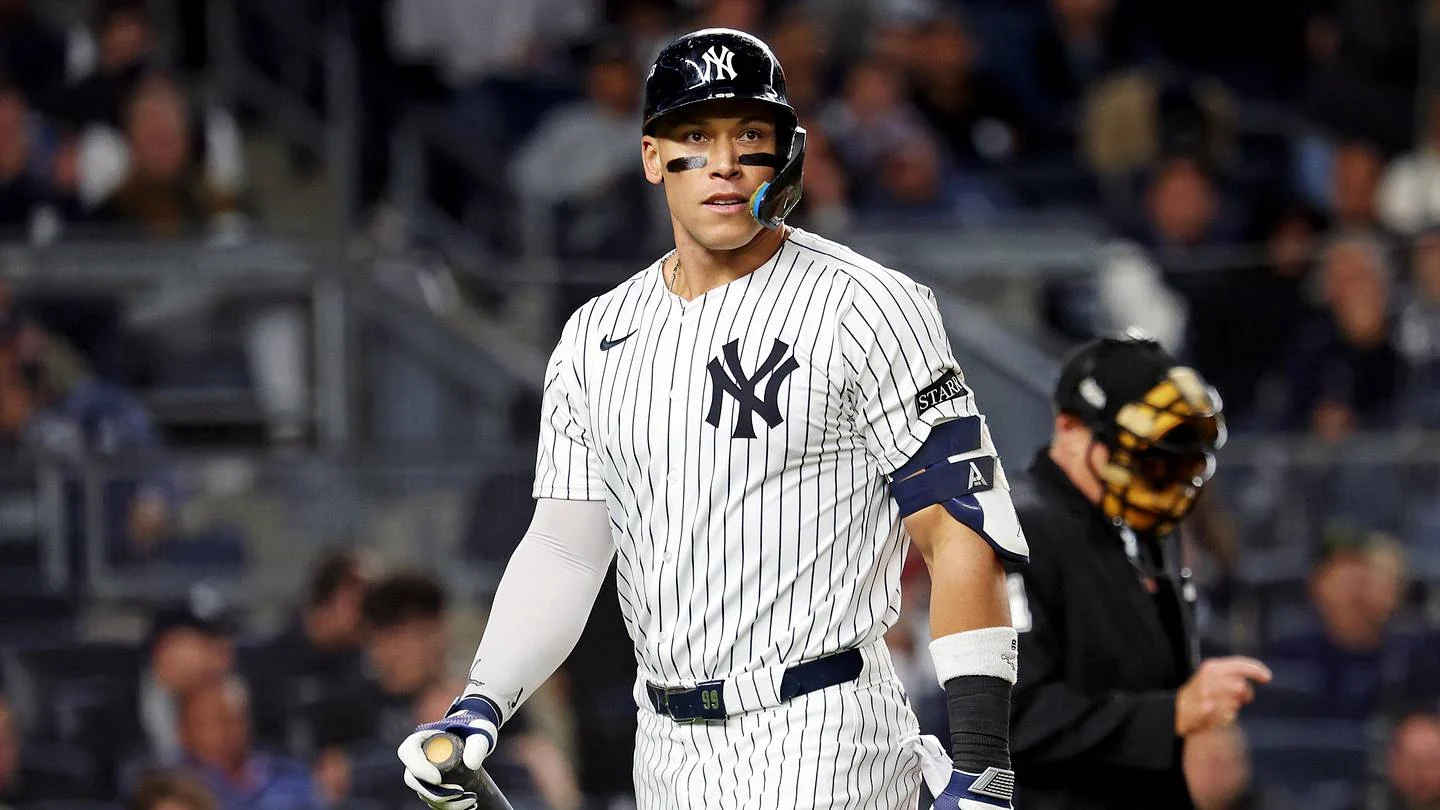
Aaron Judge Injury Status at a Glance
Updated September 20, 2026: Aaron Judge is on the New York Yankees' 10-day injured list with a confirmed right calf strain. The move was made on September 19 and is retroactive to September 17, the day an MRI revealed the injury. The Yankees have not announced the grade of the strain or a medical return timetable. Judge has said that being back for the postseason is his plan, but neither he nor manager Aaron Boone has said that he is cleared or certain to play.
- Diagnosis: right calf strain, which Judge identified as involving the soleus muscle.
- How it surfaced: lower-right-leg stiffness during the September 16 game at Minnesota.
- Earliest IL activation: September 27, the Yankees' regular-season finale against Baltimore.
- Wild Card Series begins: September 29, leaving virtually no regular-season runway.
- Official return date: none as of this update.
That distinction matters. September 27 is the first date the roster rules allow an activation; it is not a forecast that Judge will be ready that day. The best current answer is that an October return remains possible, while his availability is genuinely uncertain. Fans can track the remaining dates on the Yankees schedule as the club reports each new step.
How Aaron Judge's Calf Injury Happened
The calf problem arrived only eight days after Judge returned from a much longer absence caused by a right rib stress fracture. There was no reported collision or spectacular breakdown. Instead, the public timeline starts with tightness during a game, followed by imaging and an injured-list transaction.
September 16: Stiffness and an Early Exit
Judge started in right field against the Minnesota Twins at Target Field on September 16. He later said he noticed stiffness in his lower right leg during the first inning. He initially tried to continue because of the importance of the late-season games, but the Yankees used a pinch-hitter for him in the sixth. His final line was 0-for-2 with two strikeouts in a game New York eventually lost 5-4 in 13 innings.
His explanation was practical: remaining in the game while compromised could hurt the Yankees in the field or on the bases. That detail is useful because it prevents an unsupported story from forming around one swing or one running play. Public reporting has not identified a single traumatic moment. The warning sign was stiffness that became significant enough for Judge and the club to stop.
MRI, Injured-List Move and Earliest Activation
Judge underwent an MRI in Phoenix on September 17. The scan revealed a right calf strain. New York formally placed him on the 10-day injured list on September 19, with the placement backdated to September 17. Infielder-outfielder Max Schuemann was recalled from Triple-A Scranton/Wilkes-Barre in the corresponding move.
Backdating matters because the 10-day count begins on September 17 rather than the announcement date. That produces September 27 as the earliest day Judge can be activated, which happens to be the final scheduled regular-season game against the Orioles. It does not mean a 10-day calf recovery has been prescribed. An IL period sets the minimum time off the active roster; doctors and the Yankees still decide when his body is ready for baseball activity.
The official Yankees injury tracker listed his expected return as “TBD” after the MRI. It also said he was receiving treatment and might receive a platelet-rich plasma injection after returning to New York. “Might” is the operative word: a possible treatment should not be reported as something that has already happened.
What Judge and the Yankees Have Said
The clearest way to read the public comments is to separate Judge's objective from the club's medical position. Judge wants to play in October. The Yankees have not announced that he will.
Judge's Goal Is October, Not a Guaranteed Date
Speaking after the IL move, Judge said he would like to return by the postseason and described that as the plan. In the same availability, however, he said he had no answers about a timeline. Those two statements belong together. The first conveys his intention; the second acknowledges that treatment and progress will determine what is possible.
Judge said he expected to keep throwing and working out so he could rejoin the team quickly when ready. That suggests the Yankees can preserve some baseball conditioning without loading the injured area exactly as a game would. It does not establish that he can sprint, change direction, rotate through a full-power swing or play nine innings in the outfield.
He also identified the strained area as the soleus and said its role in running and hitting made this episode different from calf tightness he has managed in other seasons. That is the player's description of how the location feels in baseball activity. It is not a public disclosure of the strain's grade.
Aaron Boone Has Declined to Set a Timetable
Boone has been more guarded. He declined to reveal a grade and would not estimate when Judge could return. When asked directly whether Judge would be back for the playoffs, the manager said he did not know. That is the team's most important confirmed position as of September 20.
This restraint limits what outside projections can responsibly claim. General recovery windows may provide context, but they cannot replace the missing clinical details. Boone's point was that only nine regular-season games remained and the Yankees would treat Judge, monitor the response and see whether they could get him back. Until the club reports running, hitting or game-level progress, headlines that assign a firm return date are moving beyond the evidence.
Why a Soleus Calf Strain Matters for a Hitter
The calf is more than the visible muscle at the back of the lower leg. The soleus sits deeper than the gastrocnemius, begins below the knee and connects into the Achilles tendon above the heel. Together, the calf muscles help a person flex the foot, stand, walk, run and jump. That anatomy helps explain Judge's concern without allowing anyone outside his medical team to diagnose the injury's severity.
A major-league hitter repeatedly asks the lower leg to produce and absorb force. The back leg drives against the ground as the swing begins. The front side must stabilize as the body rotates. Leaving the batter's box requires an immediate acceleration, and rounding a base adds turns and deceleration. An outfielder also has to react, sprint, stop and throw from changing positions. A player may feel acceptable in controlled upper-body work yet still be unready for those explosive actions.
Calf strains span a broad spectrum. A mild strain can involve a small number of fibers; more serious injuries can involve partial or complete tears. Recovery therefore cannot be calculated from the name “calf strain” alone. The Yankees have MRI information, but they have chosen not to disclose a grade. Judge's ability to walk around the clubhouse, throw or take selected swings would not by itself prove that he can safely handle a full game.
This article is reporting the club's injury information, not offering personal medical advice or an independent prognosis. The relevant baseball takeaway is narrower: running and hitting load the injured region, so both activities must progress before a return can be considered credible. The lack of a disclosed grade is why the timeline must remain conditional.
Can Aaron Judge Return for the 2026 MLB Playoffs?
Yes, a postseason return is still possible, but it is not confirmed. Judge is eligible for October, and his 10-day IL minimum expires before the first Wild Card games. The harder question is whether he can complete enough baseball work for the Yankees to trust both his performance and health in a short series.
The Calendar Leaves Almost No Regular-Season Runway
Judge's earliest activation date is Sunday, September 27. The American League Wild Card Series is scheduled to begin Tuesday, September 29. If New York must play in that round, the gap is only one off day. Even an activation for the finale would give the Yankees at most one regular-season game in which to evaluate him against major-league pitching.
New York had already clinched a postseason berth when the calf strain occurred, so qualification is not the uncertainty. Seeding, home field and the exact opponent can still affect the path. The live MLB standings show that race, while the playoff schedule will carry confirmed matchups and start times. A bye would materially change the recovery calendar, but it should not be assumed before the standings make it official.
Medical Clearance Is Only the First Test
A credible comeback has several layers. Pain and swelling must respond to treatment. Judge must progress from controlled work to running at game intensity, changing direction and decelerating. He must be able to rotate and push through full swings, then repeat those actions without a setback. The club also has to decide whether he can defend in the outfield, serve as designated hitter or contribute in some narrower role.
None of those milestones had been publicly completed when this guide was updated. Fans should be cautious with a clip of light throwing or stationary hitting: it may be encouraging, but it answers only one part of the readiness question. Because a previous calf strain can carry reinjury risk, the response the next day can matter as much as the first successful workout.
The Yankees Must Make a Series-by-Series Roster Decision
Postseason clubs submit a 26-man roster before each round. That creates a strategic choice different from an ordinary September activation. If the Yankees place Judge on a series roster, they need reasonable confidence that he can offer value throughout that round. A team may seek permission to replace a player injured during a series, but MLB's rules make that player ineligible for the remainder of the current round and the next one.
In other words, carrying a star who can only pinch-hit once is not automatically the right call, even if his presence changes how an opponent pitches. The Yankees will weigh his offensive upside, defensive and baserunning limitations, bench flexibility and the length of the series. Our MLB playoff format guide explains how the rounds fit together; Judge's status will have to be reassessed at each roster checkpoint.
What Judge's Absence Means for the Yankees
The impact begins with the scale of the player missing. Even in an interrupted 2026 season, Judge had a .241/.360/.511 slash line with 18 home runs and 41 RBIs in 66 games when he returned to the IL. His walks, power and ability to change a game with one swing shape how pitchers approach the hitters around him.
Replacing Judge's Bat Is a Group Assignment
There is no direct substitute for that offensive profile. New York can redistribute outfield innings and designated-hitter plate appearances, but it cannot ask one reserve to reproduce Judge's combination of on-base skill and slugging. Schuemann's recall supplies roster coverage; it does not make him a one-for-one offensive replacement.
The practical response has to come from several hitters extending at-bats, reaching base and converting scoring chances. Matchups may lead Boone to change the order or rotate players through right field and DH. Those decisions can vary daily, so a projected lineup should not be treated as official. Check today's MLB games for the actual matchup and game status, then confirm the lineup when the club releases it.
His Return From the Rib Injury Adds Another Workload Question
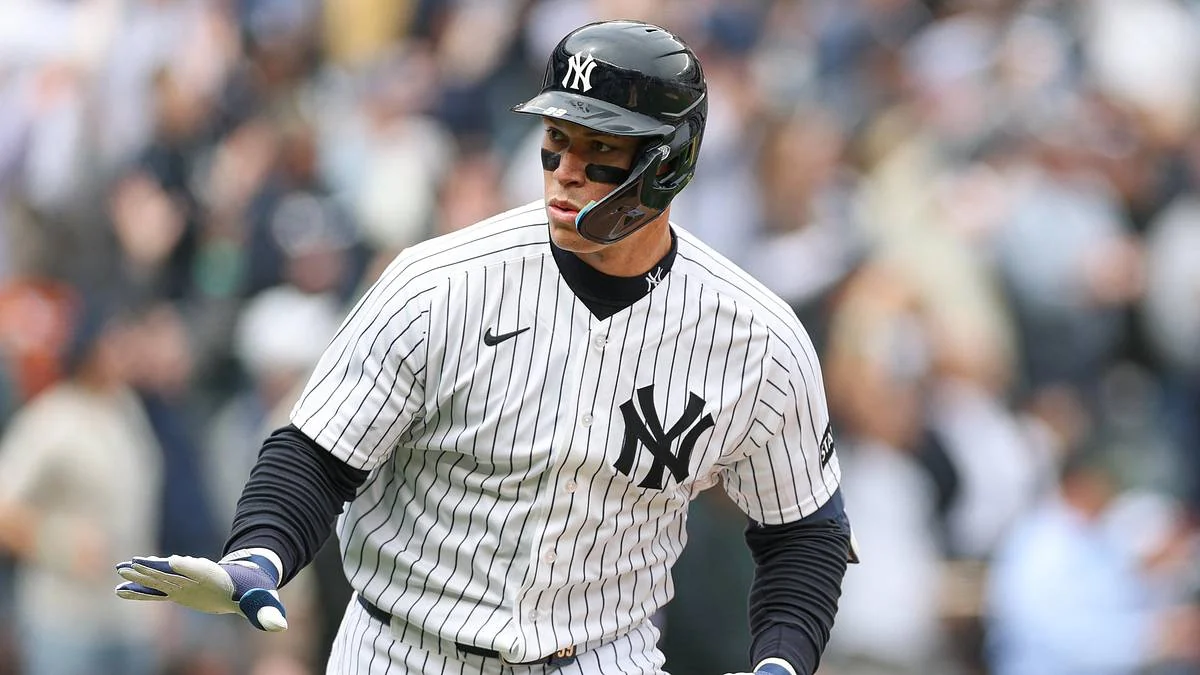
The calf strain did not occur in the context of a normal, uninterrupted season. Judge had missed about 100 days after a right rib stress fracture and returned on September 8 without a Minor League rehab assignment. He appeared in six games after activation, going 4-for-23 with one home run, before the leg stiffness forced him out.
That history does not prove that the rib injury or the decision to skip a rehab assignment caused the calf strain. Boone explicitly declined to second-guess the plan, and a causal claim would go beyond the available evidence. It does mean Judge has accumulated very few recent game repetitions. If the calf improves quickly, the Yankees still have to evaluate timing at the plate, game conditioning and defensive workload at postseason intensity.
The club has already navigated much of the year without its captain, and its expectations remain high. Yet October games magnify every roster spot and every late-inning decision. A limited Judge could still be valuable; the question is whether that value exceeds the flexibility New York would give up to carry him.
What Fans Should Watch Before the Next Update
Injury news moves quickly, but not every update carries the same weight. A useful way to follow Judge is to look for progressively more game-like activity rather than treating every optimistic comment as a breakthrough.
- A treatment and symptom update: the club may say how the calf responded over the first several days. Any report about an injection should distinguish a plan or possibility from a completed treatment.
- A running progression: straight-line jogging is an early step. Sprinting, accelerating, stopping and turning more closely resemble the demands of bases and outfield defense.
- Full-intensity hitting: tee work or dry swings are different from repeated full swings. Facing live pitching or participating in a simulated game would provide stronger evidence of timing and tolerance.
- Defensive and baserunning decisions: the Yankees may consider a DH role before right field, but even a DH must leave the box and run the bases. Watch what the team says he can do, not what outsiders assume it will do.
- An official transaction or roster announcement: activation from the IL or inclusion on a postseason roster is the decisive confirmation. Being eligible on September 27 is not the same as being activated.
The order above is a reader's evidence checklist, not a published Yankees rehabilitation protocol. Steps can overlap, and the club may share only part of its process. The most reliable rolling sources are the team's transaction announcements and MLB's Yankees injury tracker. Schedule math helps explain the urgency, but it cannot clear a player.
Also pay attention to the team's route through October. A change in seeding can add or remove rest days, and postponements can alter game dates. Use the site's playoff schedule for the calendar and official club reporting for Judge's health. That combination keeps two separate questions—when New York plays and whether Judge is ready—from being confused.
Aaron Judge Injury FAQ
What is Aaron Judge's injury?
The Yankees placed Judge on the 10-day injured list with a right calf strain. Judge said the injury involved the soleus, a deeper calf muscle that contributes to foot and lower-leg movement. The club has not disclosed the strain's grade.
When can Aaron Judge come off the injured list?
He is first eligible to be activated on September 27, 2026, because the 10-day IL placement was made retroactive to September 17. September 27 is a rules-based minimum date, not an announced comeback date. He can remain on the IL longer if the Yankees determine that he is not ready.
Will Aaron Judge play in the 2026 postseason?
It remains possible but unconfirmed. Judge said returning for the postseason was his plan. Boone said he did not know whether Judge would be back and declined to offer a timetable. Availability will depend on treatment, baseball activity and the roster decision for the Yankees' first series.
Did the Yankees announce the grade of the strain?
No. Boone declined to state the severity, and Judge said when he spoke publicly that he had not been told a grade. Without that information and without a completed on-field progression, a precise recovery forecast would be speculation.
This page will require an update when the Yankees announce a meaningful milestone, activate Judge, place him on a postseason roster or rule him out for a round. Until then, the confirmed status is simple: he is on the 10-day IL, September 27 is the earliest permitted activation, and October remains a target rather than a promise.
Loading comments...