
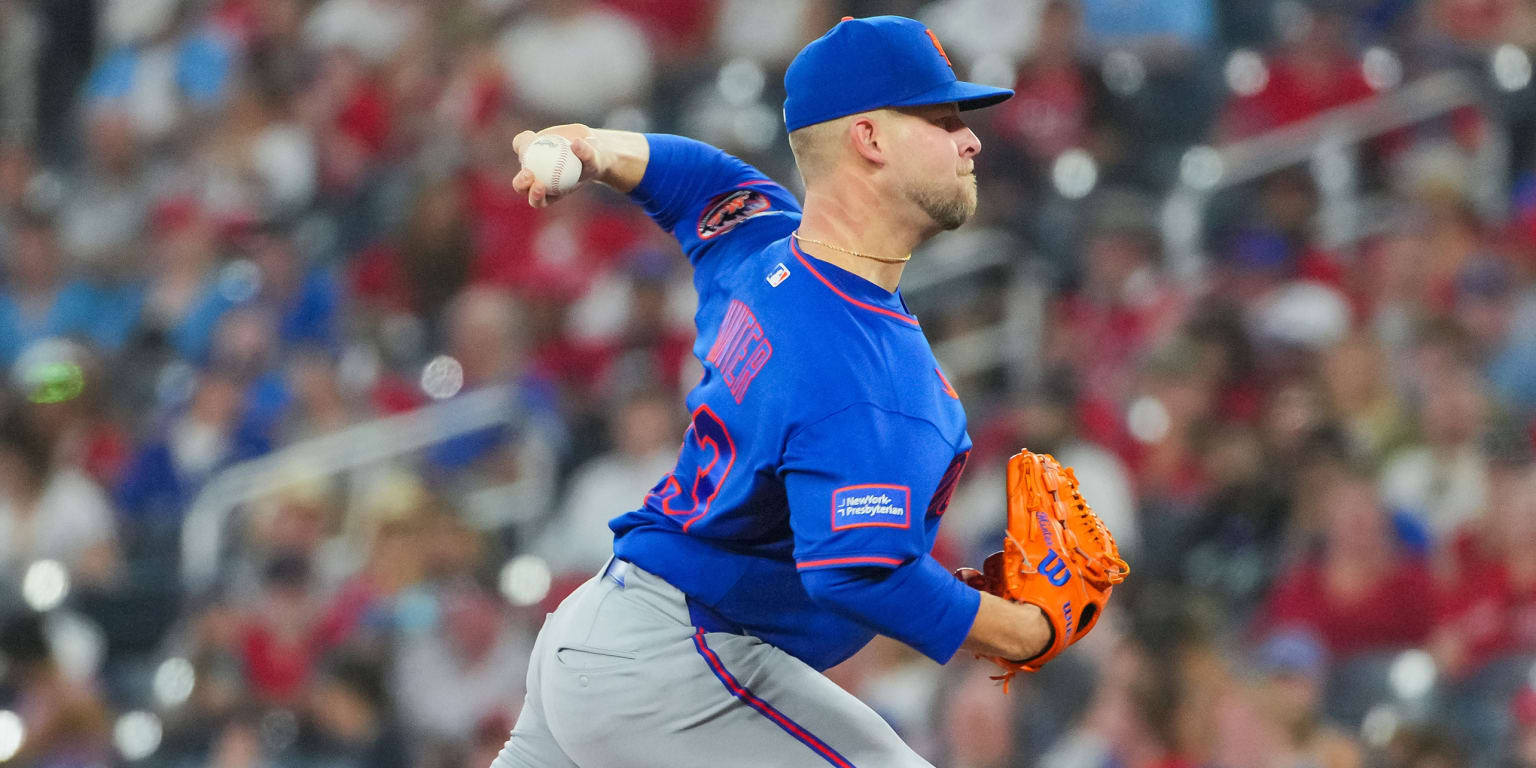
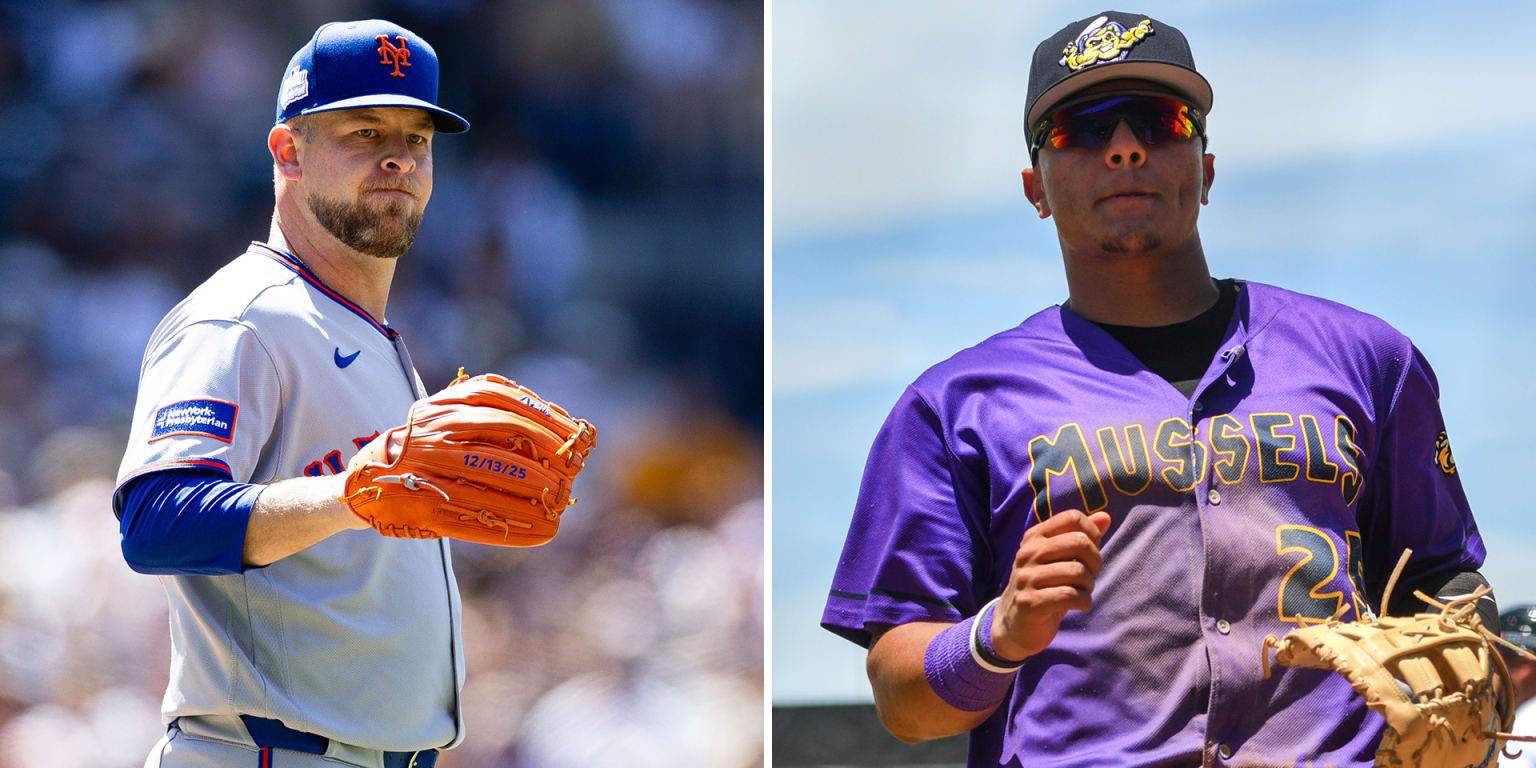
The New York Mets have made one confirmed trade in the 2026 deadline window as of this update on August 2. They sent left-handed reliever A.J. Minter to the Minnesota Twins and received infield prospects Bruin Agbayani and Billy Amick. The deal is official, but the Mets' deadline work may not be finished.
The 2026 MLB Trade Deadline is Monday, August 3 at 6 p.m. ET. That means this is a live status report, not a final recap. A player's appearance in a report or candidate list does not mean he has been traded. We will use MLB's official transaction tracker as the confirmation standard and keep completed deals separate from players who remain on New York's roster.
Confirmed 2026 Mets trade deadline deals
| Announced | Mets traded | Mets received | Status |
|---|---|---|---|
| July 31, 2026 | LHP A.J. Minter | INF Bruin Agbayani and INF Billy Amick | Official |
MLB's league-wide tracker lists the transaction under July 30, while the Mets and Twins announced it Friday morning, July 31. Those two displays refer to the same completed trade. For a running list of moves involving all 30 clubs, use our 2026 MLB Trade Deadline tracker.
No other Mets deal appeared on MLB's official tracker at the publication check. That sentence is intentionally time-stamped: the deadline remains open until 6 p.m. ET on August 3, and transactions can be reported or finalized quickly near the cutoff.
What the Mets received for A.J. Minter
The return is built around two infielders at different stages of development. Neither is an immediate replacement for Minter in the Major League bullpen, and neither should be treated as a guaranteed future starter. The trade adds two chances to the farm system in exchange for a veteran who can become a free agent after the season.
Bruin Agbayani
Bruin Agbayani was 19 when the trade was announced. Minnesota selected him in the sixth round of the 2025 Draft out of St. Louis School in Honolulu. MLB Pipeline ranked him No. 29 in the Twins' system and projected him at No. 22 after joining the Mets' organization.
Agbayani is a left-handed-hitting infielder whose scouting appeal begins with bat-to-ball ability and developing power. His 2026 game sample was small because a right shoulder injury limited him to 10 games before the trade. That matters when reading his statistics: the Mets acquired a young developmental player, not a finished statistical profile.
The name is familiar in Queens. Bruin is the son of Benny Agbayani, the former Mets outfielder remembered for his walk-off home run in Game 3 of the 2000 National League Division Series. The family connection makes the transaction especially interesting to Mets fans, but the younger Agbayani's own development will determine the baseball value.
Billy Amick
Billy Amick was 23 at the time of the deal and had reached Double-A. He hit 23 home runs in 379 plate appearances in 2026, evidence of the right-handed power in his profile. The same line included a .217 batting average and 108 strikeouts, so contact consistency is the clear development question.
MLB's Mets report said Amick was not expected to enter the club's ranked prospect list. That does not make him irrelevant; it means the reasonable expectation is organizational depth with a power tool, not a blue-chip prospect. His next test is whether he can preserve that power while making more consistent contact against upper-level pitching.
Why New York traded Minter
Minter was a logical deadline asset because he is eligible to become a free agent after the 2026 season. A contender could acquire him for the stretch run without taking on a long-term commitment, while a selling club risked losing him in free agency without receiving this prospect return.
His two seasons in New York were interrupted by a serious left lat injury. Minter required surgery in 2025 and did not return until May 2026. Once active, he opened with 14 appearances without allowing an earned run, according to MLB's official trade report. He then posted a 6.00 ERA over his final nine Mets appearances. The complete picture was an experienced left-handed reliever with postseason history, recent effectiveness and health risk.
Minnesota's motivation was different. The Twins needed another left-handed option in a bullpen built for meaningful late-season games. Minter brought years of leverage work and a 2021 World Series ring. New York, meanwhile, converted two months of a veteran reliever into two younger players who can remain in the organization beyond 2026.
That is the trade's cleanest interpretation. It is too early to declare a winner because prospect development takes years, and a relief pitcher's contribution can turn on a small number of high-leverage innings. The Mets gained future control; the Twins gained immediate bullpen help.
Which Mets players are still worth monitoring?
Official MLB reporting before the deadline identified several potential Mets trade chips. The important word is potential. The table below is a monitoring list, not a list of completed transactions.
| Player | Why teams may call | Status at Aug. 2 check |
|---|---|---|
| Freddy Peralta | Starting pitching is scarce, and he can become a free agent after 2026 | No confirmed trade on MLB tracker |
| Brooks Raley | Veteran left-handed reliever on an expiring deal | No confirmed trade on MLB tracker |
| Clay Holmes | Experienced starter/reliever profile with a player decision affecting 2027 | No confirmed trade on MLB tracker |
| Luke Weaver | Controllable relief arm who could help a contender's bullpen | No confirmed trade on MLB tracker |
| Huascar Brazoban | Relief versatility and multiple future seasons of club control | No confirmed trade on MLB tracker |
| Sean Manaea or Kodai Senga | Starting-pitching upside, balanced against salary and performance risk | No confirmed trade on MLB tracker |
A candidate can remain with the Mets for many reasons: the return may be too light, the contract may be difficult to move, New York may value future control, or another club may fill its need elsewhere. Rumor volume is not proof that a deal is close. A trade becomes part of this article's confirmed table only after an official announcement or its appearance on MLB's transaction tracker.
Core young players are a different category from short-term veterans. An earlier MLB analysis described Nolan McLean, A.J. Ewing and Carson Benge as players the Mets were expected to protect. Juan Soto's long-term place in the club's plans also makes casual speculation a poor basis for a “confirmed” tracker. The article will not convert broad industry discussion into a transaction that has not happened.
How more trades could change the Mets roster
The Minter move removes a late-inning left-hander and creates opportunity in the bullpen. It does not tell us by itself which pitcher will inherit a specific inning or roster spot. Those choices depend on the active roster, health and any additional moves before the cutoff.
A starting-pitcher trade would have a larger visible effect. It could change the rotation order, probable pitchers and how the club covers innings during a long stretch of games. A reliever trade would redistribute leverage work. A position-player move could open regular at-bats for a younger player. None of those downstream changes should be assumed before the corresponding deal and roster move are official.
Fans planning to watch should check the New York Mets schedule after the deadline and confirm the day's matchup on the MLB games today page. Probable pitchers, lineups and television assignments can change independently of the published season schedule.
The return prospects are more likely to affect organizational depth than the immediate Major League lineup. Agbayani needs healthy development time, while Amick needs upper-level plate appearances. Their new affiliate assignments are worth following, but the trade should not be described as an instant remake of the Mets' batting order.
What can happen after the August 3 deadline?
The deadline is the last point in the 2026 season when players signed to Major League contracts can be traded between clubs. MLB eliminated the old revocable August trade-waiver process before the 2019 season, so fans should not expect a second normal Major League trading period later in August.
Outright waivers still exist. A club can place a player on waivers and another club can make a claim, but that process is not the same as negotiating a post-deadline trade. Minor Leaguers who are not on a 40-man roster are also governed differently from players on Major League contracts.
Postseason eligibility has a separate clock. MLB's guidance says a player ordinarily must be on a club's 40-man roster or 60-day injured list by noon ET on September 1 to be eligible for that organization in the postseason. Limited injury-replacement petition rules can apply, but they do not reopen the trade market.
How to follow official Mets deadline updates
- Start with the official tracker. MLB's deal ledger is the best confirmation check for a transaction involving any club.
- Read the team announcement. Mets news and transactions provide the return, roster move and player context.
- Separate reports from deals. A credible report can explain active talks, but a player remains in the “monitoring” section until the move is official.
- Recheck the schedule. Use the Mets team page and MLB schedule after roster changes for the next matchup.
The deadline produces fast-moving headlines, duplicate reports and proposed deals that can change. A short official table is more useful than a long rumor list if the reader's question is simply, “Whom did the Mets trade?” As of August 2, the answer is A.J. Minter, with Bruin Agbayani and Billy Amick coming to New York.
2026 Mets trade deadline FAQ
Have the Mets made a trade in 2026?
Yes. The Mets traded left-handed reliever A.J. Minter to the Minnesota Twins for infield prospects Bruin Agbayani and Billy Amick.
Is the Mets' 2026 deadline finished?
Not necessarily. This article was updated August 2, and the deadline does not close until August 3 at 6 p.m. ET. Additional moves may still be completed.
When is the 2026 MLB Trade Deadline?
The deadline is Monday, August 3, 2026 at 6 p.m. Eastern Time. It is the cutoff for trading players signed to Major League contracts.
Who did the Mets get for A.J. Minter?
New York received infielders Bruin Agbayani and Billy Amick. Agbayani is a younger ranked prospect with a familiar Mets family name; Amick is an upper-level power hitter with contact risk.
Can the Mets trade Major League players after August 3?
No. The former revocable August waiver-trade system no longer exists. Outright waivers and certain transactions involving non-40-man Minor Leaguers follow different rules, but the ordinary Major League trade window closes at the deadline.
Where can I verify a reported Mets trade?
Check MLB's official 2026 deal tracker and the Mets' official transactions or news pages. Until a move is announced or entered there, treat it as a report rather than a completed trade.
Loading comments...