

The 2026 MLB Trade Deadline is Monday, August 3 at 6 p.m. ET. This tracker lists completed deals confirmed on Major League Baseball's official transaction tracker through July 25 and was last reviewed on July 26, 2026. It does not treat a report, prediction or social-media rumor as a finished trade.
Use the table below to see what each club received, then open the MLB games today page to check when an affected team plays next. Deadline week moves quickly, so the timestamp matters: a deal announced after this review will appear only after the tracker is updated.
2026 MLB Trade Deadline: Date, Time and Status
MLB set the deadline for Monday, August 3, 2026 at 6 p.m. Eastern. That is 5 p.m. Central, 4 p.m. Mountain and 3 p.m. Pacific. It is later than the familiar July 31 date, but it is official rather than an estimate based on past seasons.
The current collective bargaining agreement gives the Commissioner's Office a window from July 28 through August 3. MLB explained that choosing August 3 also avoids having a player traded while a game is underway: all eight games scheduled that day begin at 6:40 p.m. ET or later. Fans planning the first post-deadline night can compare those matchups on the full 2026 MLB schedule.
The deadline is the last point during the season when players on Major League contracts can be traded from one organization to another. A club can agree to a deal before 6 p.m. and announce it after the clock if the transaction was submitted in time, so the final confirmed list may continue changing after the deadline itself passes.
Every Confirmed 2026 MLB Trade Before the Deadline
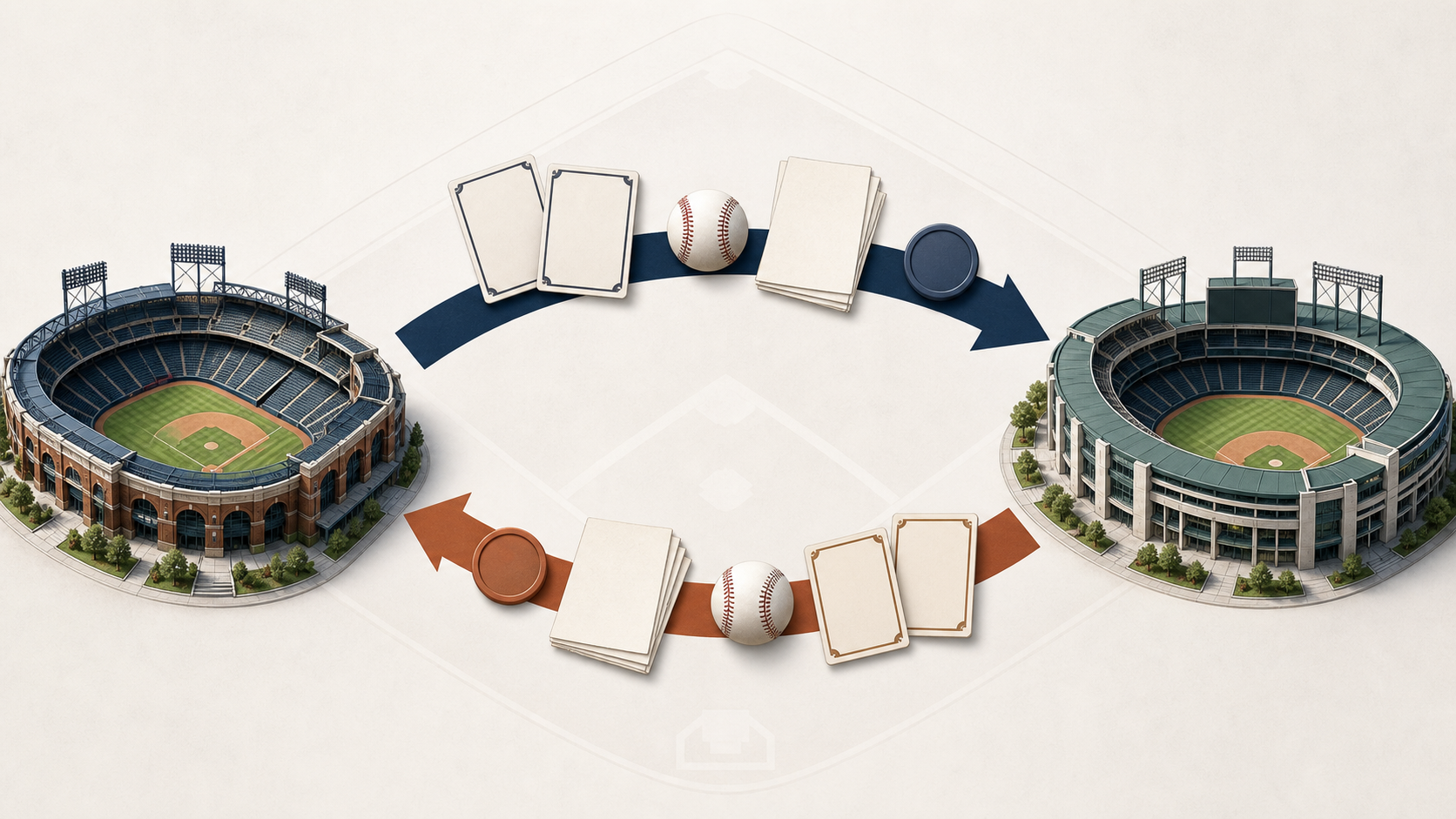
The ledger is arranged newest first and follows the two-sided wording on MLB's official tracker. “Receives” is important: the first club listed is getting the player or asset in that cell, not sending it away. Positions are included where MLB supplied them.
Trades Confirmed July 25-22
| Date | Club receives | Other club receives |
|---|---|---|
| July 25 | Red Sox: INF Curtis Mead | Nationals: LHP Connelly Early |
| July 25 | Phillies: OF Kameron Misner | Royals: cash considerations |
| July 23 | Pirates: RHP Ron Marinaccio | Padres: international bonus pool money |
| July 22 | Royals: RHP Nate Pearson | Astros: RHP Max Martin |
The newest entries already affect several upcoming slates. Check the current Boston Red Sox schedule, Philadelphia Phillies schedule or Pittsburgh Pirates schedule before assuming an acquired player will be active immediately.
Trades Confirmed July 20-14
| Date | Club receives | Other club receives |
|---|---|---|
| July 20 | Dodgers: RHP Seth Halvorsen | Rockies: OF Landyn Vidourek and RHP Nick Frasso |
| July 18 | Cubs: RHP Aaron Civale | Athletics: RHP Aiden Moffett |
| July 15 | Brewers: RHP Lance McCullers Jr., LHP Colton Gordon and cash | Astros: OF Jadyn Fielder |
| July 14 | Red Sox: OF Jahmai Jones | Tigers: player to be named later |
Trades Confirmed July 10
| Date | Club receives | Other club receives |
|---|---|---|
| July 10 | Pirates: INF Jacob Gonzalez and LHP Brandon Eisert | White Sox: 2026 Competitive Balance Round A pick and LHP Jaden Woods |
| July 10 | Twins: RHP Tommy Nance and international bonus pool money | Blue Jays: C Ryan Sprock |
This is a deadline-focused list, not a log of every roster transaction. Free-agent signings, releases, injured-list moves, options and waiver claims are different actions and are intentionally excluded. That narrower scope makes it easier to answer the practical question: what did each club actually exchange?
How to Read This MLB Trades Tracker
A baseball trade can move more than Major League players. Prospects, cash, international signing capacity and a limited class of Draft picks can also form part of the return. Read both sides before judging a deal: a club adding an established pitcher may be sending several younger players or another valuable asset in the opposite direction.
Player to Be Named Later
A player to be named later, often shortened to PTBNL, means the teams completed the main transaction before the final return player was selected. The receiving organization may choose later from an agreed group of eligible players, giving evaluators more time while allowing a deadline deal to become official.
Cash Considerations
Cash considerations are money included as part of the negotiated return. The phrase does not tell readers the amount, and clubs do not always disclose it publicly. It should not be confused with international bonus pool money, which represents spending capacity for eligible international amateur signings rather than a simple cash payment.
International Bonus Pool Money
Each organization has a defined pool for international amateur signing bonuses. MLB rules permit portions of that pool space to move in trades, subject to league limits. A team receiving pool money gains additional signing capacity; the line in the tracker does not mean that amount is paid directly to a player already in the trade.
Competitive Balance Draft Pick
Most MLB Draft selections cannot be traded. Competitive Balance selections are the important exception. MLB awards those picks to qualifying lower-revenue or smaller-market clubs, and the original recipient can trade its selection once under the applicable restrictions. That is why the July 10 Pirates-White Sox transaction can legitimately include a Competitive Balance Round A pick.
What Happens After the MLB Trade Deadline?
The deadline does not freeze every roster. It ends trades involving players signed to Major League contracts, but clubs can still make other permitted moves. Players may be placed on outright waivers and claimed, teams can promote players from the Minor Leagues, and free agents can still sign if they are eligible.
The old August revocable-waiver trade system no longer exists. Before it was eliminated ahead of the 2019 season, a player could sometimes clear revocable waivers and then be traded in August. Under the current system, fans should not interpret a post-deadline waiver claim as another deadline trade.
Postseason eligibility also has its own timing. MLB's deadline announcement says the general rule is that a player must be on a club's 40-man roster or 60-day injured list by noon ET on September 1. Limited injury-replacement petitions can apply when a player was already in the organization by the required date, so unusual cases should be checked against the official transaction and postseason rules.
A player acquired at the deadline is not guaranteed a postseason spot, a starting job or immediate activation. Travel, medical review, roster space and a club's tactical decision can all affect when that player first appears.
How a Trade Changes a Team's Upcoming Schedule
A trade changes the roster, not the dates on the schedule. Opponents, venues and scheduled first-pitch times remain the same unless MLB separately announces a postponement or schedule adjustment. What can change is the baseball context around those games: a newly acquired starter may join the rotation, a reliever may become available, or a position player may alter the expected lineup.
Probable pitchers are especially important to recheck during deadline week. A pitcher listed for one club can be scratched after a transaction, while a new acquisition may need travel and roster clearance before receiving an assignment. Treat an early probable-pitcher listing as useful planning information rather than a guarantee.
Broadcast assignments also do not automatically change because of a trade. Use the MLB TV schedule for the latest loaded channel information, then confirm local availability and blackout rules near first pitch. A high-profile acquisition can increase interest in a game without changing which network owns the telecast.
2026 MLB Trade Deadline Tracker FAQ
What time is the 2026 MLB Trade Deadline?
The deadline is Monday, August 3 at 6 p.m. ET. That converts to 5 p.m. CT, 4 p.m. MT and 3 p.m. PT.
Does this tracker include MLB trade rumors?
No. It includes only completed deals listed on MLB's official tracker as of the stated review date. A club showing interest in a player, discussing a need or receiving a proposal is not the same as completing a trade.
Can MLB teams trade players after August 3?
Players on Major League contracts cannot be traded after the 2026 deadline. Other roster mechanisms, including outright waivers and eligible free-agent signings, can continue, but those moves are not post-deadline trades.
When will this list be updated?
The current version was reviewed July 26 and covers official entries through July 25. It should be checked again as MLB confirms more deals and given a final review after the August 3 deadline. Always use the article's timestamp when comparing it with breaking news.
Loading comments...